

 Phoenix 24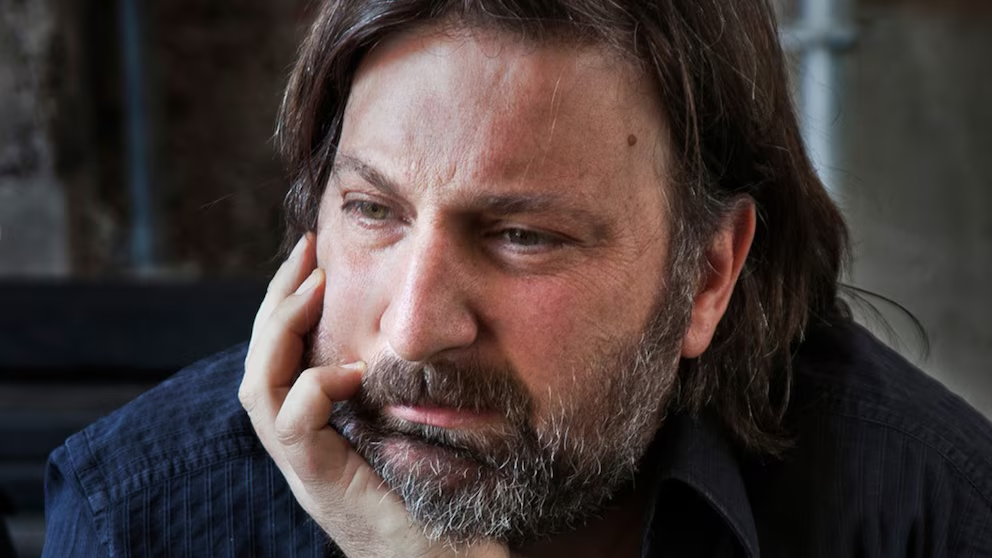
The prize recognizes more than a career.
Santiago, March 2026
Smiljan Radić Clarke’s Pritzker Prize does more than celebrate an accomplished architect from Chile. It elevates a way of thinking about architecture that resists spectacle without surrendering force. The official announcement named Radić the 2026 laureate of the Pritzker Architecture Prize, an award widely regarded as the discipline’s highest distinction, and the jury emphasized emotional intelligence, fragility, and a deep sensitivity to human experience. That matters because the prize is not rewarding sheer monumentality or brand architecture. It is rewarding a quieter but more difficult form of authority.
Radić’s recognition is also significant in cultural and geopolitical terms. He becomes the 55th laureate of the prize, and his work reaches the center of the discipline without imitating the visual grammar of the dominant architectural capitals. Coverage of the award stressed that his architecture brings together material experimentation, memory, atmosphere, and a careful relation between the natural and the built. In other words, this is not the coronation of an architect who became globally legible by becoming generic. It is the affirmation of a body of work singular enough to reshape the terms of legibility itself.
That singularity has long defined Radić’s appeal. Critical responses published alongside the prize described his work as hybrid in the richest sense: industrial and artisanal, temporary and permanent, intimate and public. This is one reason his architecture has often resisted easy reduction to a formula. It does not depend on repetitive signature effects. Instead, it advances by testing how topography, memory, and material strangeness can coexist without flattening each other. In a profession often pulled toward instant recognizability, his achievement lies partly in refusing to become predictable.
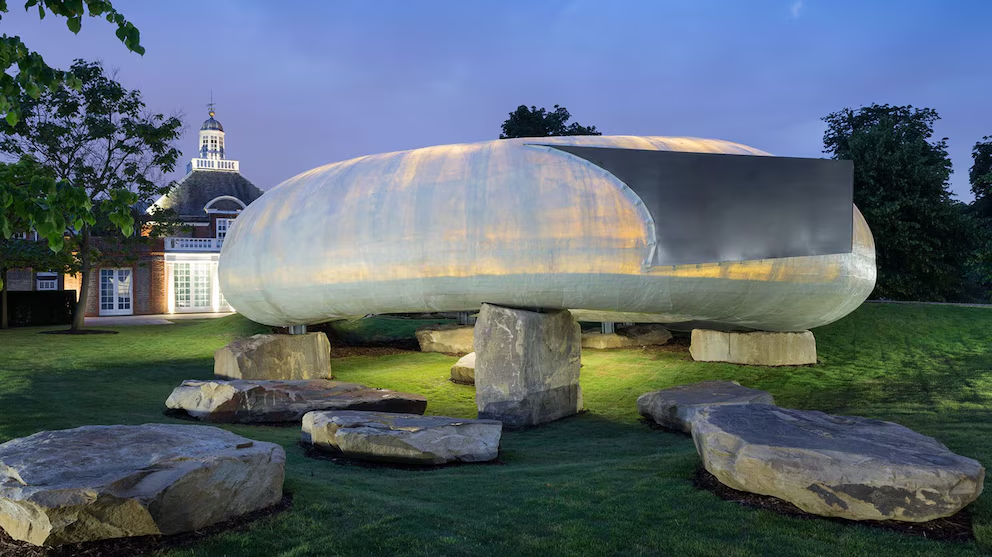
The award also signals something broader about the discipline itself. The jury’s language suggests that architecture’s highest honor is continuing to shift away from a narrow fixation on visual dominance and toward emotional resonance, human shelter, and complexity without noise. Radić’s buildings often seem less interested in conquering a site than in negotiating with it. They do not merely occupy territory. They converse with it, sometimes uneasily, often poetically. That is why the prize can be read not only as a recognition of one architect, but as a statement about what parts of architecture now feel necessary in a time of ecological stress, cultural fatigue, and saturation by image.
There is a Chilean dimension here that should not be overlooked. The official prize material identifies Radić as based in Santiago, and that continuity matters. His trajectory complicates the old assumption that global relevance requires symbolic migration into the North Atlantic centers of architecture. Instead, his career suggests something more interesting: that an architect can remain structurally tied to a local intellectual and material environment while still speaking at the highest international level. In that sense, the prize is also recognizing architectural production that does not need to abandon origin in order to gain force.
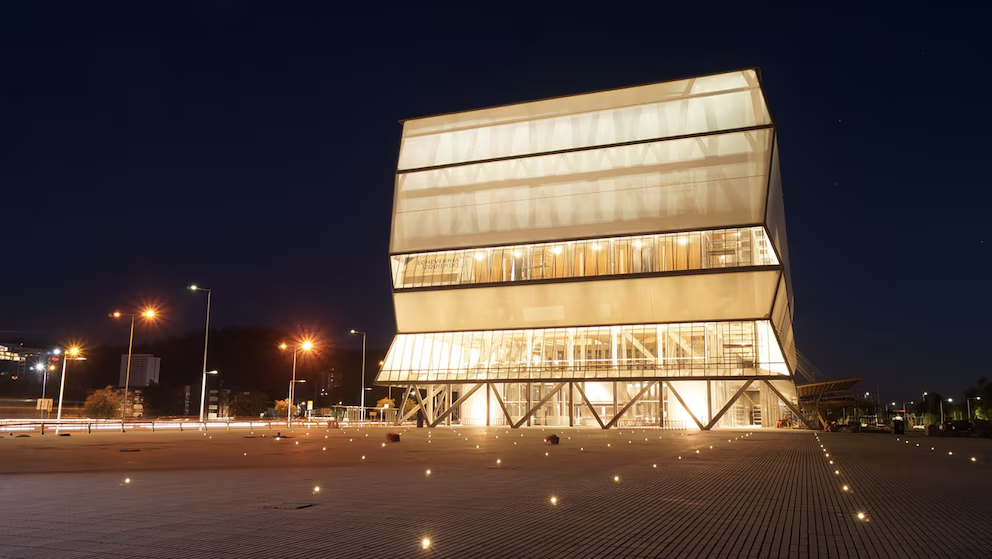
His association with fragility is especially striking in this context. Coverage of the prize repeatedly returned to the idea that his architecture embraces vulnerability, temporality, and incompletion rather than hiding them behind smooth certainty. That may sound paradoxical in a discipline so often associated with solidity and permanence. Yet it captures something essential about Radić’s method. He has spent years showing that vulnerability can function as design intelligence, and that architecture may gain power not only through confidence, but through calibrated openness and tension. In a world increasingly obsessed with fortified surfaces and rigid identities, that is a quietly radical proposition.
The international response to the award reinforces that reading. Architectural coverage quickly highlighted his material experimentation, his exploration of memory, and the emotional charge of forms that can appear understated at first glance. The consistency of that reaction is telling. Radić is not being celebrated because he suddenly became fashionable. He is being recognized because a long career of difficult, disciplined work has become impossible to ignore. The prize, then, functions less as discovery than as consolidation. It formalizes a consensus that his architecture has already been building slowly, through influence rather than noise.
What this Pritzker ultimately reveals is that architecture’s highest honor is, at least this year, aligning itself with a different model of greatness. Not louder, but deeper. Not more monumental, but more unsettling in its humanity. Smiljan Radić Clarke’s victory does not simply add another name to an illustrious list. It restores attention to the idea that architecture can still move people without dominating them, and can still become globally resonant without sacrificing material weirdness, local memory, or emotional risk. That is why this moment matters beyond Chile, beyond the prize, and even beyond architecture itself. It suggests that in an age saturated by assertion and image, quiet originality still has the power to reorganize the field.
Truth is structure, not noise. / Truth is structure, not noise.