

 Phoenix 24
Pain often starts as routine.
San Francisco, March 2026
The growing concern over hand injuries linked to smartphone use is not a passing wellness fad. It reflects a broader physical cost of digital behavior that has become normalized through constant scrolling, texting, tapping, and gripping. Medical and orthopedic sources increasingly describe excessive phone use as a driver of repetitive strain patterns affecting the thumb, wrist, and hand, especially when use is prolonged and ergonomically poor. Conditions associated with this pattern include tendinitis, de Quervain tenosynovitis, repetitive strain injury, and in some cases symptoms consistent with carpal tunnel syndrome.

That matters because smartphones demand a very particular kind of physical repetition. Unlike broader arm movement or whole-hand tasks, phone use concentrates stress into small structures that were never designed for thousands of micro-motions a day under static grip. Orthopedic guidance notes that repeated thumb flexion, swiping, and awkward wrist positioning can irritate tendons and surrounding tissues, while broader repetitive use of the hand and wrist is a known pathway for strain injury. The problem is not only motion. It is the combination of repetition, posture, and duration.
De Quervain tenosynovitis has become one of the most recognizable diagnoses in this conversation. It affects tendons on the thumb side of the wrist and is often associated with pain during gripping, lifting, or thumb motion. Clinical literature has linked heavy smartphone use to symptoms compatible with this condition, particularly among people who rely heavily on their thumbs for texting or gaming. Case evidence and observational research point in the same direction: repeated smartphone manipulation can aggravate the wrist structures involved and trigger clinically meaningful pain.
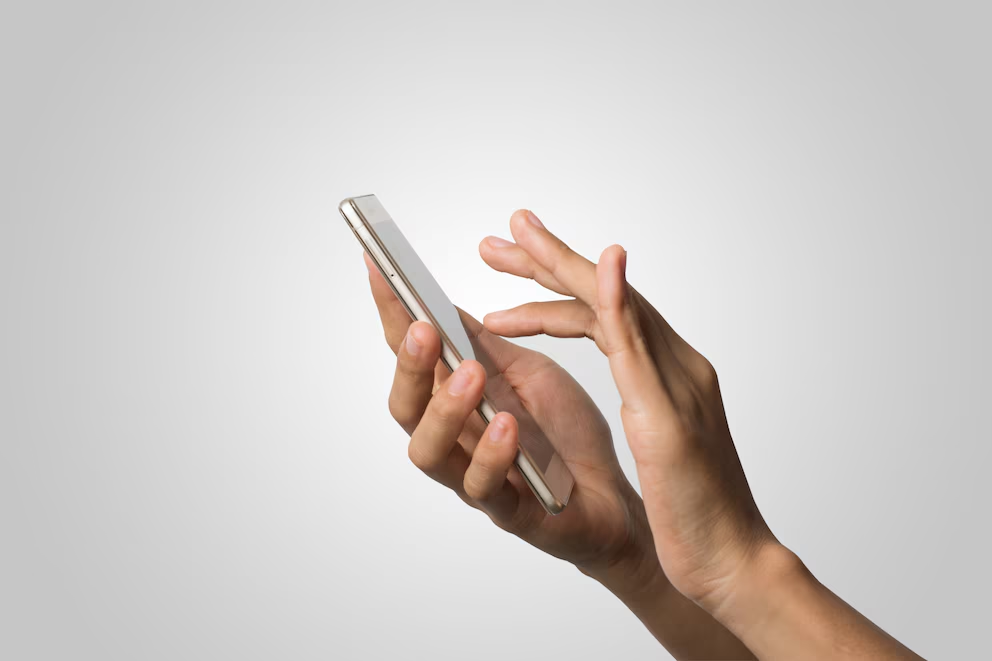
But tenosynovitis is only part of the picture. Other overuse patterns include general tendinitis, stiffness, grip weakness, tingling, and pain that radiates into the wrist or forearm. Research on excessive phone use has associated it with diminished grip strength, increased wrist pain, and a higher risk of hand disorders among heavy users. What begins as soreness can evolve into functional discomfort if the behavior continues unchanged. The injury often builds gradually, which is precisely why many users ignore it until the discomfort starts interfering with daily tasks.
The deeper issue is behavioral, not merely medical. People rarely interpret early symptoms as injury because the motions involved feel trivial. A few extra minutes of scrolling, another series of messages, one-handed typing while commuting, or late-night browsing in bed all appear harmless in isolation. Yet repetitive strain injuries rarely announce themselves dramatically at first. They tend to accumulate quietly until pain, swelling, or weakness interrupts ordinary use. That slow escalation is what makes smartphone-related hand damage easy to dismiss until it begins affecting work, sleep, or routine movement.
There is also a structural irony here. The same device designed to maximize convenience often redistributes physical stress into the smallest joints and tendons of the upper extremity. The body adapts for a while, then starts sending signals: aching at the base of the thumb, soreness near the wrist, reduced tolerance for gripping, or numbness after long sessions. Medical advice generally centers on reducing provoking activity, changing hand position, taking regular breaks, and seeking professional evaluation when symptoms persist or worsen. Treatment may include rest, anti-inflammatory strategies, splinting, therapy, or, in more serious cases, further intervention.

What this reveals is larger than one health tip about screen time. It shows how digital life is increasingly reorganizing the body through low-grade repetition rather than dramatic trauma. The modern phone does not usually injure through impact. It injures through habit. And habit is harder to confront because it is woven into work, entertainment, relationships, and routine. That makes prevention less about alarm and more about ergonomic discipline. Switching hands, reducing one-thumb dominance, interrupting long sessions, and adjusting grip patterns may sound minor, but those small choices can determine whether irritation stays temporary or becomes chronic.
In the end, the most common hand injuries tied to smartphones are not random complaints. They are signs that constant connectivity has a musculoskeletal price. Tenosynovitis, microtrauma, tendinitis, and repetitive strain all point to the same reality: the body is now negotiating with technology at the level of tendon, nerve, and joint. The screen may look weightless, but the repetition is not.
Every silence speaks. / Cada silencio habla.