

 Phoenix 24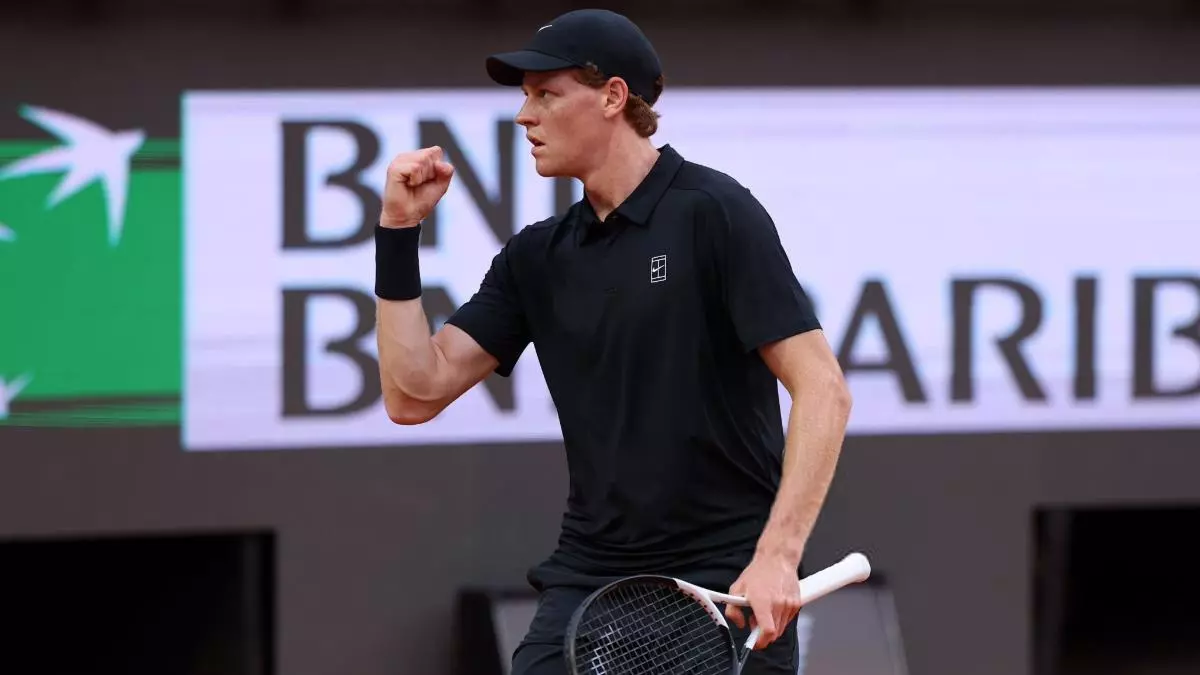
Home pressure becomes championship fuel.
Rome, May 2026. Jannik Sinner’s opening performance in Rome delivered more than a comfortable debut. It confirmed that the Italian star has entered a phase of competitive authority where expectation no longer appears to weigh him down, even in front of a home crowd that has transformed every point into a national event. The Foro Italico did not simply receive a player; it received the central figure of Italian tennis power.
Sinner arrived in Rome carrying the weight of recent dominance, a growing winning streak and the symbolic pressure of chasing the only Masters 1000 title still missing from his collection. That context matters because Rome is not an ordinary tournament for him. It is the stage where private ambition, national pride and global ranking pressure converge under maximum emotional visibility.
His debut showed the same pattern that has defined his recent rise: controlled aggression, clean timing, emotional discipline and an ability to suffocate opponents without theatrical excess. Sinner does not dominate through noise. He dominates through rhythm. Once he takes control of the baseline, the match begins to feel less like a contest and more like a gradual reduction of the opponent’s options.
The Italian crowd also changed the psychological texture of the match. Playing at home can amplify energy, but it can also distort concentration. Many players become trapped between performance and expectation. Sinner handled that pressure with the maturity of someone who has learned to convert public demand into competitive structure.
The significance of this start goes beyond one round. Rome represents a strategic threshold in Sinner’s season because it connects clay-court credibility with the approach to Roland Garros. A strong run here would reinforce his status not only as the world’s most consistent player, but as a champion capable of extending control across surfaces, atmospheres and emotional conditions.
The wider men’s tour is now being forced to adjust to his pace. Rivals no longer face Sinner as a promising talent or a temporary form player. They face a system of pressure: deep returns, early ball-striking, tactical clarity and a mental structure that rarely gives away cheap openings. That is why each victory now carries a message beyond the scoreline.
For Italy, Sinner’s Rome campaign has a generational dimension. He is not only competing for another trophy; he is carrying the possibility of restoring a home triumph that would resonate beyond tennis. In a country with deep sporting memory, winning in Rome would turn dominance into civic symbolism.
The debut, therefore, was not merely dreamed. It was strategically important. Sinner did what elite champions must do in the first round of emotionally charged tournaments: avoid drama, impose hierarchy and leave the impression that the real question is not whether he belongs at the center of the draw, but how far the rest of the field can survive his current level.
Analysis that transcends power. / Análisis que trasciende al poder.