

 Phoenix 24
Nostalgia alone cannot revive a franchise.
New York, May 2026. Robert Downey Jr. has once again revived speculation surrounding a third Sherlock Holmes film, but this time the actor admitted that the final decision may not belong entirely to him. During a public appearance in New York, Downey suggested that Susan Downey, his wife and producing partner, has the last word on whether the long-delayed sequel finally moves forward.

The comment reopened one of Hollywood’s most persistent franchise mysteries. More than fifteen years after Sherlock Holmes: A Game of Shadows, the third installment remains suspended between studio calculations, scheduling conflicts and shifting entertainment priorities. Warner Bros. has explored the project for years, but the film has repeatedly moved in and out of development without reaching production.

The delay reflects a broader industry problem. The first two films worked because they belonged to a precise blockbuster moment, when star power, literary mythology and franchise ambition could still converge inside theatrical cinema. Downey’s Holmes, paired with Jude Law’s Watson, gave Arthur Conan Doyle’s detective a kinetic, commercially modern identity that helped the saga become a global success.
But Hollywood has changed since then. Streaming fractured attention, legacy franchises became riskier and studios began treating intellectual properties as long-term ecosystems rather than isolated films. A third Sherlock Holmes movie now depends not only on nostalgia or fan demand, but on whether the character still fits Warner Bros.’ broader theatrical and streaming strategy.
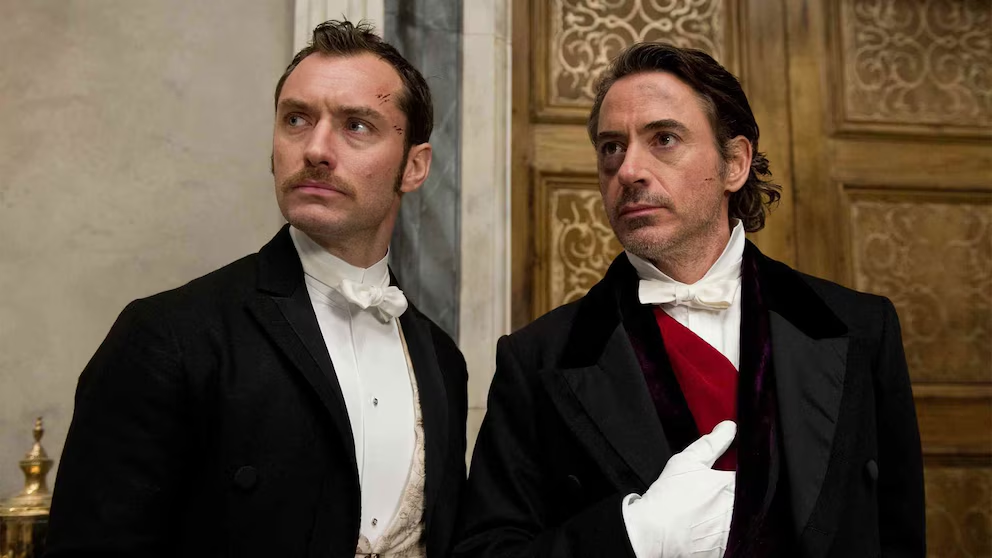
Downey’s cautious tone suggests that affection for the franchise is not enough. Reviving Sherlock Holmes requires more than returning familiar faces to the screen; it requires restoring the chemistry, timing and cultural momentum that made the original films feel alive. That may be the real mystery: not who controls the decision, but whether Hollywood can still revive an old case without turning it into routine content.
Narrative is power too. / La narrativa también es poder.