

 Phoenix 24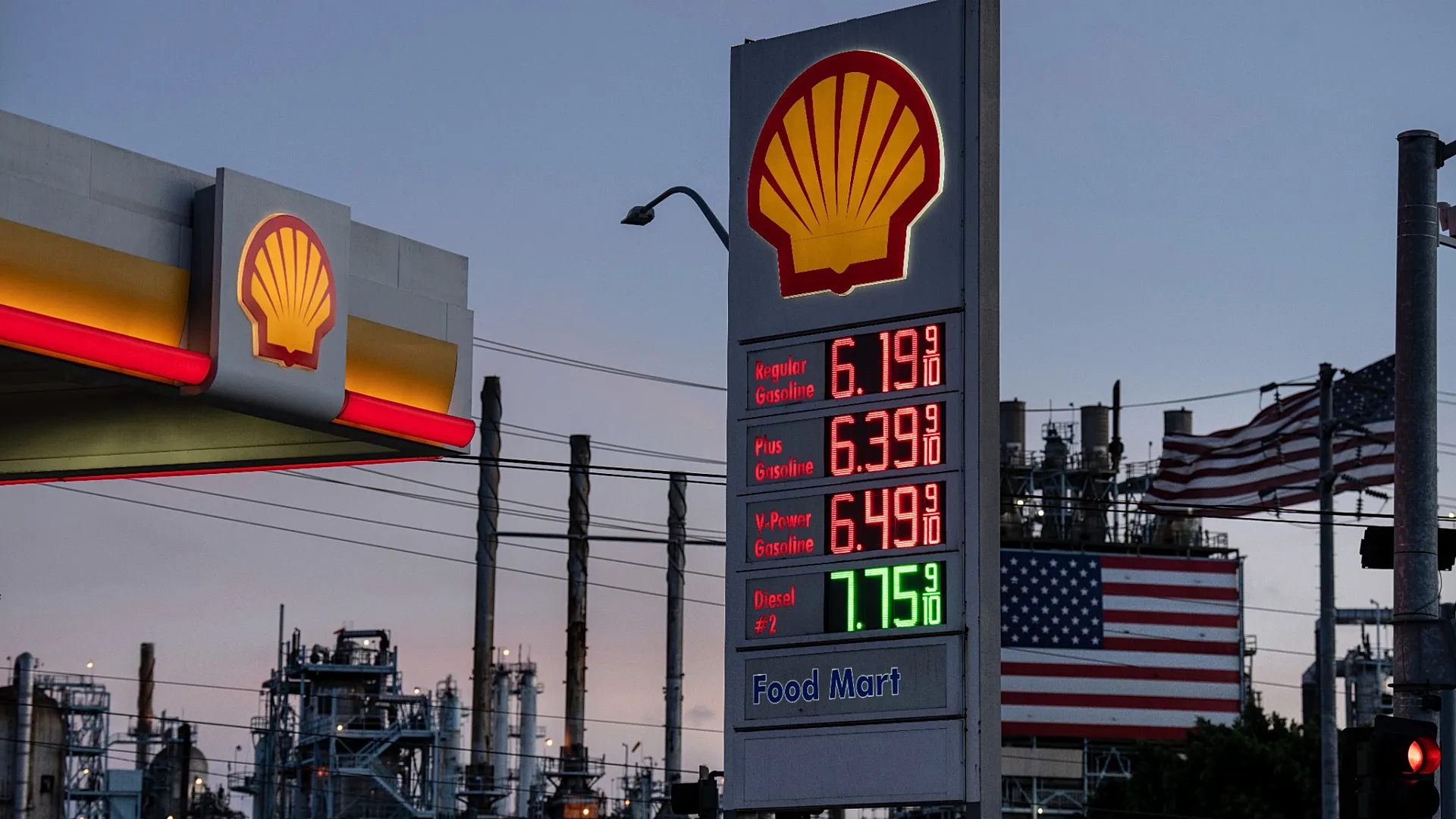
Conflict at sea becomes cash flow on land.
London, May 2026. Shell reported its strongest quarterly profits in two years as the war involving Iran and disruption across Middle Eastern energy routes pushed oil prices sharply higher. The company posted adjusted earnings of approximately 6.9 billion dollars for the first quarter, beating market expectations and more than doubling its previous quarterly result. The figures immediately revived criticism from climate groups, consumer advocates and anti-war voices who argue that major energy corporations are benefiting from geopolitical instability while households and industries absorb higher fuel costs.
The surge was driven largely by volatility in oil, liquefied natural gas and refined fuel markets after tensions around Iran and the Strait of Hormuz unsettled global supply chains. Shell’s trading operations benefited from rapid price swings and urgent rerouting of energy cargoes toward higher-demand markets. Brent crude temporarily climbed during the regional crisis, reinforcing fears that another Middle Eastern conflict could translate quickly into inflationary pressure across Europe, Asia and the Americas.
Shell framed the results as evidence of operational resilience under extreme market conditions. The company emphasized its ability to adapt through trading, logistics, shipping and portfolio flexibility. It also raised its dividend, signaling confidence in future cash flow despite the uncertainty surrounding the Gulf region and wider energy markets.
Yet the profits tell only one side of the story. The same conflict that generated extraordinary trading opportunities also exposed the vulnerability of physical energy infrastructure in the region. This contradiction is central to the modern energy economy: instability can damage production capacity while simultaneously creating lucrative market conditions for corporations positioned to manage scarcity, price shocks and logistical disruption.
The Iran conflict has again turned the Strait of Hormuz into one of the most sensitive economic chokepoints in the world. Any disruption near that corridor affects oil prices, shipping insurance, maritime security, fuel costs and inflation expectations far beyond the Middle East. For Europe, still managing the aftershocks of previous energy crises, the episode reinforces how incomplete the transition toward real energy autonomy remains.
The controversy surrounding Shell’s earnings is therefore not only financial. It is political, ethical and strategic. When war raises energy prices, corporations with global trading systems can convert volatility into profit, while consumers face higher transport, heating and production costs. That imbalance gives new force to calls for windfall taxes, stronger regulation and a more serious debate over who pays the real cost of geopolitical disorder.
Shell’s results also expose the limits of the energy transition narrative. Governments continue to speak of decarbonization, strategic autonomy and renewable acceleration, yet the global economy still reacts sharply when oil flows are threatened. The war around Iran shows that fossil fuels remain embedded not only in markets, but in national security, industrial planning and inflation control.
For investors, the logic is more immediate. Volatility can increase margins for companies able to reroute cargoes, arbitrate regional price differences and manage complex supply chains. That is why energy majors often perform strongly in crisis periods, even when the same crises increase long-term operational risk.
The deeper problem is that modern energy companies are no longer just extraction firms. They are geopolitical trading systems with infrastructure, data, shipping capacity, financial instruments and regulatory intelligence. In a stable market, those capabilities generate efficiency; in a crisis, they generate advantage.
The Shell case reveals a hard paradox of the twenty-first-century energy order. Wars threaten production, weaken households, complicate diplomacy and increase economic uncertainty. Yet for certain actors inside the energy architecture, geopolitical disorder can become a source of exceptional returns.
The issue is not whether Shell caused the crisis. The issue is that the current system allows crisis itself to become monetized at scale. As long as the world remains structurally dependent on fossil energy passing through militarized chokepoints, every regional war will carry a global invoice, and someone will profit from writing it.
Detrás de cada dato, la intención. / Behind every data point, the intention.