

 Phoenix 24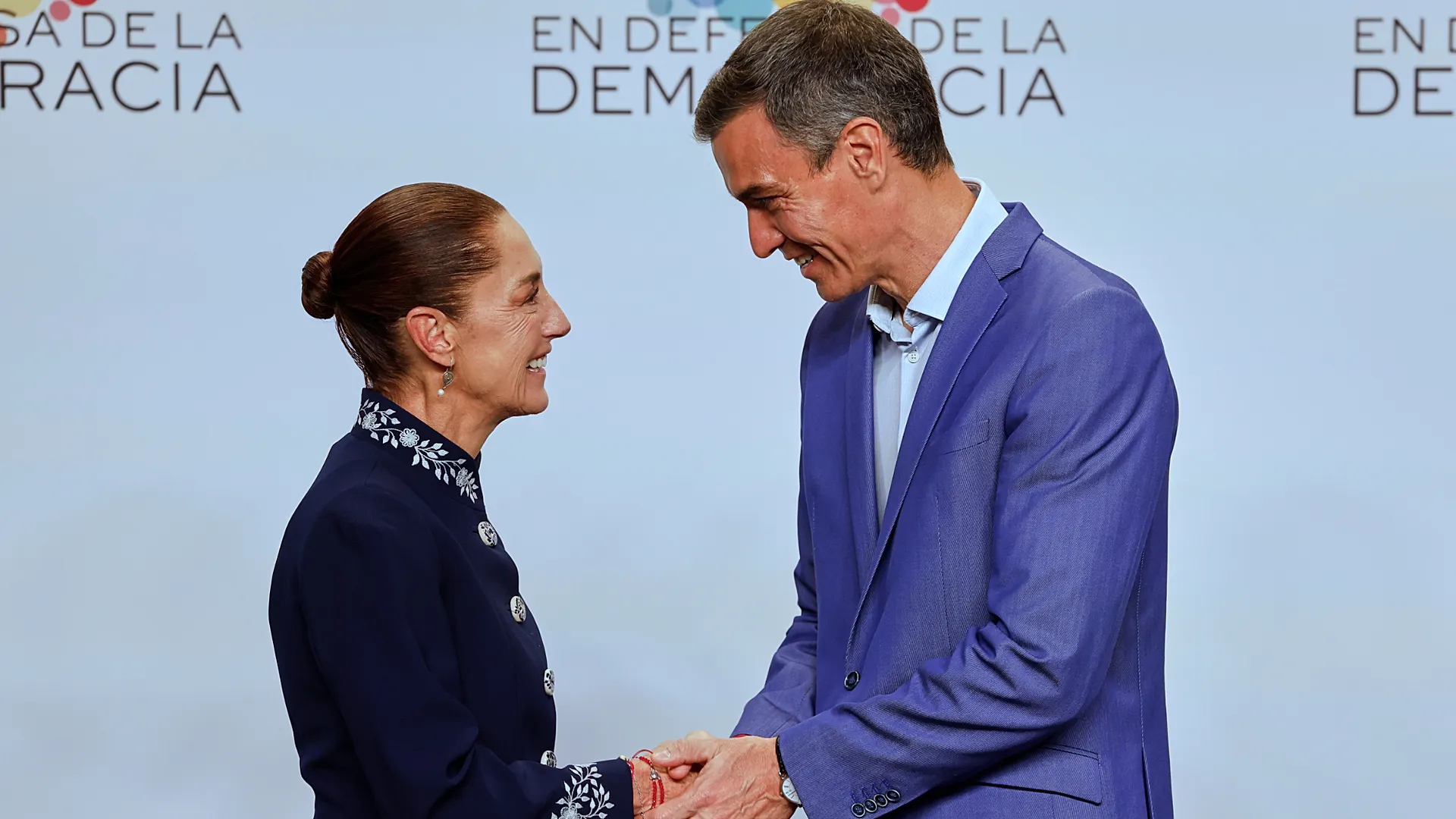
When history stops dictating the entire relationship.
Barcelona, April 2026
Claudia Sheinbaum rejected the idea that Mexico and Spain are facing a diplomatic crisis, presenting the bilateral relationship instead as one of political recalibration rather than rupture. Her remarks in Barcelona signaled an effort to lower the symbolic temperature around a relationship that had become burdened by disputes over historical memory and protocol. The message was deliberate. Mexico is not erasing the past, but it is refusing to let that past define the whole architecture of the present.
The significance of the statement lies in what it tries to close without formally denying prior tension. The relationship had been strained in recent years by demands for recognition of colonial-era abuses and by disagreements that turned historical grievance into a live diplomatic issue. By rejecting the word crisis, Sheinbaum is doing more than adjusting tone. She is attempting to move the conversation away from symbolic confrontation and toward controlled normalization.
This repositioning matters because Spain remains an important political and economic bridge for Mexico into Europe. Trade, investment, diplomatic coordination, and broader access to European networks all benefit from a relationship that is stable, even if not entirely resolved at the symbolic level. Sheinbaum appears to understand that historical dignity and international pragmatism do not need to cancel each other out. They can coexist, but only if the relationship is no longer narrated through permanent dispute.
There is also a domestic reading behind her language. She inherits a political tradition that gave historical memory a central place in diplomatic discourse, yet she governs under conditions that require broader external flexibility. Her formula is careful. She preserves the legitimacy of Mexico’s historical position while avoiding the appearance of escalation. In that sense, the statement is not softness. It is calibrated statecraft.
What happened in Barcelona was therefore more than a routine diplomatic gesture. It was an attempt to rewrite the grammar of the Mexico–Spain relationship without appearing to retreat from principle. Sheinbaum is signaling that recognition of the past remains valid, but that bilateral strategy cannot remain trapped inside symbolic grievance forever. That shift does not eliminate tension. It reorders it.
The broader lesson is that diplomatic crises are not always resolved by apologies, treaties, or dramatic gestures. Sometimes they are neutralized by changing the frame through which both sides are expected to interpret the relationship. Sheinbaum’s move points in that direction. She is trying to convert a history-heavy dispute into a more functional coexistence, where memory still matters, but no longer monopolizes the future.
Detrás de cada dato, hay una intención. Detrás de cada silencio, una estructura.
Behind every data point lies an intention. Behind every silence, a structure.