

 Phoenix 24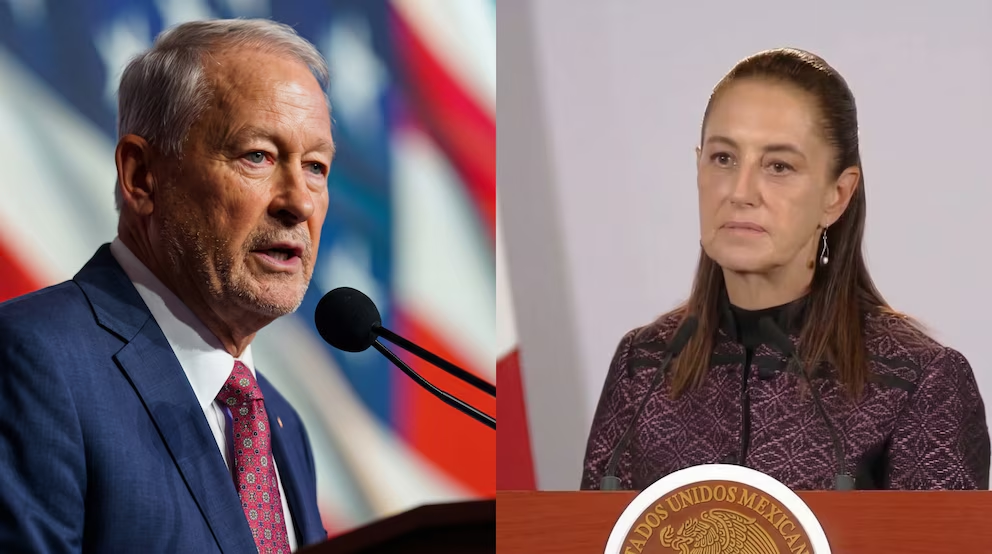
Security cooperation collides with questions of federal authority.
Mexico City, Mexico
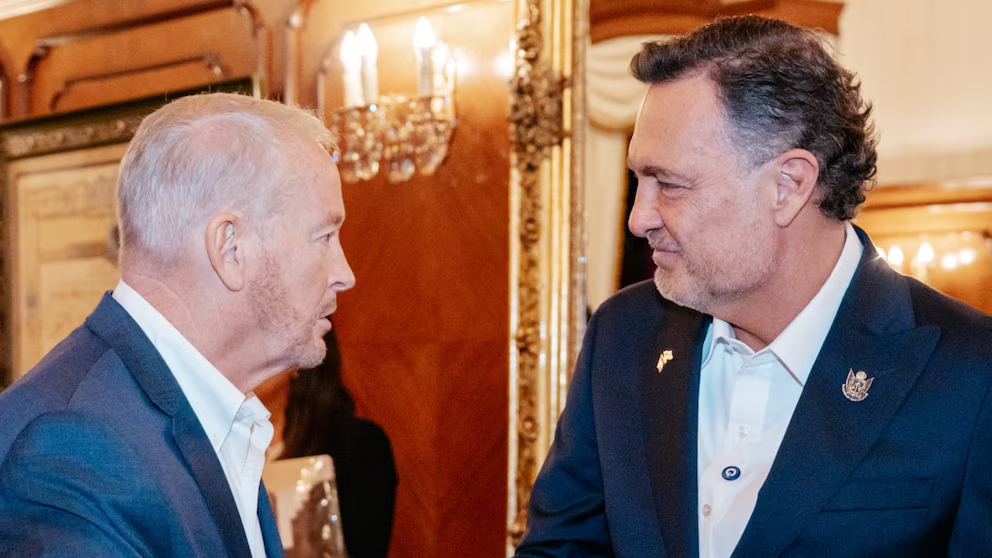
President Claudia Sheinbaum has questioned the creation of an international police training academy in Querétaro after state authorities and U.S. Ambassador Ronald Johnson participated in laying its cornerstone without prior coordination with the federal government. Sheinbaum said Foreign Affairs officials would contact both Querétaro Governor Mauricio Kuri and Johnson to request explanations about the project. The academy is intended to train police personnel in areas including the detection of drugs, weapons, illicit money and contraband. The dispute places Mexico-U.S. security cooperation against a sensitive institutional question: which level of government can authorize international law-enforcement training inside Mexican territory.
The controversy intensified because the federal government said it had not been formally informed before the project was publicly presented. Sheinbaum argued that cooperation involving foreign security agencies must follow established federal channels, particularly when training activities intersect with national security responsibilities. At the same time, the president did not frame the project itself as inherently illegal. The immediate issue is therefore one of authorization, institutional coordination and the boundaries of state-level cooperation with foreign governments.

The academy is planned for the Rhino Complex, which houses Querétaro’s state security infrastructure, and investment has been reported at more than 30 million pesos. Johnson has described the facility as the first academy of its kind in Mexico and Latin America, while highlighting an existing history of U.S.-supported police training in Querétaro. Thousands of participants have reportedly received instruction through bilateral cooperation programs in the state since 2015. That background suggests the current conflict is less about whether security cooperation exists and more about how far it can advance without explicit federal participation.
For Governor Kuri, the episode creates pressure to explain both the legal framework and the political coordination behind the academy. For Washington, it raises another test of how security cooperation can expand while respecting Mexico’s insistence on sovereignty and federal oversight. The case arrives at a time when bilateral relations already involve sensitive discussions over organized crime, border security, weapons trafficking and the role of U.S. agencies in Mexico. A training center can therefore become much more than an infrastructure project when it touches the architecture of national authority.
The central question is not whether Mexico and the United States will continue cooperating on security, because that relationship is already deeply institutionalized. The sharper issue is who defines the rules, authorizes the mechanisms and controls the political meaning of that cooperation inside Mexico. Querétaro has now become the setting for that broader debate.
Geopolitics, unmasked. / Geopolítica, sin maquillaje.