

 Phoenix 24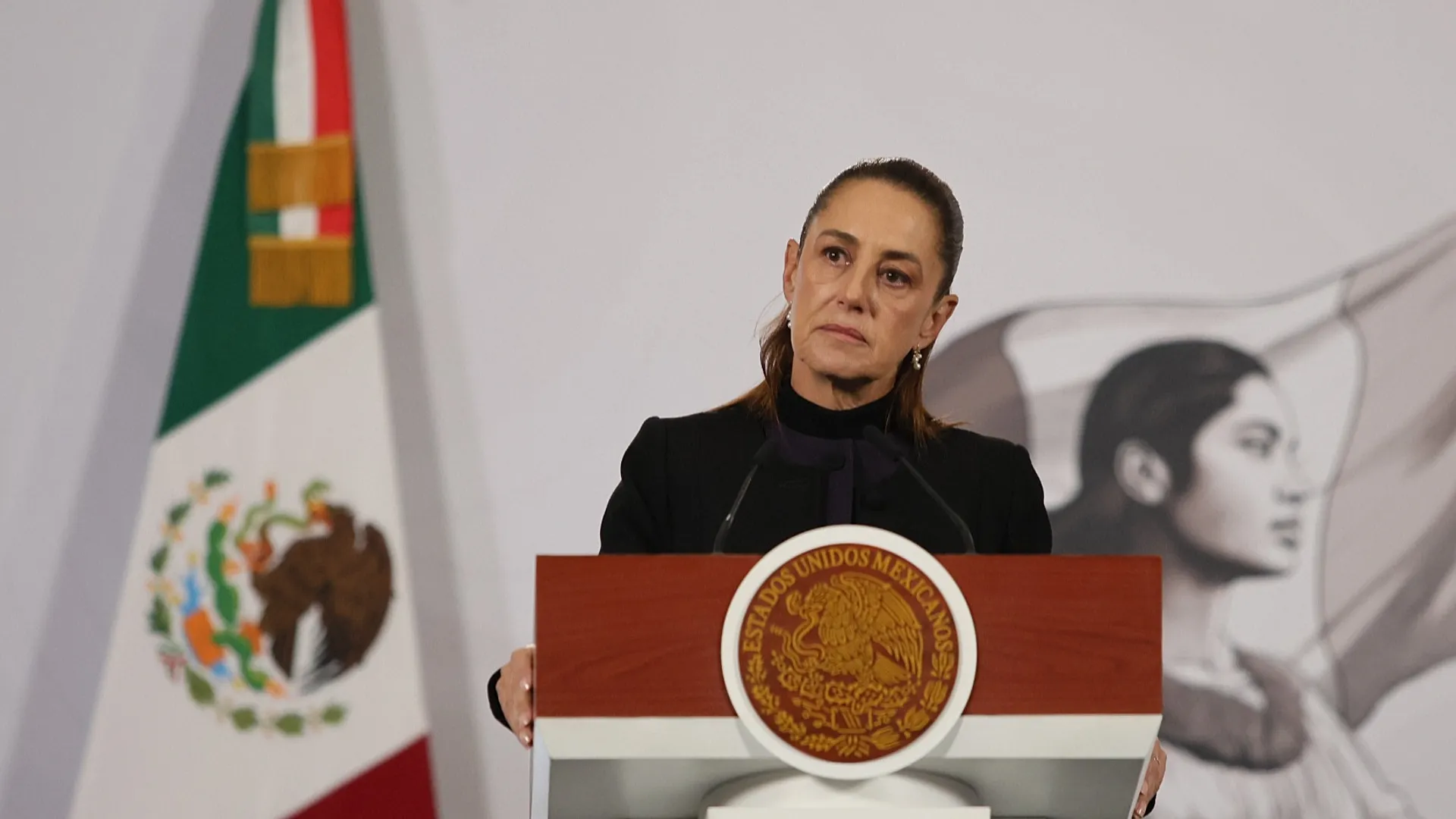
A map becomes a test of sovereignty.
Mexico City, March 2026
Claudia Sheinbaum has once again turned a symbolic provocation from Donald Trump into a political line of resistance. After Trump revived his push to call the Gulf of Mexico by another name, the Mexican president answered with a phrase designed for both state protocol and public memory: it is called the Gulf of Mexico. The dispute may look semantic on the surface, but in reality it touches a deeper nerve. Names on maps are never just labels when power is trying to rewrite space itself.
What Sheinbaum appears to understand is that Trump’s gesture is not really about cartography. It is about narrative dominance, territorial imagination and the normalization of unilateral language from Washington. By publicly rejecting the term pushed by Trump, she is defending more than historical usage. She is defending Mexico’s right to resist symbolic annexation in an era when political influence often begins with linguistic imposition. In that sense, the clash is less about a body of water than about who gets to define reality in North America.
Her response also matters because it is calibrated to a wider pattern in the bilateral relationship. Since Trump returned to office, pressure on Mexico has not arrived through a single channel, but through tariffs, border demands, security rhetoric and recurring gestures of public humiliation dressed up as nationalism. The naming dispute fits perfectly into that pattern. It is theatrical enough to dominate headlines, but strategic enough to test how far Mexico will bend under symbolic pressure. Sheinbaum’s answer signals that not every challenge from Washington will be treated as a negotiable irritation.
There is also a domestic dimension that should not be ignored. By defending the name publicly and directly, Sheinbaum speaks not only to Trump, but to the Mexican public, which expects firmness when sovereignty is mocked from abroad. In moments like this, presidents do not merely clarify facts. They perform political posture in front of a national audience that reads tone as much as substance. Her intervention therefore helps reinforce an image of disciplined resistance, one that avoids theatrical excess while still projecting control. That balance is valuable in a country where memory, dignity and foreign pressure often collide in the same symbolic arena.
The deeper issue is that Trump’s politics thrive on transforming symbols into instruments of leverage. A renamed gulf, a reworded map or a deliberately provocative phrase can function as trial balloons for broader hierarchies of power. That is why Sheinbaum’s response carries more weight than its brevity suggests. Mexico City is refusing to let spectacle quietly become precedent. And in a relationship as asymmetrical as the one between Mexico and the United States, stopping a symbolic encroachment early can be as important as resisting a material one later.
Phoenix24: journalism without borders. / Phoenix24: periodismo sin fronteras.