

 Phoenix 24
When a war stops relying on precision and moves toward overwhelming volume, the goal is no longer to win a battle, but to collapse the will to endure.
Kiev, November 2025
The alarms began before midnight and never stopped. Residents reported hearing a continuous mechanical vibration in the sky, a sound that grows until it erases every other thought. According to Ukrainian president Volodymyr Zelensky, Russia launched more than four hundred fifty drones together with forty five missiles of different ranges during one coordinated strike. Ukraine’s Air Force stated that it intercepted over four hundred of those unmanned aircraft. Numbers tell only part of the story. The tactic was not about accuracy. The objective was to saturate. A swarm of cheap drones forces every defense unit to react, fires expensive ammunition, consumes precious time and creates confusion while missiles travel silently in the background toward critical infrastructure.
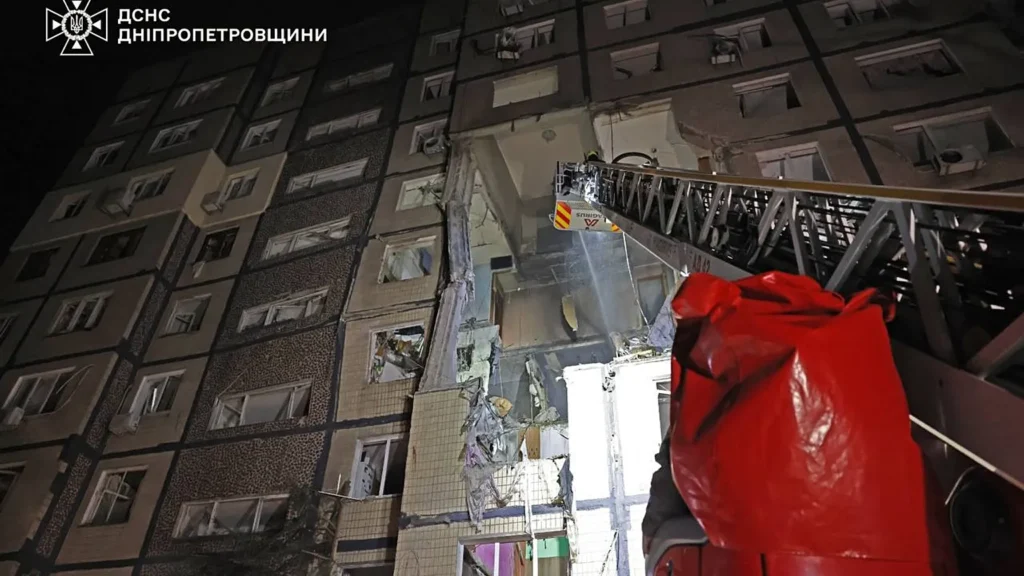
The attack hit multiple regions and was aimed at the backbone of Ukraine’s winter survival. Several power facilities were struck, and emergency teams confirmed that substations feeding residential zones and heating systems were taken offline. In Dnipro, one of the drones hit a residential building. People did not expect the strike there. Trapped residents tried to escape through stairwells filled with dust and smoke. Local authorities reported casualties and dozens of injuries. By sunrise, parts of the city had no electricity, no heating and no water. In other regions engineers worked through the night to manually reroute the grid and prevent a chain collapse of the energy network.
Ukrainian officials argue that this is not just another episode of the war, but a new stage. The Ministry of Energy stated that Russia no longer attempts selective attacks on military assets. Instead, it seeks to dismantle everything that keeps the population functional. The aim is cumulative exhaustion. When houses freeze, hospitals struggle, schools close, morale drops. The battlefield extends to the kitchen, the elevator, the public bus, the heating valve. When infrastructure falls, society becomes fragmented and every day becomes a negotiation with basic survival.
European defense analysts have warned for months that this pattern represents a doctrinal shift. Research centers that follow military innovation, including institutes in Brussels and Stockholm, describe it as infrastructure warfare. If you cannot break the army, you break the conditions that allow the army to exist. European officials privately admit that this strike will accelerate the creation of a continental air defense shield. The debate has already shifted from donating single systems to designing shared aerial defense corridors. In capitals across the European Union, the focus is no longer only on helping Ukraine resist, but on protecting the continent from a future version of the same tactic.
Across the Atlantic, analysts at major US security think tanks describe the Russian attack as a glimpse into the next generation of warfare. Saturation drones change the logic of cost. Ukraine must use expensive missiles or sophisticated jamming to stop devices that cost comparatively little. Russia spends less to force Ukraine to spend more. A war of attrition becomes a war of financial asymmetry. The Pentagon has noted that defending infrastructure is becoming as important as defending territory. If hospitals lose power, the front line shifts, because internal displacement grows and political pressure increases. War extends into the economy and into elections.
In Asia, military researchers studying conflict in the Pacific region follow the Ukrainian case closely. Countries in the region view the use of drone saturation as a living test case. According to analysts in Tokyo and Seoul, a mass drone attack forces defenders to reveal radar frequencies, consume valuable interceptors and expose the gaps in layered defense. Every reaction becomes data. The lesson is that a swarm of cheap drones can neutralize highly advanced defense systems not by defeating them, but by exhausting them.
Russia maintains that the strike focused on military and energy facilities. The consequences contradict that narrative. Residential districts were hit. Families slept in winter coats. Elderly people were trapped on upper floors. The line separating military targets from the civilian grid vanished. Ukraine responded with urgency. Zelensky requested accelerated deliveries of modern air defense systems. Ukrainian diplomats argue that every strike against energy infrastructure must trigger economic pressure on the Russian energy sector. In their view, if Russia attacks with drones, the answer cannot be words but cost. A cost that Moscow feels.
The real question emerging from this night is not whether Ukraine can shoot down four hundred drones. It already proved it can. The question is how many times Ukraine can repeat that effort while still keeping cities warm, hospitals powered and transportation networks running. Sustainability becomes the battlefield. If electricity collapses for days, if people live without water, if the grid remains exposed, the war enters a psychological phase. When a population fears the next night more than the next announcement, the aggressor believes it has gained an advantage.
Ukrainians, however, continue to operate with a logic that Russia has underestimated. Communities improvised shelters, volunteers transported fuel to hospitals, and students set up charging stations for neighbors. While systems fail, human networks appear. Resistance becomes a civilian infrastructure of its own.
Narrative is power too.
Narrative is power too.