

 Mario López Ayala, PhD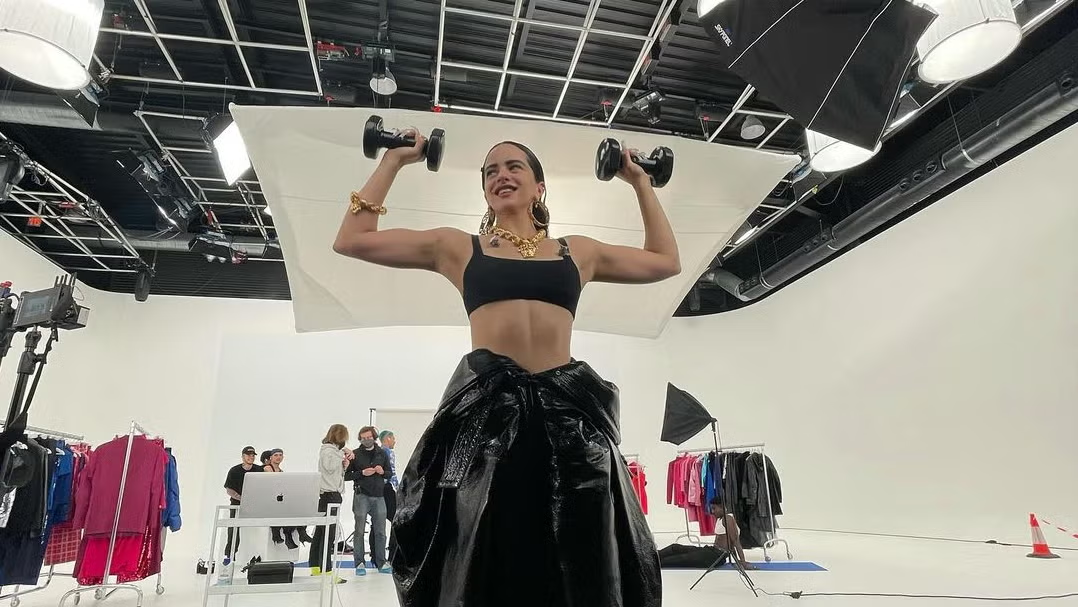
When rhythm met iron, the stage gained a new dimension.
Barcelona, Spain
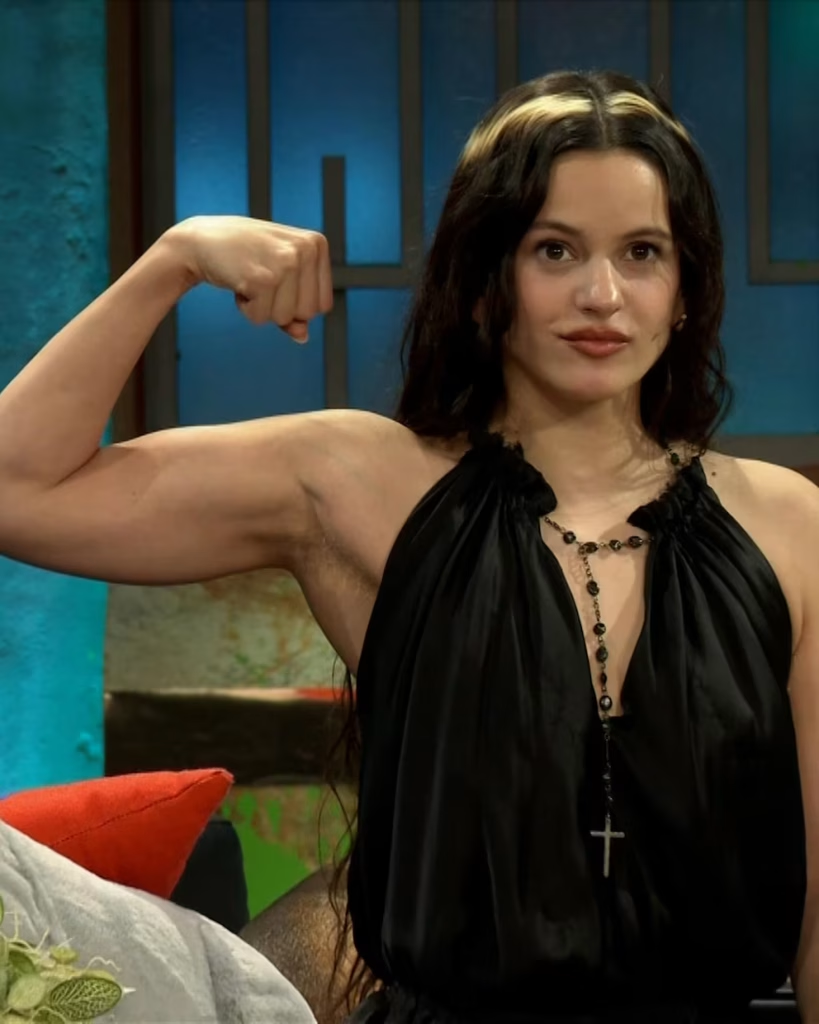
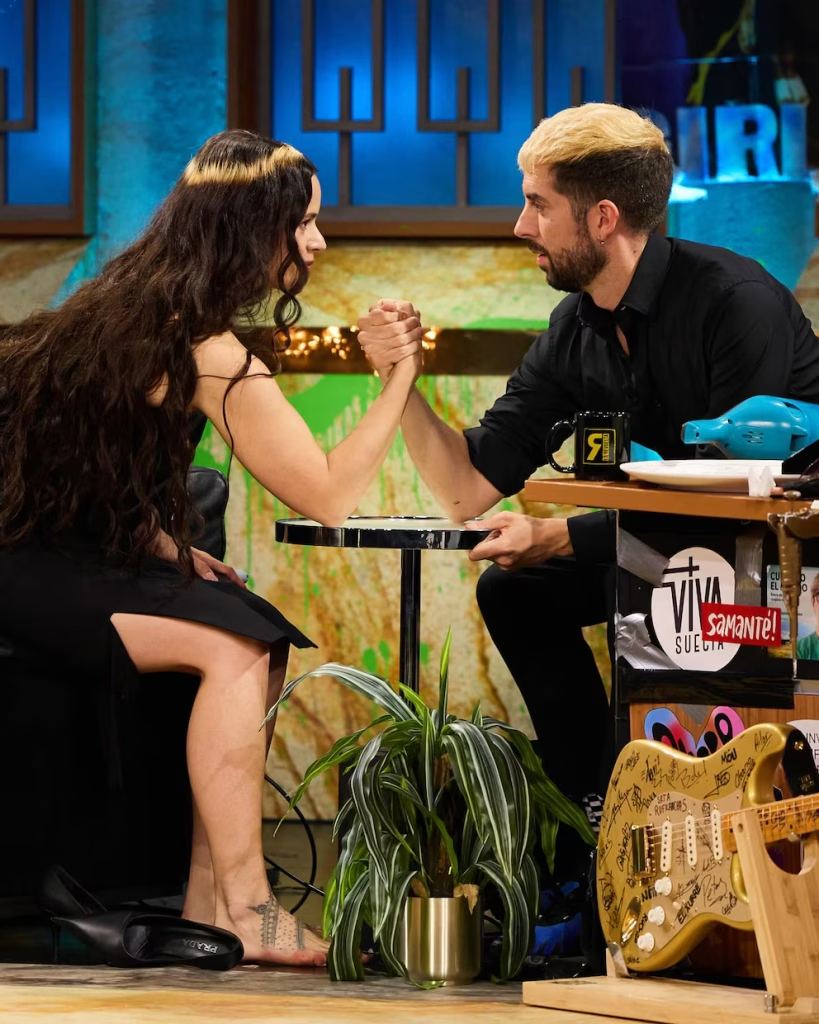
In the glare of camera flashes and the roar of streaming charts, one image stands out: Rosalía, the Spanish singer-songwriter whose voice has become an international phenomenon, flexing her biceps on television and revealing a transformation that transcends music. It wasn’t just the rhythm, the voice or the choreography anymore—it was the physique. The defining moment came on the talk show “La Revuelta,” where Rosalía accepted a pulse challenge from host David Broncano, delivered a decisive win, and set social media alight. From that moment, “the change” became real.
Her journey began quietly, behind rhythms and rehearsals, years of movement and motion. But in the past three years she embraced a structured training regimen: functional exercises, weights, resistance circuits and high-intensity intervals, all tailored not for volume, but for strength, athleticism and stage endurance. Her routine emphasises compound lifts — dumbbell military presses, rows, dips, curls — with a focus on controlled technique rather than bar-bell bravado. Twice a week she targets her upper body, interspersed with HIIT and boxing for agility, then regenerates for 48-72 hours before the next session.
Dance remains the foundation. For Rosalía, each live performance, each rehearsal is a cardiovascular, muscular and coordination challenge. Isolated sessions with weights complement the demands of flamenco influences, pop energy and visual spectacle. Off-the-stage she follows a disciplined nutrition plan centred on lean fish, mindful recovery and minimal nightlife—choices motivated by her vocal health, physical integrity and professional longevity.
The significance extends far beyond aesthetics. In an industry where image often speaks louder than sound, Rosalía crafts a narrative of resilience and agency. She doesn’t present her transformation with vanity. She frames it as preparation for the exhaustive world of global touring, demanding choreography, live vocals and constant reinvention. Her body becomes both instrument and message: strength, precision and authenticity replacing mere glamor.
Social-media responses were instantaneous. Fans coined monikers like «Grosalía» and dubbed her “the woman supreme.” The internet fragmented into admiration and curiosity: How did she achieve it? What is the routine? But for Rosalía the answer remains: discipline and function. She went public stating, «I have been going to the gym for three years and now the muscles are starting to show.» She emphasises she is not after sensational bulk—her goal is energy, endurance, stamina.
Within her industry sphere, observers note this shift as emblematic of larger trends: women in pop reclaiming strength, rejecting passive female imagery and embracing physical agency. For a star whose cultural significance spans Spain, Latin America and beyond, this move solidifies her brand not only as a singer but as a powerhouse performer. Her critics may label it marketing, yet her muscles argue otherwise: they are built for action.
The message reverberates for audiences too. In a world saturated with images of instant transformation and filtered perfection, Rosalía projects a more grounded model: three years of consistent work, quiet commitment, visible results. She blends music and motion, performance and preparation. Her transformation invites conversation about body, identity and what it means to inhabit a pop-icon role in the 21st century.
As she steps into the spotlight for her current album rollout and global tour, the musculature is only the beginning. The real story is momentum. She isn’t satisfied with the stage she has reached—her ambition repurposes every rehearsal, every set, every dumbbell as part of a broader aesthetic and cultural claim. She makes clear that the craft of the performer now incorporates strength training, biomechanics and endurance.
In the end, the transformation isn’t just visible—it is functional. It speaks of a performer who acknowledges her voice and her body as instruments to be honed, prepared and delivered. It reminds us that artistry and athleticism frequently collide, especially in contemporary pop. And perhaps most importantly, it offers an example of how one artist rewrote her own narrative by recalibrating rhythm into strength.
Behind every fact, there is an intention. Behind every silence, a structure.