

 Phoenix 24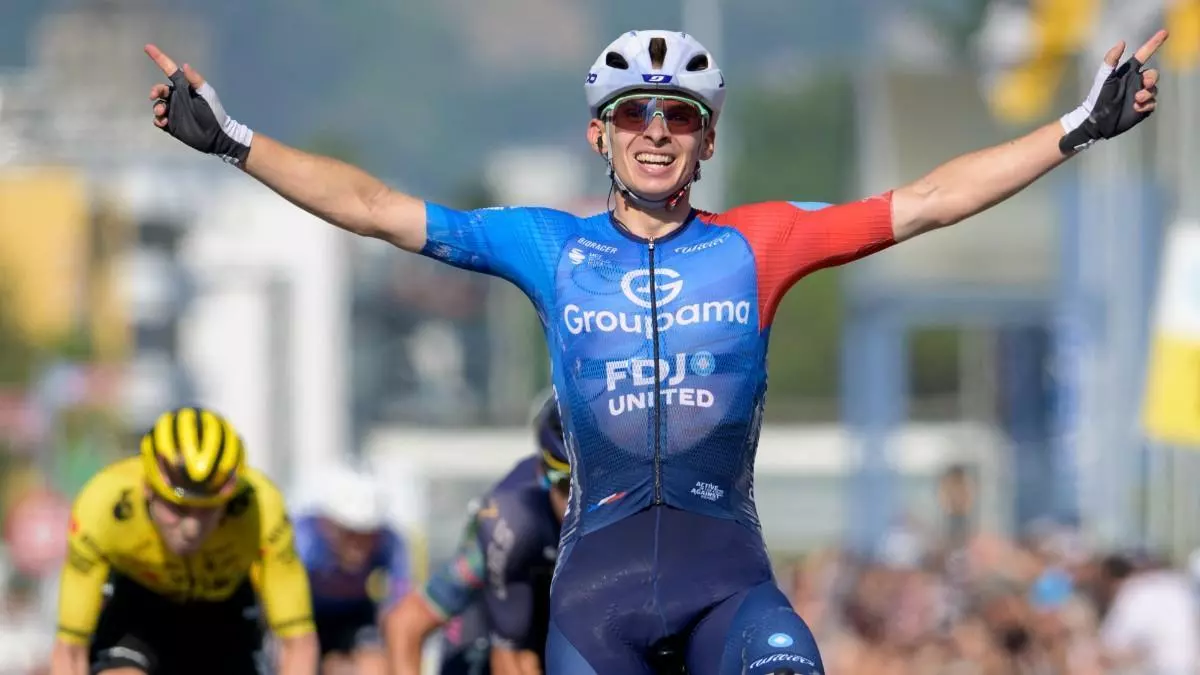
The breakaway held by the narrowest possible margin.
LOCARNO, Switzerland | June 2026
Romain Grégoire claimed a dramatic victory in the second stage of the 2026 Tour de Suisse after surviving a furious late chase led by Tadej Pogacar. The French rider reached the finish in Locarno at the front of a reduced breakaway group and defeated Spain’s Marcel Camprubí in the final sprint. Pogacar crossed the line only four seconds later after dismantling the main group on the final climb. The result delivered Grégoire one of the most intense victories of his career while allowing the world champion to strengthen his overall lead.
The 157.7-kilometer stage started and finished in Locarno and appeared relatively manageable on paper before a pair of short climbs transformed the finale. A large group of 14 riders escaped after approximately 30 kilometers and built enough of an advantage to keep the race open deep into the closing section. Grégoire joined the move alongside experienced competitors such as Julian Alaphilippe, Bauke Mollema and Fred Wright. The composition of the break ensured that the peloton could never treat it as a harmless early attack.
UAE Team Emirates controlled much of the stage without immediately committing all its resources to the chase. The team’s priority was protecting Pogacar’s yellow jersey while maintaining options for the explosive final kilometers. As the gap began to fall, the breakaway fragmented under the pressure of the climbs and the increasing pace behind. The remaining leaders understood that even a few seconds of hesitation could allow Pogacar to erase their advantage.
The decisive move came on the final ascent, around ten kilometers from the finish, when Pogacar accelerated and separated himself from most of his general classification rivals. Only Mathias Vacek was able to follow the Slovenian’s pace for a meaningful period. The pair rapidly reduced the gap to the riders ahead and appeared capable of completing the catch before the line. Their advance turned the closing kilometers into a direct contest between the exhausted survivors of the break and the strongest rider in the race.
Grégoire later admitted that the escapees had almost no capacity left to respond. They were already riding at maximum effort and could not produce another acceleration when Pogacar began closing from behind. Their only strategy was to maintain the highest possible speed and hope the finish arrived before the chase. The tension intensified with every turn as the margin fell from a visible advantage to only a few seconds.
Seven riders from the original break reached the final section together, but the group lacked the freedom to engage in prolonged tactical maneuvering. Any pause would have opened the door for Pogacar and Vacek, whose presence could already be felt behind them. Grégoire positioned himself near the front and entered the final bend prepared to launch early. His decision denied his rivals the opportunity to surprise him and prevented the chasing group from making contact.
The Frenchman accelerated powerfully and held his speed to the line, beating Camprubí and Dutch rider Bart Lemmen. The victory was particularly painful for Camprubí, who came close to securing the first professional win of his career. Grégoire’s experience and finishing speed ultimately made the difference after a demanding day in the breakaway. Pogacar finished eighth, just four seconds behind the stage winner, after recognizing in the final meters that the escape would survive.
The triumph marked Grégoire’s second stage victory at the Tour de Suisse, reinforcing his strong connection with the race. He had already demonstrated in previous seasons that the event’s rolling terrain and selective finales suit his combination of endurance, climbing ability and sprint speed. At 23, he continues developing into one of France’s most versatile riders for hilly one-day races and demanding stage finishes. The victory also confirmed his ability to remain composed when one of cycling’s most dominant figures was closing rapidly behind him.
Pogacar did not win the stage, but the day still strengthened his position in the general classification. His late attack created a significant gap over several direct rivals and extended his advantage over Richard Carapaz to two minutes and 50 seconds. Andrea Bagioli remained third overall at three minutes and seven seconds, while Vacek moved into fourth place after following the Slovenian’s acceleration. The stage therefore produced two distinct winners: Grégoire took the celebration, while Pogacar increased his control of the race.
The performance also demonstrated how Pogacar can reshape a stage even when victory appears destined for a breakaway. His acceleration forced the leaders to abandon tactical games and transformed their final kilometers into a survival exercise. Riders who might normally have attacked one another instead had to cooperate because the greater danger was approaching from behind. Grégoire’s success depended not only on his sprint, but also on resisting the psychological pressure created by Pogacar’s pursuit.
For Groupama-FDJ United, the victory represented a major result against some of the strongest teams in the WorldTour. Grégoire entered the break, survived the difficult climbs and completed the job under extreme pressure. His success offered the French team both sporting value and a visible confirmation of its investment in younger riders. It also gave Grégoire momentum during a period of the season when many competitors are testing form before the Tour de France.
The second stage ultimately became a contest between collective resistance and individual power. The breakaway spent most of the day building its opportunity, only to see Pogacar threaten to erase everything in the final minutes. Grégoire responded with patience, positioning and a decisive sprint when there was no energy left for another attack. His margin was only four seconds, but it was enough to turn a near collapse into a memorable victory.
Resistencia narrativa global. / Global narrative resilience.