

 Phoenix 24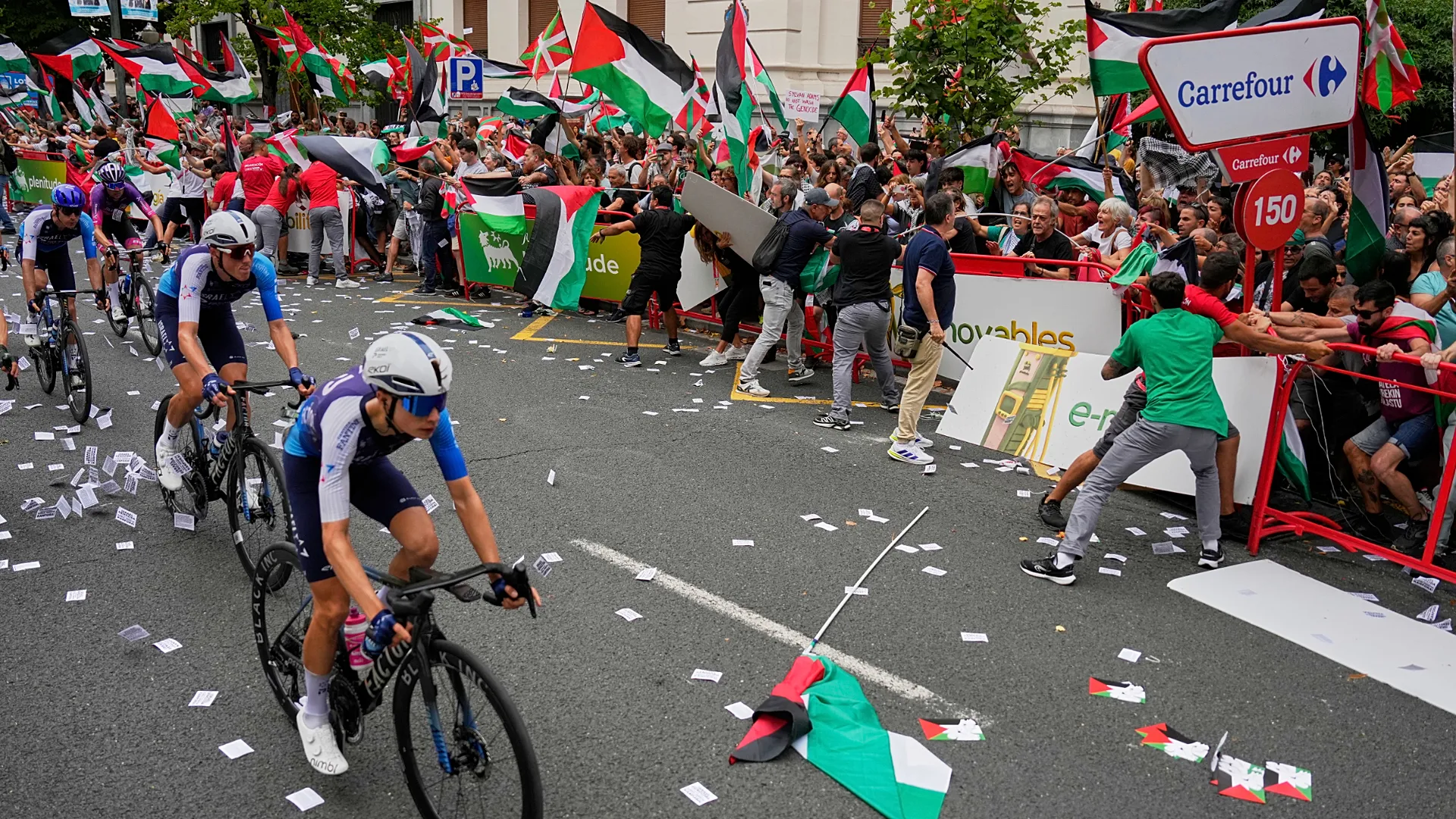
The decision to erase its national identity from competition reveals how geopolitics now infiltrates even the most unexpected corners of professional sport.
Paris, October 2025
Cycling, once a realm seemingly insulated from the world’s most combustible conflicts, has become the latest symbolic battlefield of the Israeli-Palestinian struggle. Israel–Premier Tech, one of the top teams in the WorldTour, has decided to remove all references to its Israeli identity from international competitions following a wave of global protests accusing it of being part of the Israeli government’s “sportswashing” strategy. The move, which includes redesigning team uniforms, deleting the country’s name from social media accounts, and replacing the national emblem with neutral symbols, marks one of the most visible capitulations of professional sport to transnational public pressure.
According to reports from AFP and Le Monde, the decision was made after a series of demonstrations in Western Europe forced the cancellation of promotional events in Paris, Brussels, and Copenhagen. At each of these appearances, pro-Palestinian solidarity groups disrupted press conferences, blocked public presentations, and unfurled banners accusing the team of whitewashing the Gaza blockade and Israel’s military operations in the West Bank. What began as scattered protests soon evolved into a coordinated campaign supported by human rights organizations and influential civil society networks across Europe and the Middle East.
Pressure intensified after Human Rights Watch released a report describing the team as “an instrument of soft power designed to normalize Israel’s global image amid escalating human rights violations.” The report, echoed by multiple European lawmakers, called for sponsors to reconsider their financial backing. At least two major corporate partners, a French renewable energy company and a Canadian technology firm, reportedly threatened to withdraw funding unless the team distanced itself from official state symbolism.
The rebranding reflects a broader pattern: the collision between state diplomacy and the global sports industry. Analysts at the Peterson Institute argue that the case illustrates how public opinion, amplified by digital mobilization and cross-border advocacy, can undermine even the most carefully crafted soft power strategies. The cycling team’s transformation is not just cosmetic; it signals a recalibration of the relationship between sport, politics, and image management in an era where neutrality is increasingly impossible.
From Jerusalem, Israel’s Ministry of Culture and Sports criticized the decision, calling it “a regrettable concession to extremist narratives.” Government spokespeople warned that capitulating to public pressure “sets a dangerous precedent” and could embolden future campaigns targeting Israeli athletes or cultural institutions. Yet, behind closed doors, several Israeli officials admitted to Haaretz that the move reflects a shifting reality: global sports platforms can no longer be controlled solely through state narratives.
The impact has been felt within the peloton as well. Several riders, speaking anonymously to Cycling Weekly, described an atmosphere of discomfort during races, with some fans booing the team at European tours and others displaying Palestinian flags along the routes. In some cases, rival teams reportedly considered boycotting joint promotional events unless Israel–Premier Tech took visible steps to depoliticize its image.
For Palestinian advocacy groups, the rebrand is being hailed as a symbolic victory. “It proves that civil pressure works,” said a spokesperson for the Boycott, Divestment, Sanctions (BDS) movement. “When governments fail to hold Israel accountable, ordinary people and public opinion become the most powerful tools of resistance.” Meanwhile, sports governance bodies like the Union Cycliste Internationale (UCI) have refrained from commenting directly, though internal discussions suggest growing concern about the politicization of sponsorships and branding in the sport.
The saga underscores a deeper truth: in today’s hyperconnected world, no arena, not even the seemingly apolitical domain of professional cycling, remains immune to geopolitical turbulence. For Israel–Premier Tech, erasing its flag may provide temporary relief from controversy, but it also raises profound questions about the future of national identity in global sport. Will other teams representing states involved in contentious conflicts face similar pressure? And if so, where does the line between competition and diplomacy truly lie?
Beyond the news, the pattern. / Más allá de la noticia, el patrón.