

 Phoenix 24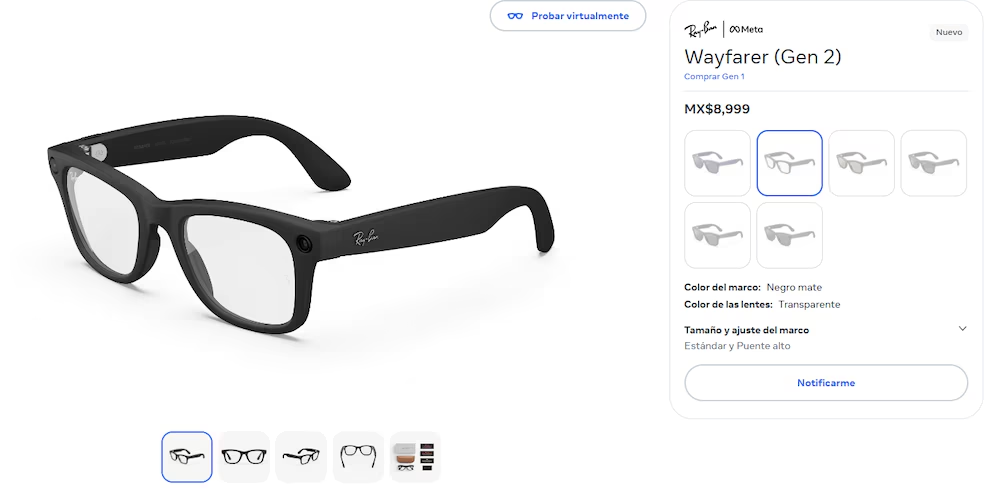
Consumer electronic ecosystems are advancing out of flagship markets and into broader regional participation, signaling both opportunity and strategic alignment challenges for hardware accessibility.
Mexico City, December 2025.
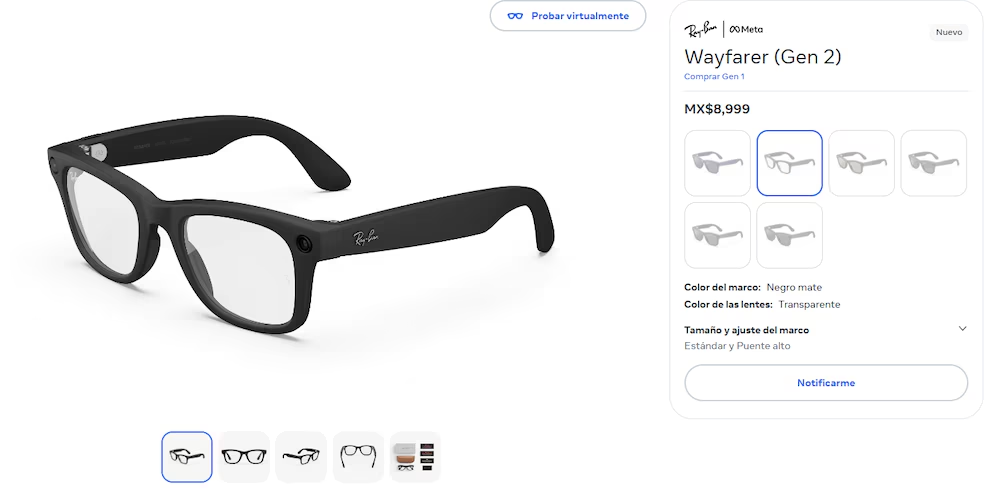
Meta’s latest eyewear collaboration with Ray-Ban, the Gen 2 smart glasses, has begun commercial distribution in select Latin American countries, marking one of the first widespread efforts to extend augmented hardware beyond North American and European early adopter markets. The rollout illustrates an emerging pattern in wearable technology: manufacturers are increasingly recognizing that premium smart devices cannot remain confined to a narrow set of high-income economies if they intend to achieve meaningful scale and cultural integration in the longer term. Availability in Latin America — with pricing stratified according to local taxation, currency valuations and distribution agreements — reflects both the promise and the structural challenges of expanding next-generation consumer tech into markets that are economically diverse and regulatory heterogeneous.

The introduction of Ray-Ban Meta Gen 2 in these markets aligns with a strategic calculus shaped by several converging factors. First, the presence of a growing digital middle class with disposable income capable of absorbing premium hardware creates an untapped consumer base. Second, the proliferation of advanced mobile networks and compatible smartphone ecosystems enhances the functional value proposition of wearable devices that rely on seamless connectivity. Third, competitive pressure from rival manufacturers obligated to globalize hardware offerings has reinforced the calculus that postponing regional availability risks ceding influence in consumer perception and loyalty. Despite these positive incentives, the pricing structure and distribution logistics reveal the complexity of serving Latin American markets with flagship wearable products.
In Mexico and Brazil, where Ray-Ban Meta Gen 2 first entered the regional distribution chain, local prices reflect not only the base cost of the device but also additional levies tied to import tariffs and value-added tax regimes. Consequently, the retail figures in these countries often diverge markedly from the baseline prices advertised in the United States or Europe, prompting discussions about affordability relative to average income levels. The integration of these devices into mainstream tech consumption thus competes with other priorities in household budgets, even among digitally engaged consumers. Understanding this pricing dynamic is essential for both market strategists and potential buyers, as it underscores the trade-off between global hardware aspiration and local purchasing power.

The availability pattern in Latin America also highlights regulatory and ecosystem prerequisites that influence rollout decisions. Certain countries require certification of wireless communication bands or compliance with privacy and data-handling frameworks unique to the region, factors that can delay or complicate a synchronized launch. For multinational brands, reconciling these diverse regulatory environments with a unified product strategy demands coordination that often extends beyond simple logistics. It also raises questions about equitable access to new technologies and whether global tech ecosystems can realistically adapt to decentralized governance structures without fragmenting user experience.
From a consumer behavior perspective, the introduction of Ray-Ban Meta Gen 2 in Latin America arrives at a moment where wearables have already gained traction through smartwatches and fitness devices. These established categories have habituated users to wearing technology and interpreting real-time data cues in everyday contexts. Smart glasses, positioned as an evolution of this trend, contend with both functional expectations and cultural reception patterns. In some social spheres, wearables are viewed primarily as status signals, whereas in others they are framed in terms of utility or experimental novelty. The reception of Gen 2 devices in these markets will likely hinge on how effectively the product narrative bridges the utility and aspirational dimensions.
The coalition between Meta and Ray-Ban also exemplifies how cross-industry partnerships influence the market framing of hardware products. Brand heritage and contemporary technological identity intersect in ways that can either amplify or dilute consumer perception. In the case of smart glasses, the Ray-Ban legacy provides cultural cachet, while Meta’s technological platform governs the functional experience. How this alliance materializes in consumer sentiment will be a key indicator for future iterations of wearable eyewear, not only in Latin America but in analogous markets elsewhere.
Looking forward, the broader implications of introducing premium smart eyewear into diverse regional markets will be shaped by iterative learnings on pricing strategy, regulatory navigation, network capability, and cultural reception. If the trends observed with Ray-Ban Meta Gen 2 persist, they may inform how future generations of wearable devices are conceptualized, localized and supported across heterogeneous global markets.
Behind every datum, there is an intention. Behind every silence, there is a structure.
Detrás de cada dato, hay una intención. Detrás de cada silencio, hay una estructura.