

 Phoenix 24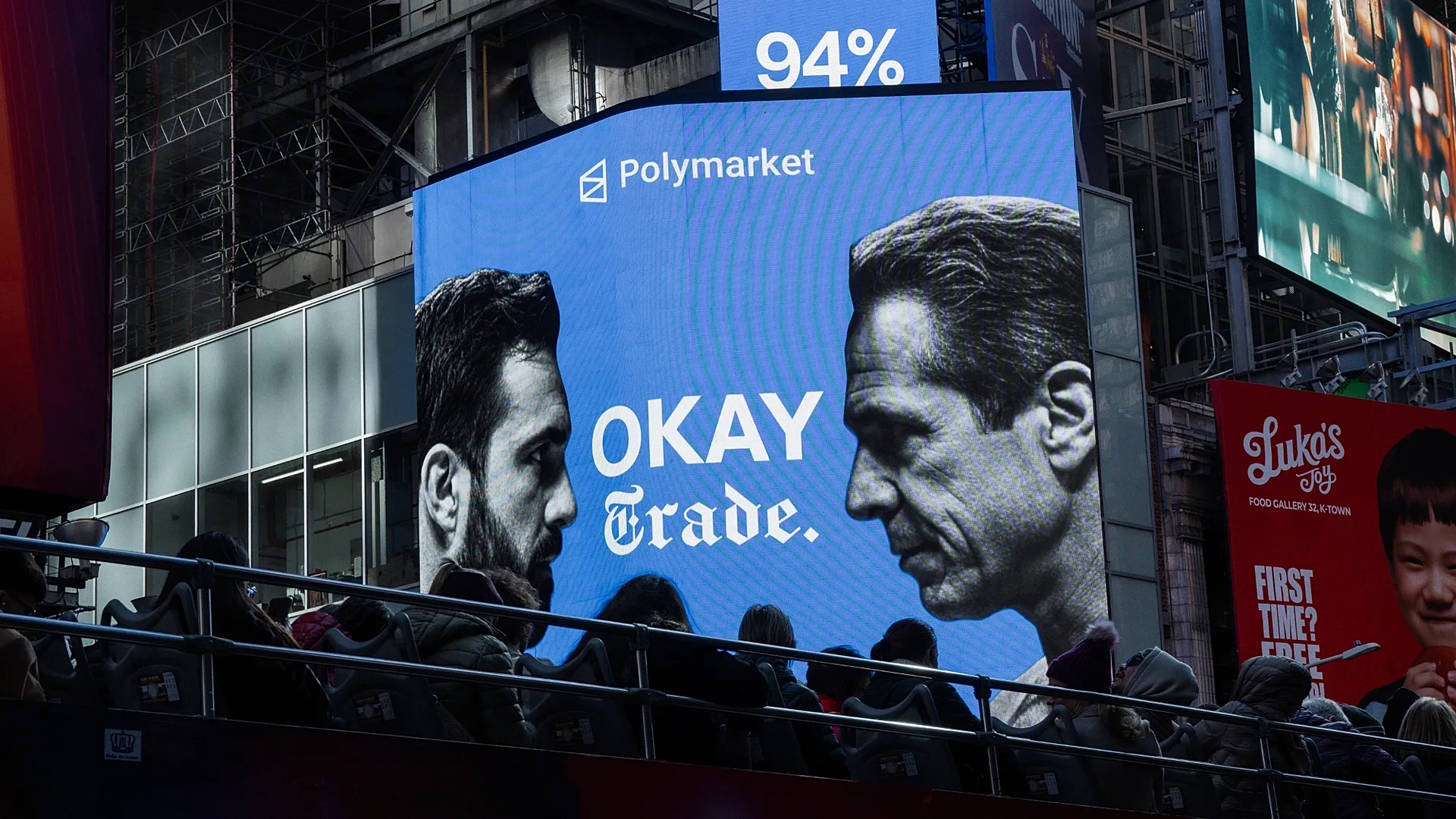
The market moved before the message did.
Washington, April 2026
The latest controversy around Polymarket is no longer just about speculative betting. It is about whether geopolitical information may have been monetized before becoming public. Several newly created accounts reportedly made highly profitable wagers on a United States–Iran ceasefire shortly before the announcement became official, raising a deeper question about the real nature of prediction markets in moments of international crisis. What looks like financial foresight may, under a harsher reading, resemble privileged positioning inside a volatile political event.
The significance of the case lies not only in the money won, but in the timing and concentration of the bets. When recently opened accounts place narrow, high-conviction wagers on a specific diplomatic outcome and then collect large profits within hours, the event stops looking like ordinary market intelligence. It begins to suggest that these platforms can become channels where asymmetrical information is converted into rapid gain. In a conflict environment shaped by secrecy, backchannel negotiation and military risk, that possibility is far more serious than a normal trading anomaly.
This is where the story becomes structurally dangerous. Prediction markets are often defended as efficient aggregators of public information, capable of identifying probabilities faster than traditional media or state institutions. But that defense weakens when suspiciously timed participation appears around war, ceasefires or state decisions. A market designed to anticipate public outcomes can easily become a market that rewards those who are simply closer to nonpublic signals. Once that perception takes hold, the platform no longer looks like a tool of collective forecasting. It starts to resemble an extraction mechanism for informational advantage.
The broader context matters. In recent years, event-based crypto markets have expanded beyond elections and economic releases into military strikes, diplomatic escalations, assassinations, regime instability and ceasefire scenarios. That evolution has transformed them into something more than experimental finance. They now sit at the intersection of speculation, political intelligence and public anxiety. In such an environment, every suspicious trade carries more than reputational risk. It raises the possibility that war and diplomacy are being shadow-priced by actors who may know more than the public is supposed to know.
There is also a legitimacy problem embedded in the architecture itself. These markets often rely on anonymous or pseudonymous accounts, fragmented oversight and settlement systems that struggle to interpret messy real-world outcomes. A ceasefire may be announced, partially violated, reinterpreted or politically disputed within hours, yet the market still has to resolve in binary form. That means the system is vulnerable on two fronts at once: it can reward suspicious timing, and it can simplify reality in ways that benefit aggressive positioning. This is not just a technical flaw. It is a credibility fracture.
For regulators and policymakers, the real issue is no longer whether prediction markets are innovative. The issue is whether they are becoming informal casinos for geopolitical leakage. If anonymous participants can repeatedly profit from events whose timing appears improbably precise, then the market risks normalizing a model in which access beats analysis and opacity beats accountability. In that scenario, the scandal is not simply that someone won big on a ceasefire. The scandal is that the financial infrastructure may already be prepared to reward those who know before the world does.
Detrás de cada dato, hay una intención. Detrás de cada silencio, una estructura.
Behind every datum, there is an intention. Behind every silence, a structure.