

 Phoenix 24
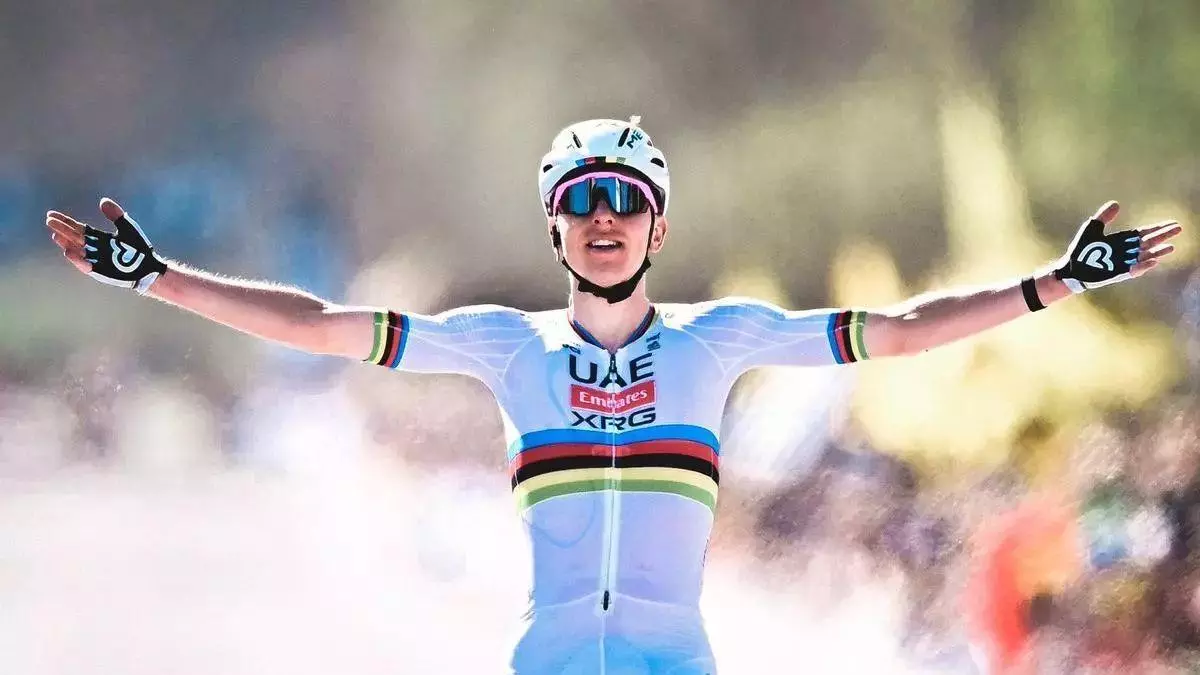
Great races begin when dominance meets resistance.
Oudenaarde, April 2026
Tadej Pogačar reaches the Tour of Flanders as the rider around whom the entire race is now being organized. That status is not built on aura alone, but on the way modern cobbled racing has been forced to adapt to his aggression, his climbing violence and his ability to turn selective terrain into a battlefield much earlier than many rivals would prefer. Flanders no longer waits politely for its final hour when Pogačar is on the start list. The race bends sooner, stretches harder and becomes more unforgiving because he is there.
That is why being labeled the favorite matters here in a deeper way. In a Monument like Flanders, favoritism is never only about recent form or public expectation. It is about who can impose the script of the race on everyone else. Pogačar has increasingly become that figure, the rider who can attack on the Oude Kwaremont or elsewhere with enough force to make tactical patience feel like surrender. Once a rider creates that kind of pressure, he is no longer simply competing for victory. He is dictating the emotional and physical rhythm of the event.
The challenge, of course, is that Flanders remains one of the few races capable of resisting even the strongest favorite through sheer complexity. Cobbled sectors, repeated climbs, weather, positioning and accumulated fatigue still produce a race where control is fragile and the strongest rider is not always the only plausible winner. That is where figures like Mathieu van der Poel and Wout van Aert remain central to the story. They represent not just opposition, but alternative logics of victory, different ways of surviving chaos long enough to turn the Monument back into a contest rather than a coronation.
What makes this edition especially compelling is that Pogačar arrives under the burden of a new cycling reality. His dominance is becoming so visible that every major race now risks being interpreted through the same question: who can stop him before the race becomes a demonstration rather than a drama. That is both a compliment and a complication. Great champions elevate events, but they also threaten to reduce uncertainty if the field cannot generate a credible collective answer.
There is also a cultural layer to why Flanders matters so much for him. Winning here is not like winning a stage race summit finish or another one day event on pure watts and climbing talent alone. It requires submission to a particular tradition of discomfort, positioning and repeated violent effort over rough terrain that punishes vanity as quickly as weakness. Every time Pogačar masters that landscape, he strengthens the idea that his range is no longer exceptional by contemporary standards alone, but historically disruptive.
So the race begins with a paradox. Pogačar is the favorite because he has made himself the rider most capable of breaking Flanders apart. Yet Flanders is still the kind of race that can expose the limits of any favorite by forcing them to spend too much, reveal too much or trust the wrong moment. That is why the dream scenario for him is never simply to arrive strong. It is to arrive strong enough to make the race fear him, but not so exposed that the others can turn his ambition into their opening.
The deeper pattern is clear. Flanders is no longer just awaiting the strongest rider of the spring. It is testing whether the modern peloton still has enough collective resistance to keep greatness from becoming inevitability. Pogačar arrives as the favorite because he has earned that burden. The race will decide whether he also earns the right to make it look inevitable.
Beyond the news, the pattern. / Beyond the news, the pattern.