

 Phoenix 24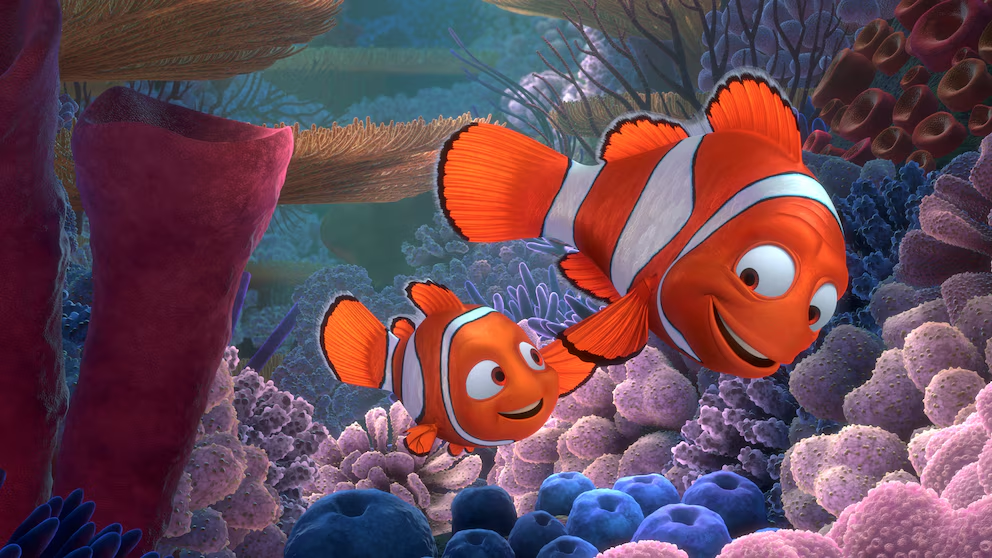
The forgetful blue tang returns in a romantic misunderstanding involving an object that should never have entered the ocean.
Annecy, June 2026
Pixar is returning to the underwater world of Finding Nemo with Loving Dory, a new animated short centered on the cheerful blue tang whose optimism and memory difficulties made her one of the studio’s most recognizable characters. The project was presented during the Annecy International Animation Film Festival, where footage revealed the unusual premise behind Dory’s latest adventure. Ellen DeGeneres will once again provide the character’s original English-language voice, marking her most significant return to the role in several years. No definitive theatrical or streaming release date has yet been announced.
The short follows Dory as she becomes emotionally attached to a floating plastic bag after mistaking it for a jellyfish. Her misunderstanding creates the comic foundation of the story, but it also introduces a potentially serious environmental element because marine animals regularly encounter human waste in the ocean. Pixar appears to be using Dory’s innocent perspective to transform pollution into a narrative that can be humorous, affectionate and quietly unsettling. The concept allows the studio to revisit a familiar character while addressing a problem that directly threatens the ecosystem in which the franchise takes place.
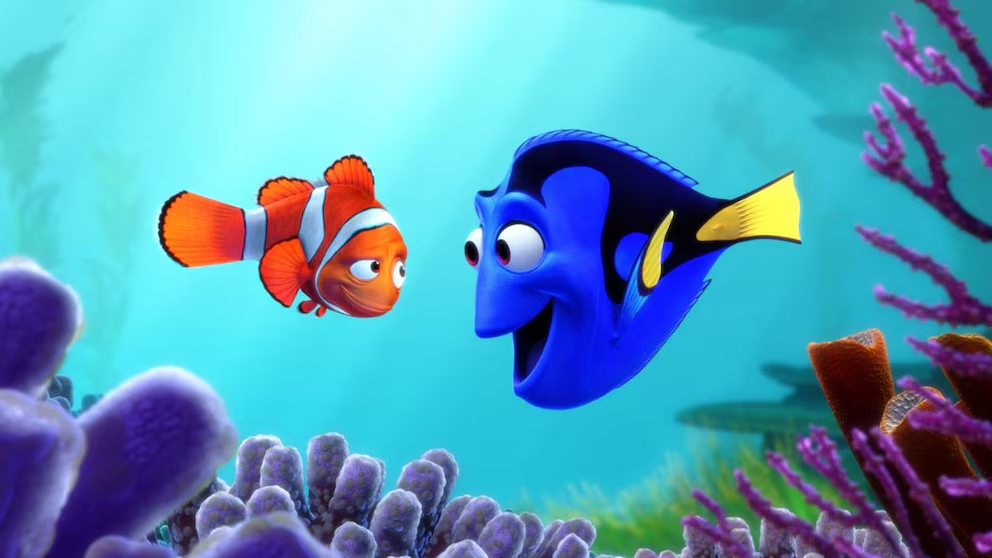
Director Lou Hamou-Lhadj has described the production as a new chapter that gives the creative team an opportunity to explore Dory through a playful situation. His previous work at Pixar includes Borrowed Time, the acclaimed independent short he co-directed with Andrew Coats while both filmmakers were working at the studio. That production demonstrated his interest in emotionally intense storytelling and visually expressive animation, although Loving Dory adopts a lighter and more comedic premise. The challenge will be preserving Dory’s warmth without reducing the environmental implications of the plastic bag to a disposable joke.
Dory first appeared in Finding Nemo in 2003 as the unexpected companion who helped Marlin cross the ocean in search of his missing son. Her short-term memory loss created repeated complications, but the character’s courage, loyalty and instinctive kindness prevented her from functioning only as comic relief. Ellen DeGeneres’ vocal performance gave Dory a distinctive combination of vulnerability and enthusiasm that quickly made her a defining element of the film. The character became so popular that Pixar eventually built an entire sequel around her past and her search for her family.
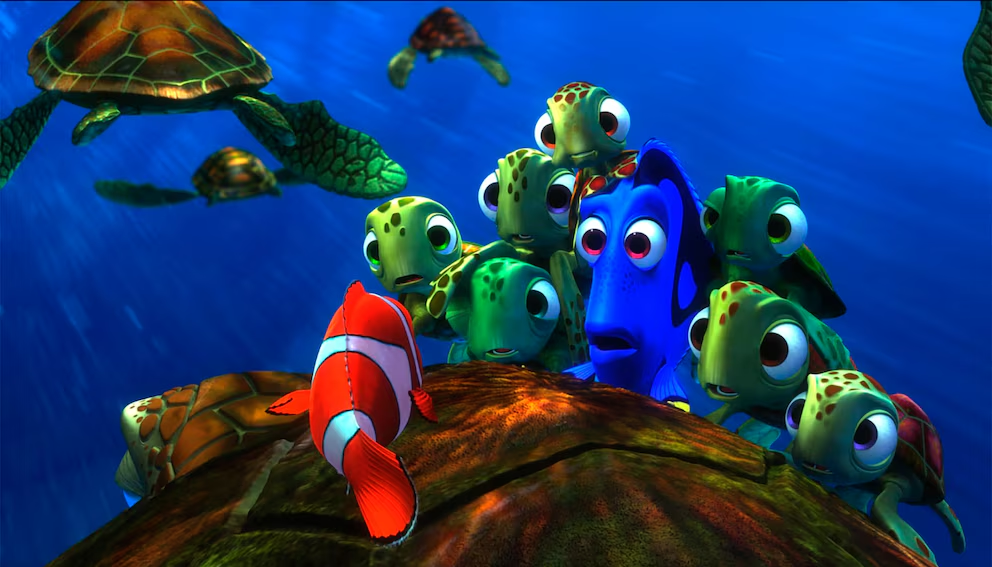
Finding Dory arrived in 2016 and expanded the emotional dimensions of a character previously defined primarily through Marlin’s journey. The sequel explored childhood separation, disability, memory and belonging while introducing Dory’s parents and the Marine Life Institute. It earned more than one billion dollars worldwide and confirmed that the franchise could remain commercially powerful without simply repeating the original search for Nemo. Loving Dory now brings the character back approximately a decade after that feature-length adventure.
The return of Ellen DeGeneres is notable because the comedian had publicly stepped away from much of the entertainment industry after ending her daytime television program and completing a later stand-up special. She confirmed her involvement in the new Pixar project after reports emerged that the short had entered production. Her decision suggests that Dory remains a personally significant role even as her broader public career has changed. The performance will also determine whether the character retains the familiar rhythm and emotional personality audiences remember from the two films.
The environmental premise gives the short a connection with concerns already present throughout the franchise. Finding Nemo depicted fish captured for aquariums, damaged habitats and the dangers created when humans treat marine life as decoration or property. Finding Dory expanded those themes through rescue, rehabilitation and the relationship between animals and institutional care. A plastic bag mistaken for a living creature shifts the focus toward pollution and the difficulty animals face when artificial waste enters their environment.
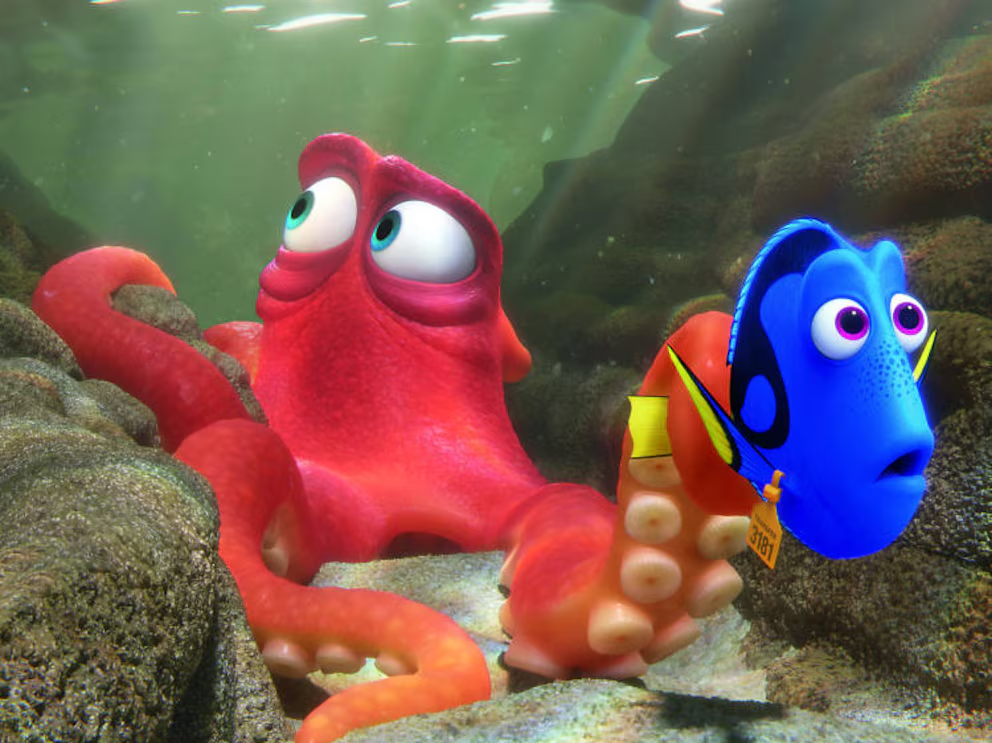
Plastic bags can resemble jellyfish as they move through water, creating a genuine hazard for turtles, fish and other marine species that may attempt to consume them. Pixar does not need to turn the short into an explicit educational campaign for that reality to shape the story’s meaning. Dory’s attraction to the object can initially appear charming while viewers understand that the relationship is built around something dangerous and unnatural. That contrast offers the filmmakers an opportunity to balance comedy with the kind of emotional recognition that frequently defines Pixar’s strongest short films.
The short-film format has long played an important role in Pixar’s creative identity. Productions such as Geri’s Game, For the Birds, Piper, Bao and Kitbull allowed artists to test visual techniques, direct for the first time or tell compact stories without the commercial demands of a feature. Some shorts have been presented before theatrical releases, while others have appeared through Disney+ or specialized studio programs. Pixar has not yet fully detailed how Loving Dory will reach audiences, leaving its eventual connection with another film or streaming release uncertain.
Returning to an established franchise through a short rather than immediately announcing a third feature gives Pixar several strategic advantages. The studio can measure audience enthusiasm, reintroduce the characters to younger viewers and experiment with a smaller narrative before committing to another large production. It can also extend the world of Finding Nemo without forcing a new crisis comparable to the disappearances that drove the previous films. A concise story about Dory’s confusion and affection may preserve the franchise’s emotional tone while avoiding unnecessary repetition.
The project arrives as Pixar continues balancing original productions with sequels and recognizable intellectual properties. Established characters provide commercial security in a competitive entertainment market, but excessive dependence on familiar franchises can create concerns about creative stagnation. A short offers a middle path because it revives a beloved world while leaving space in the feature schedule for new stories. Its success will depend less on spectacle than on whether the filmmakers find an emotionally satisfying idea within the apparently simple premise.
Loving Dory also has the potential to introduce a different form of affection from the family bonds and friendships previously explored in the franchise. Dory’s attachment to the plastic bag may function as an innocent romantic fantasy, a comic misunderstanding or a reflection of her tendency to form immediate emotional connections. The title suggests that love itself will become the story’s central subject, even though the object of that love cannot respond in the way she imagines. That imbalance could lead to a conclusion about perception, loss or learning to recognize what genuinely belongs in the natural world.
Pixar has revealed enough to establish the project’s identity but has withheld important information about its complete cast, duration and release strategy. It remains unclear how prominently Marlin, Nemo or other returning characters will appear and whether the story will connect directly with events from Finding Dory. Those unanswered questions allow the short to remain a contained surprise rather than being presented as a major franchise sequel. What is certain is that Dory will once again transform confusion into an adventure shaped by humor, affection and emotional resilience.
El océano puede devolvernos personajes queridos, pero también refleja todo aquello que la humanidad deja atrás. / The ocean can return beloved characters, but it also reflects everything humanity leaves behind.