

 Aigerim Beketova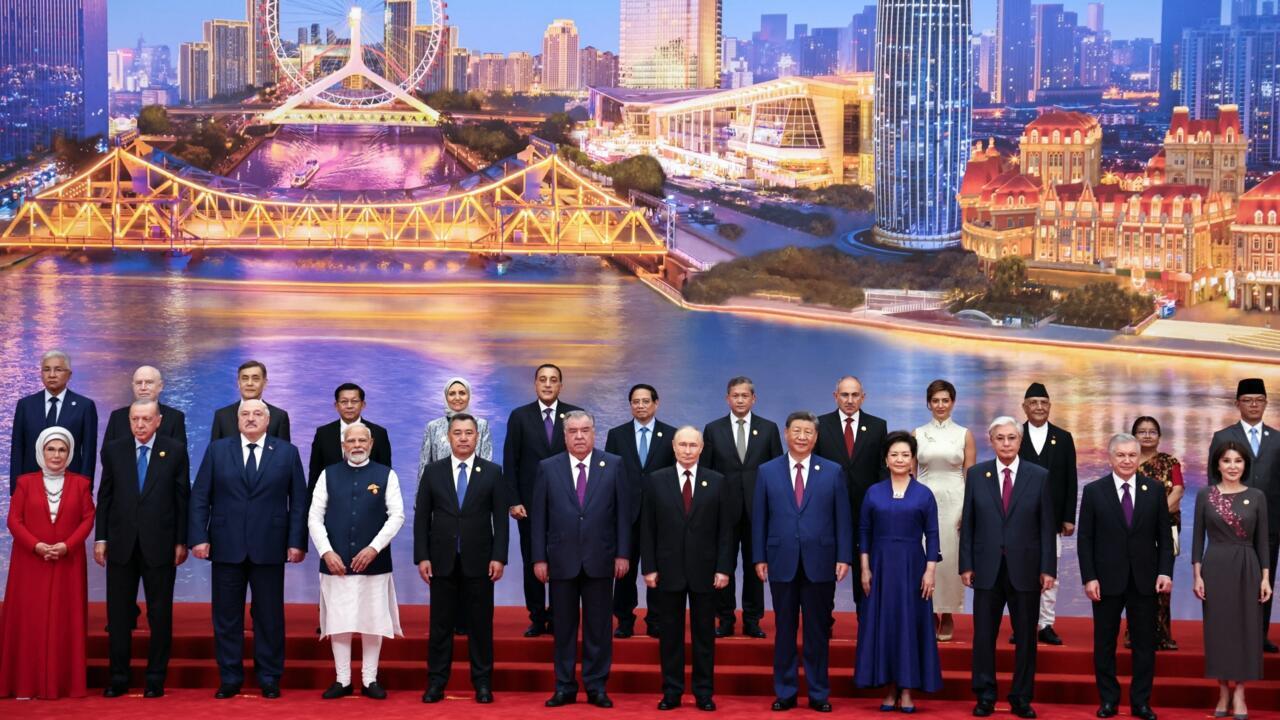
Astana, September 2025. The heart of Eurasia is once again the chessboard of global power. Pipelines and mosques, railways and prayers, uranium and digital authoritarianism—these are the pieces being moved across Central Asia in a contest that blends infrastructure with ideology. For decades, the region was treated as Russia’s backyard. Today, it is the frontline of a new Great Game where China, Turkey, and BRICS+ coalitions are redrawing the rules of power.
Russia’s war in Ukraine has accelerated this shift. Its capacity to dictate terms to Kazakhstan, Uzbekistan, or Turkmenistan is eroding, while Beijing’s Belt and Road corridors stretch deeper into the steppe. China now offers not just roads and railways, but digital infrastructures and surveillance ecosystems that promise control and connectivity in equal measure. Where Moscow once ruled through hard power, Beijing advances through logistics and code.
Turkey, meanwhile, has reemerged as a cultural and strategic force. Through the Turkic Council and a network of mosques, schools, and media, Ankara is cultivating a revival of Turkic identity. What appears as cultural outreach doubles as geopolitical leverage, binding Central Asia closer to Turkey’s orbit at a time when NATO membership and Eurasian aspirations coexist uneasily in Ankara’s foreign policy. Prayers become politics, and religious soft power fills the vacuum left by declining Russian influence.
Energy remains the region’s most contested asset. Kazakhstan’s uranium is indispensable for global nuclear programs, while Turkmenistan’s gas fields and Caspian pipelines offer Europe a lifeline away from Russian supplies. Every new corridor—from the Trans-Caspian pipeline to rail links bypassing Suez—reshapes the balance of dependency between East and West. These projects are not neutral: each is a declaration of alignment, a choice between markets, and a wager on sovereignty.
At the southern frontier, Afghanistan looms as a destabilizing factor. Its porous borders spill insecurity into Tajikistan and Uzbekistan, complicating Chinese and Russian security designs while testing the resilience of Central Asian states. For Beijing, Afghanistan is both a threat and a corridor. For Moscow, it is a distraction. For the region, it is a reminder that every pipeline is also a fault line.
The rise of BRICS+ and the Shanghai Cooperation Organization offers Central Asian states new platforms to hedge their bets. By joining multipolar forums, they dilute dependency on any single power. Yet these organizations are not neutral spaces; they are arenas where China’s weight is decisive, Russia’s role is defensive, and smaller states struggle to ensure that their sovereignty does not disappear beneath the rhetoric of “partnership.”
The new Eurasian order is being built with two tools: pipelines that carry resources outward, and prayers that bind loyalties inward. Both are instruments of power, and both are reshaping the strategic map of Central Asia. The region’s future will depend on whether its states can transform infrastructure and identity into leverage, or whether they will once again find themselves reduced to corridors—silent passages for the ambitions of others.
Aigerim Beketova, Central Asia correspondent at Phoenix24. Specialist in Eurasian infrastructure diplomacy, energy geopolitics, and digital Islam in the steppes.