

 Phoenix 24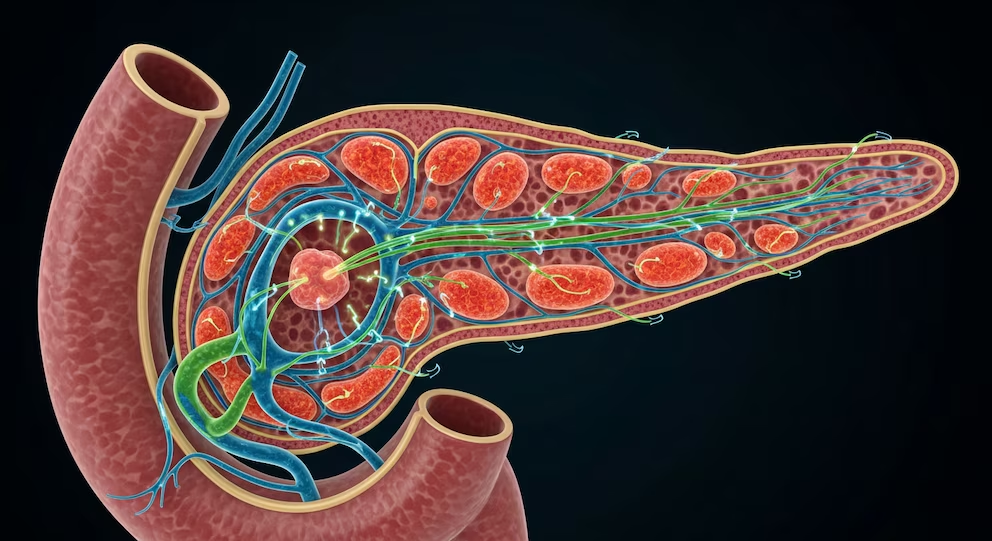
Science is beginning to breach a lethal wall.
Buenos Aires, May 2026
Pancreatic cancer remains one of the most aggressive tumors in modern oncology, largely because it is usually detected late and has historically responded poorly to available treatments. Its five-year survival rate barely exceeds 13%, while global incidence continues to rise in older populations and, more recently, among younger women. Against that bleak background, three scientific advances are beginning to open a different clinical horizon.
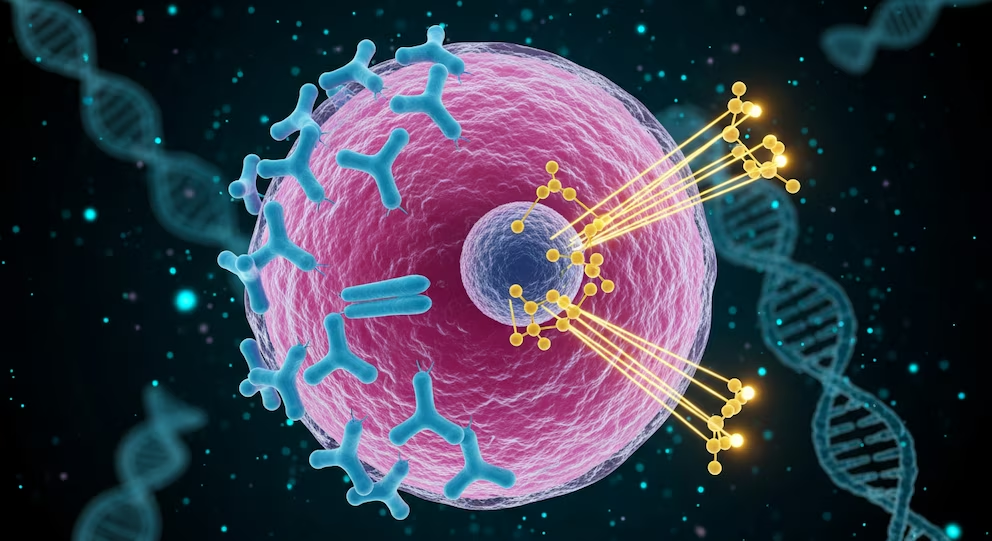
The first breakthrough is daraxonrasib, an experimental oral drug designed to inhibit KRAS, a protein long considered almost unreachable in cancer therapy. In international trials involving more than 500 patients, the drug achieved a median survival of 13.2 months compared with 6.7 months under standard chemotherapy. For metastatic pancreatic cancer, where progress is usually measured in small increments, that difference is not minor; it is a rupture in the therapeutic ceiling.
The second line of progress comes from research on PARP2, a protein that appears to help pancreatic tumors evade the immune system. Scientists from Spain and Argentina found that blocking or eliminating PARP2 in animal models reactivated immune defenses, increased survival, and reduced the tumor’s protective environment. The finding is still preclinical, but it matters because pancreatic cancer has been notoriously resistant to conventional immunotherapy.
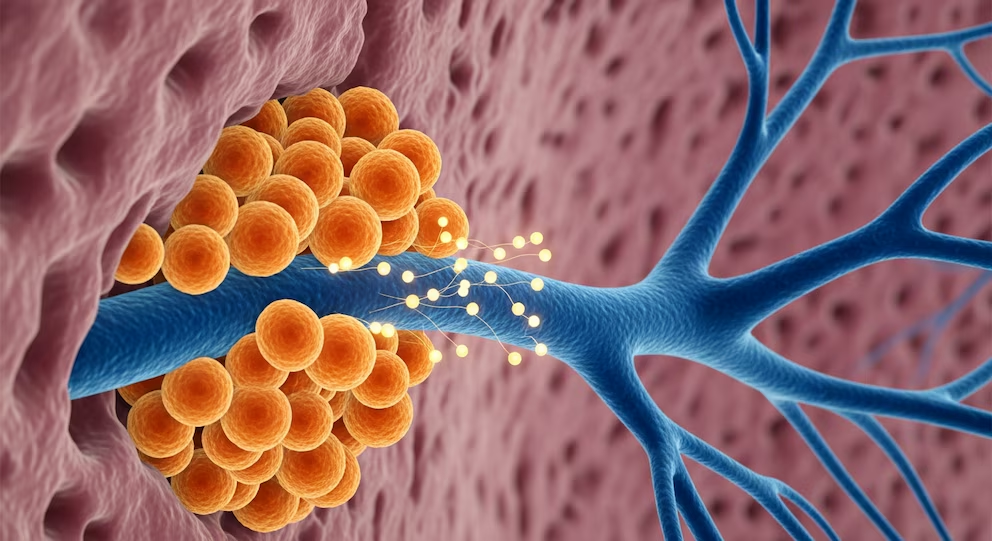
The third path involves a triple-drug strategy developed in Spain that eliminated pancreatic tumors in animal models for more than 200 days without relevant side effects. That result remains far from clinical application in humans, and the research still faces regulatory, financial, and publication hurdles. Even so, it shows that pancreatic cancer may not be biologically untouchable, only insufficiently understood.
What connects these advances is a shift in strategy. The disease is no longer being approached only through generalized chemotherapy, but through molecular vulnerabilities, immune evasion mechanisms, and combination therapies aimed at weakening the tumor from several directions. This does not mean a cure is near. It means the old fatalism around pancreatic cancer is beginning to lose scientific authority.

The caution is essential. Experimental access, preclinical success, and promising trial results are not the same as broad medical availability. Patients still need evidence, regulation, safety evaluation, and realistic timelines. But for one of oncology’s darkest diagnoses, the message is changing: the wall has not fallen, yet it is finally showing cracks.
Información que anticipa futuros. / Information that anticipates futures.