

 Phoenix 24
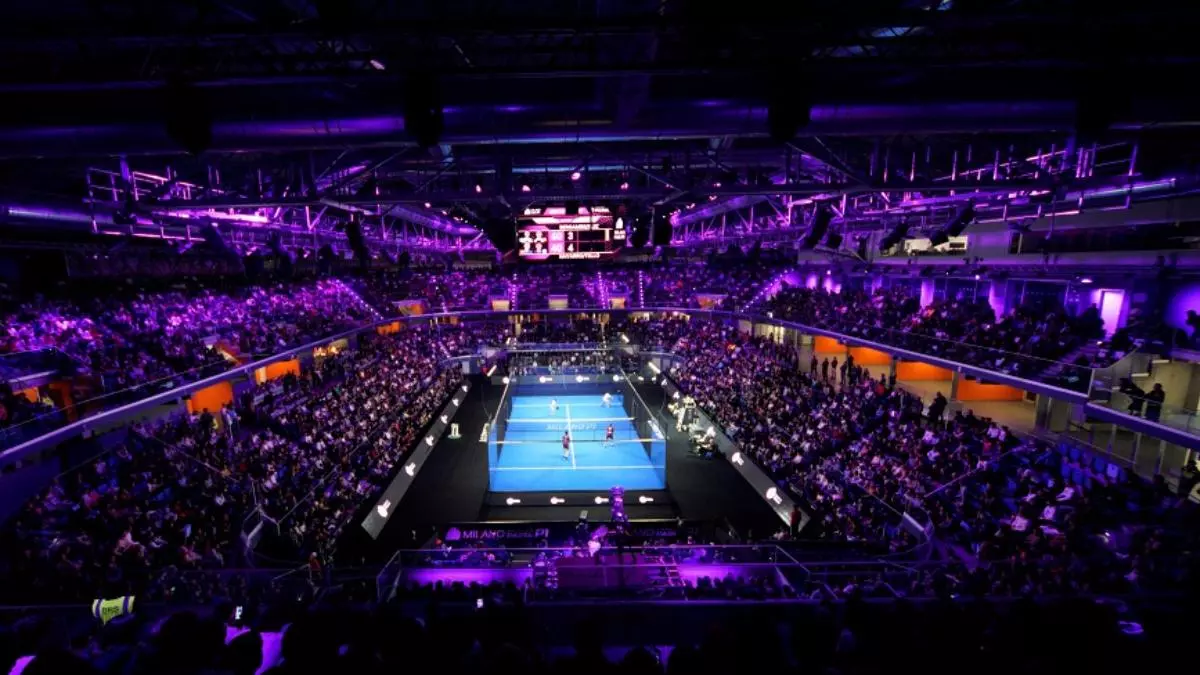
When a game escapes its courts it becomes a cultural movement.
London, December 2025
The sound of the ball hitting glass walls has become an unexpected marker of urban life around the world. What began as a regional curiosity in the Iberian Peninsula is now a global phenomenon that has taken root in cities separated by oceans and cultures. Padel, once overshadowed by more established racket sports, has crossed a threshold. Analysts from Europe, North America and the Middle East agree that the sport has entered a stage where growth is no longer episodic but structural. The numbers emerging from industry reports and sports federations reveal a pattern of expansion that few disciplines have achieved in such a short period.
The International Padel Federation confirms that participation has increased across continents, with millions of new players recorded over the last three years. In Europe, countries like Italy and Sweden report some of the highest installation rates of new courts, driven by demand from amateur players who embrace the sport’s accessible learning curve. In Spain, the sport has consolidated its position as a leading recreational activity, embedded in local communities and supported by clubs that have adopted a hybrid model of fitness, social entertainment and competitive play. These trends mirror similar dynamics observed in Canada and Argentina, where the sport’s simplicity and fast paced gameplay have broadened its appeal beyond traditional tennis demographics.
One of the defining factors behind this expansion is the adaptability of the sport to different urban environments. In the United States, where space is often a premium, converted warehouses and rooftop facilities have boosted the number of playable courts in major metropolitan areas. Sports development groups from New York to Los Angeles describe padel as uniquely suited for dense urban settings because its footprint is smaller than that of a tennis court while offering a comparable sense of dynamism. This efficient use of space has also encouraged the private sector in Asia, especially in the United Arab Emirates and Qatar, to invest heavily in premium facilities aimed at both local and expatriate populations.
There is also a sociocultural component that shapes the sport’s momentum. Sociologists in France and Australia suggest that padel’s growth is linked to its capacity to merge competition with social interaction. The sport encourages cooperation, fast decision making and constant communication between partners, which transforms matches into communal experiences rather than isolated athletic efforts. This dual identity, both social and competitive, appeals to a generation that values physical activity integrated into wider lifestyle habits. In Latin America, for example, clubs in Mexico, Chile and Uruguay report that padel has become a hub for networking, events and recreational gatherings, reinforcing its status as a social anchor as much as a sport.
The economic dimension is equally decisive. Market researchers in Japan note that padel has become one of the most profitable emerging sports sectors due to its ability to attract private investment, brand sponsorship and steady membership fees. Court operators emphasize that utilization rates remain high even outside peak hours, partly because the sport attracts players across age groups. Retail sectors tied to equipment, apparel and training technology observe year over year increases that have surpassed expectations in several regions. In addition, the rise of professional circuits supported by various international organizations has elevated the visibility of top players, turning them into ambassadors capable of inspiring new audiences.
However, the sport’s rapid growth brings challenges. Infrastructure has not always matched demand. Some cities in northern Europe and the Gulf region face backlogs for court reservations, prompting concerns about saturation and maintenance. Sports planners warn that without regulated expansion and long term planning the sport risks uneven quality standards, which could undermine its reputation. In Africa, for instance, early stage adoption in countries like South Africa and Kenya has been encouraging, but experts caution that sustained growth requires governmental and private coordination to ensure accessibility and durability of facilities.
Technology has further accelerated padel’s global rise. Motion tracking, player analytics and online reservation systems have professionalized what was once a grassroots activity. These tools are now used in clubs from Singapore to Toronto to enhance coaching methods and match performance. As a result, communities with little prior exposure to racket sports have quickly adapted. Digital platforms have also increased international visibility, allowing fans to follow tournaments, rankings and training content regardless of geography. This digital integration positions padel as a sport aligned with contemporary consumption habits.
The sport’s trajectory suggests that its expansion is more than a passing trend. It reflects a convergence of accessibility, cultural resonance, market opportunity and technological adaptability. Yet the next stage will depend on how well national federations, private investors and global organizations coordinate to maintain growth without compromising quality or inclusiveness. If the sport succeeds in balancing these demands it may become not just a global sensation but a long term fixture in the landscape of international sports.
Padel’s ascent demonstrates that a sport does not need a century of tradition to achieve global relevance. It needs rhythm, community and a structure capable of moving at the pace of modern life. The courts now rising across continents are more than facilities. They are gateways into a sport that continues to reshape how people play, compete and connect.
The visible and the hidden, in context. / Lo visible y lo oculto, en contexto.