

 Phoenix 24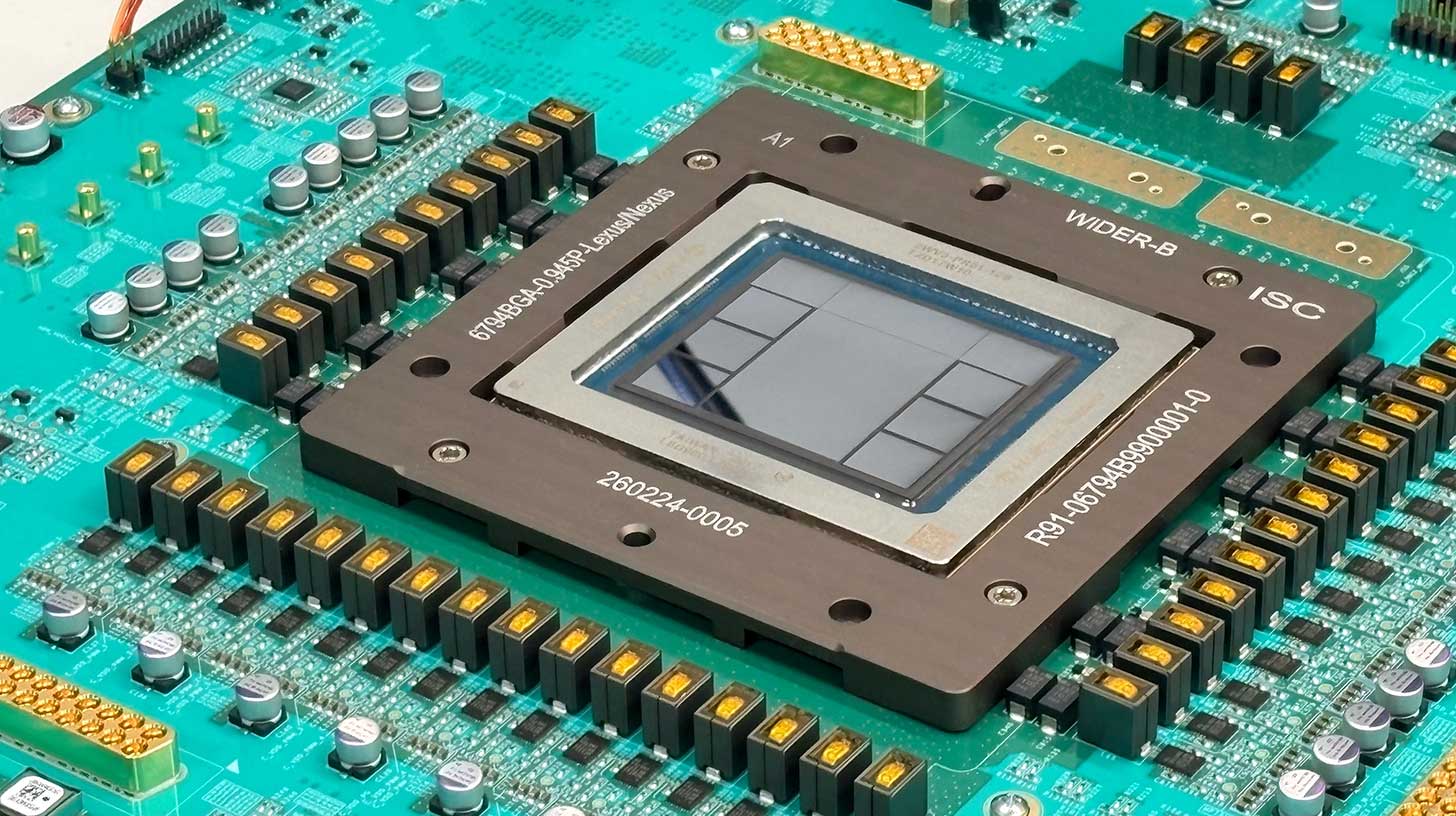
AI begins engineering the hardware that powers itself.
San Francisco, United States.
OpenAI has revealed how its artificial intelligence models accelerated the development of Jalapeño, the company’s first custom processor designed specifically for AI inference. Technical details highlighted on September 19 show that the project progressed from its initial architecture to working silicon in less than 20 months, with just nine months separating the first register-transfer-level design from manufacturing. The engineering team averaged fewer than 100 people, using AI to accelerate tasks traditionally requiring extensive human effort. The achievement introduces a new dimension to semiconductor development: artificial intelligence is becoming a tool for designing the physical infrastructure on which future AI systems will operate.
Jalapeño was developed in collaboration with Broadcom, which contributed expertise in physical design and semiconductor implementation. OpenAI designed the overall system architecture, including its inference accelerator, memory hierarchy and interconnection network. The processor delivers up to 13.4 petaflops of computing performance at four-bit precision and incorporates 232 gigabytes of advanced memory with bandwidth reaching 15.4 terabytes per second. These specifications reflect an architecture optimized for generating responses efficiently rather than serving as a general-purpose computing platform.
The development process relied on an unusual combination of human engineering and AI-assisted programming. Engineers used Accelerated Hardware Synthesis, an open-source framework originally developed at Google, to describe hardware components through programming languages and convert them into circuit descriptions. OpenAI’s models helped generate, modify and evaluate portions of these designs, allowing engineers to explore alternatives more rapidly. Human specialists remained responsible for verifying the resulting circuits and making final engineering decisions.
Artificial intelligence also played an important role after the first chips returned from manufacturing in May. During one optimization exercise involving an attention-processing system, performance improved from 0.31% to 88.94% of the chip’s theoretical limit in approximately 40 hours, according to OpenAI. The company also reported that AI-guided optimization reduced the area occupied by certain matrix multiplication units by 10% compared with a human-optimized design. These results concern specific engineering tasks and should not be interpreted as equivalent improvements across every application running on the processor.

Performance testing offers another indication of the project’s ambitions. OpenAI reports that Jalapeño achieved up to 3.6 times lower end-to-end latency than Nvidia’s GB300 system in selected inference benchmarks. Across several tested language models, the processor delivered between 1.5 and 1.9 times more AI work per watt than the comparison systems. These are company-reported benchmark results under defined testing conditions, and broader commercial performance remains to be established.
The company is already developing subsequent generations of its hardware while preparing Jalapeño for deployment within its computing infrastructure by the end of 2026. Nevertheless, OpenAI acknowledges that current models remain less effective in certain physical design and routing tasks, which continue to require substantial human expertise and specialized engineering tools.
Jalapeño represents more than an attempt to improve processing speed. It illustrates an emerging technological feedback loop in which AI systems help design better hardware, while improved hardware creates additional computing capacity for developing and operating future models.

The economic implications could extend across semiconductor manufacturing, data centers and the competitive structure of the AI industry. Whether these advances translate into lower costs and broader access will depend on manufacturing scalability, energy consumption and the efficiency of complete computing systems.
Más allá de la noticia, el patrón. / Beyond the news, the pattern.