

 Phoenix 24
Monetization has become a training variable.
Calgary, February 2026.
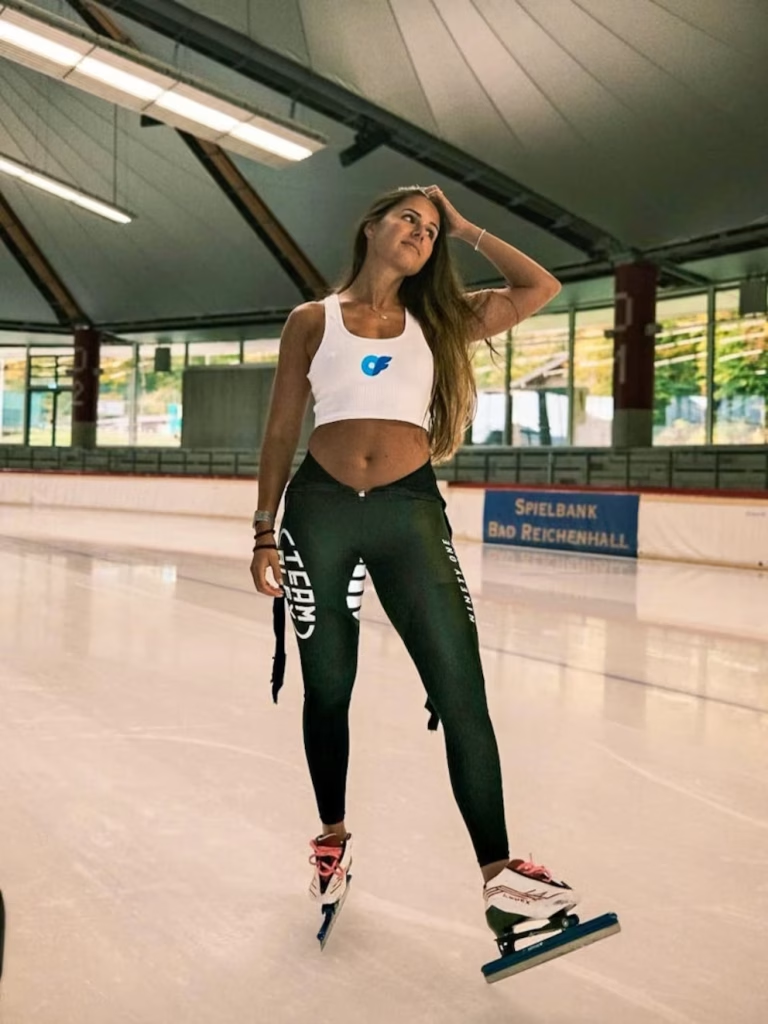
Alexandra Ianculescu has become an uncomfortable case study in how elite sport increasingly survives on parallel income streams rather than on federations, sponsors, or stable public stipends. Born in Romania and competing for Canada, she raced at PyeongChang 2018 and now aims to reach Los Angeles 2028 through track cycling. The story draws attention because she frames her decision less as provocation and more as logistics, a way to fund coaching, equipment, travel, and recovery in a high cost pathway with thin institutional coverage. She describes leaving multiple jobs to build a subscription based income on OnlyFans, effectively converting attention into predictable cash flow. The controversy is not the platform itself, but what it reveals about a system where the difference between “world class” and “funded like world class” can be ruinously wide.
The structural reality is that training is not only time in the gym or on the track, it is the stability that allows consistent planning, sleep, nutrition, medical care, and injury prevention. When athletes patch their lives together with several part time jobs, they often end up trading recovery for wages and accepting physical risk as an invisible cost of staying competitive. In that frame, monetization is not a cultural shift, it is a financing workaround that buys time, reduces stress, and makes performance more repeatable. The moral debate tends to focus on optics, yet the performance effect comes from something banal: fewer hours spent earning money means more hours spent training with intention. The same logic applies across many Olympic and near Olympic sports where prize money is limited, sponsorship is volatile, and federation support is uneven. A personal funding engine can look like rebellion, but it is often simply the fastest route to continuity.

The pandemic years sharpened this logic because they exposed how quickly a career can become financially nonviable when work opportunities, travel, and competition calendars collapse together. Relocation, disrupted income, and higher living costs can turn an elite pathway into a crisis even for athletes who have already reached the Games. In that context, a direct to audience model becomes attractive because it bypasses gatekeepers and converts small scale attention into cash that can be reinvested in training. The trade is not free, however, because new income streams can create a permanent reputational frame that follows the athlete into every arena. Once an athlete is publicly categorized, the label becomes a shortcut that some audiences use to ignore sporting competence. The financial gain can therefore come with a lasting social tax that institutions rarely acknowledge and rarely help manage.
This dynamic also forces sports institutions to confront a governance gap between the values they market and the realities athletes face. The International Olympic Committee promotes a universal narrative of excellence, but funding remains national, unequal, and often tied to medal probability rather than athlete sustainability. Federations and sponsors tend to prefer “safe” branding, which can push athletes toward private monetization that is less controllable but more direct. The result is a split world where the public story is clean and inspirational while the private economics are improvisational and precarious. In that split world, platforms become the financial infrastructure that institutions did not build. The deeper consequence is that career survival increasingly depends on personal media skill, not only athletic skill. That is a structural shift in what it means to be an elite athlete.

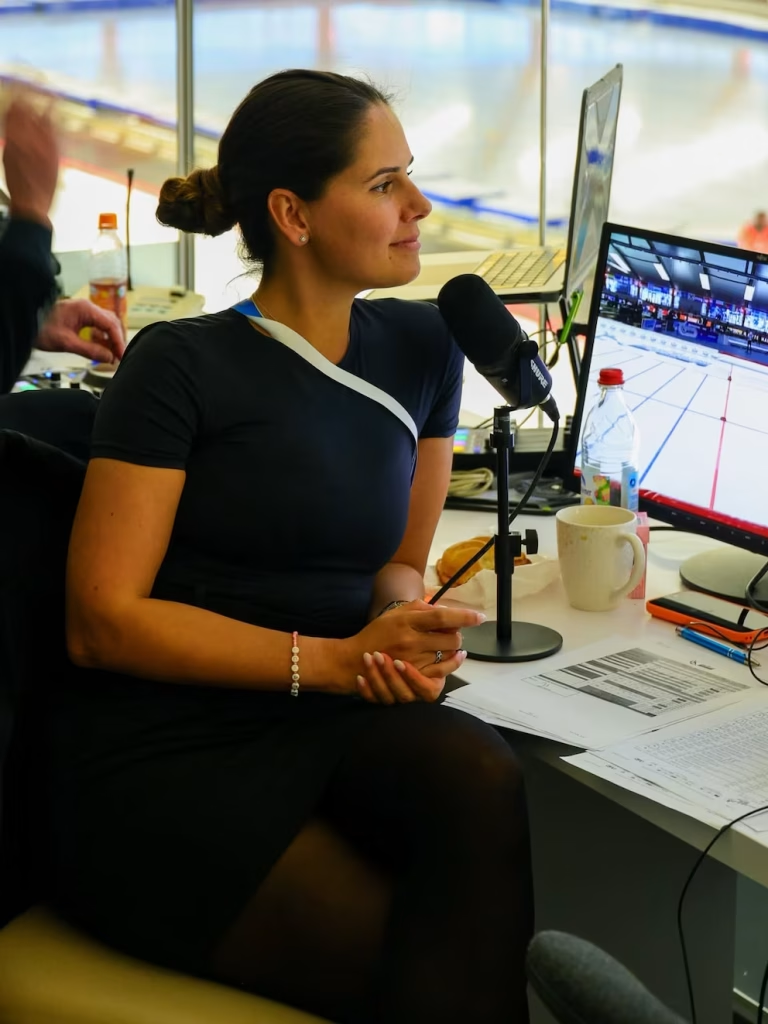
There is also a broader information environment risk that deserves attention, because adult platform narratives are easily weaponized and are disproportionately used to target women athletes. A creator economy pathway can fund training, but it also creates vulnerabilities to harassment, stigma, and reputational sabotage that can spill into professional opportunities. At the same time, the athlete’s visibility can translate into new roles, including commentary work during Milan Cortina 2026, which suggests a second sustainability track through expertise and media presence. That hybrid identity, athlete plus creator plus analyst, is becoming more common as the economics of Olympic sport harden. The question is whether institutions adapt by building transparent funding ladders and mental health protections, or whether they continue to outsource survival to private hustle. When an athlete says their life changed after monetization, the claim is not only personal, it is diagnostic of a system where money controls access to time, and time controls performance.
Más allá de la noticia, el patrón. / Beyond the news, the pattern.