

 Phoenix 24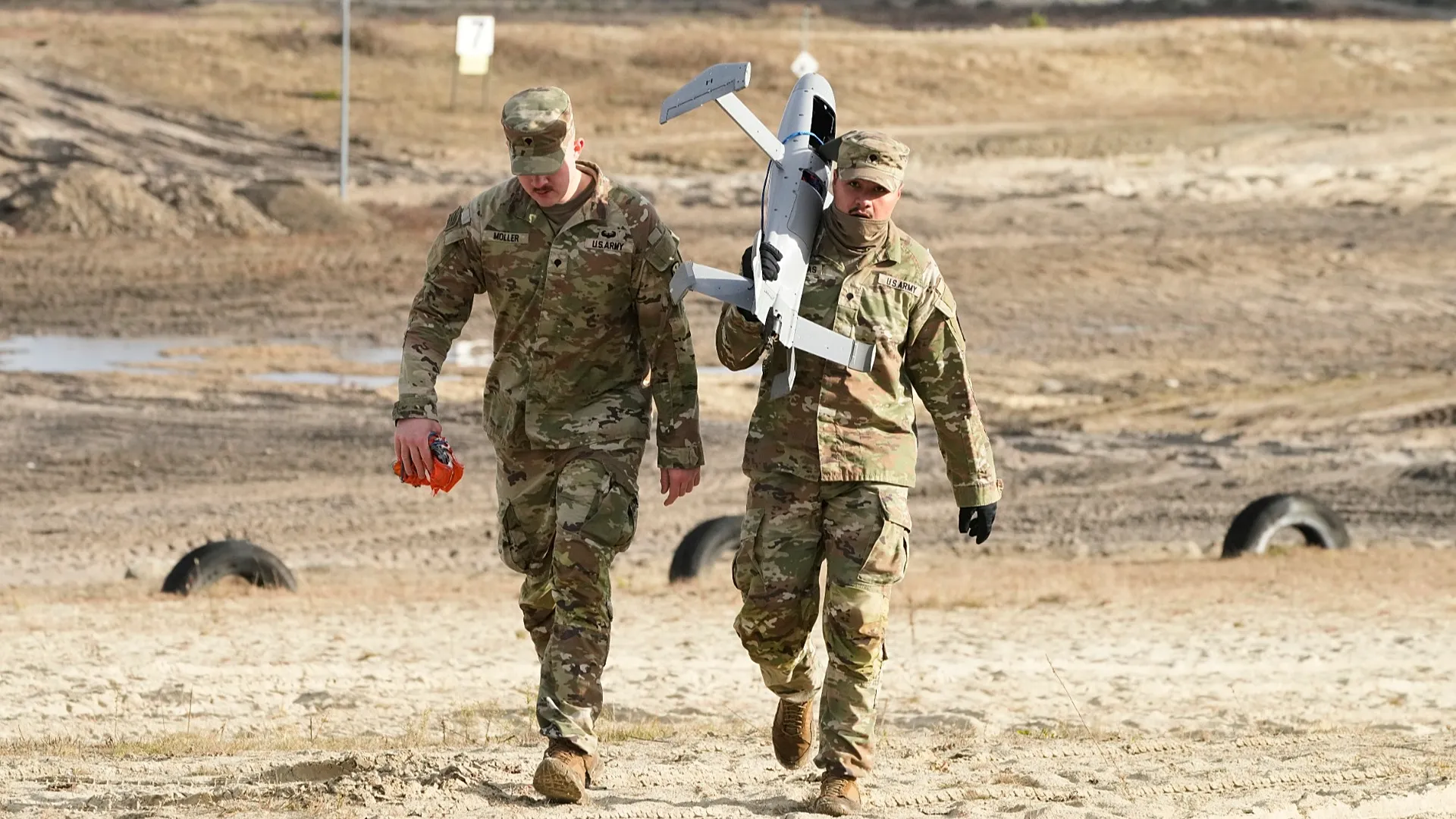
Cheap drones are exposing costly strategic weaknesses.
RAMSTEIN, GERMANY — July 2026.
NATO is intensifying efforts to close a widening gap in anti-drone defense as inexpensive unmanned systems increasingly challenge conventional air power. Military officials, European defense companies and Ukrainian specialists gathered at the second AIRCOM Industry Day at Ramstein Air Base to examine faster and more affordable responses. The meeting reflected growing concern after drones entered allied airspace, struck civilian areas and disrupted operations at major European airports. What once appeared to be a specialized battlefield threat is becoming a broader test of continental security and industrial readiness.
The cost imbalance is among the alliance’s most serious problems. Some hostile drones can be produced for less than €100,000, while scrambling NATO fighter aircraft to intercept a single target can cost tens of thousands of euros per hour. A typical mission involving two aircraft can exceed €85,000 before a missile is launched. Defending European airspace with premium aircraft and expensive interceptors is therefore economically unsustainable during repeated or large-scale drone attacks.
Major General Guillaume Thomas, deputy commander of NATO’s Allied Air Command, described drone warfare as a shared challenge requiring progress in cost, production and innovation. Russia’s mass use of unmanned systems against Ukraine has demonstrated how numerical volume can overwhelm defenses designed for smaller numbers of sophisticated threats. NATO must now combine advanced capabilities with systems that can be manufactured, deployed and replenished at scale. That transformation will require military planners and industry to work more closely than traditional procurement structures have allowed.
Ukraine remains central to the search for practical solutions because its forces have accumulated unmatched experience under continuous drone attack. Security expert Ulrike Franke argued that unmanned systems have brought mass back to the battlefield and forced NATO to think in terms of quantity as well as quality. Ukrainian officers have developed improvised interception methods, rapid software updates and operational procedures under extreme pressure. European industry possesses greater capital and manufacturing capacity, but Ukraine often understands the threat more quickly because it confronts each technological change in real combat.
Reliable detection is still one of the most important technical barriers. Ukrainian air-defense officer Oleksandr Worobjow said many existing radars were designed for aircraft, weather monitoring or other purposes rather than small, low-flying drones. These systems can lose a target for several seconds, preventing interceptor drones from operating with full autonomy. When radar contact disappears, human pilots must temporarily guide the interceptor, reducing speed, accuracy and scalability during mass attacks.
The Ramstein event brought together nearly 40 companies presenting radar systems, guided missiles, interceptor drones and artificial-intelligence tools. Participants included established defense groups such as MBDA, Hensoldt and Aselsan alongside smaller technology companies developing specialized software and autonomous platforms. The objective was not simply to display equipment, but to shorten the distance between an operational requirement and a deployable system. Military demand is evolving faster than the acquisition procedures through which European governments traditionally purchase defense technology.
One proposed solution is the integration of MBDA’s DefendAir missile into Rheinmetall’s Skyranger 30 air-defense platform. Initial systems are planned for Germany’s 45th Brigade in Lithuania, with deliveries expected between 2027 and 2028. Each Skyranger vehicle would carry nine guided missiles, while a six-vehicle battery could field 54 ready interceptors against larger threats such as Shahed-type drones. Smaller commercial quadcopters would be engaged with the platform’s 30-millimeter automatic cannon, allowing commanders to match the weapon to the target.
Artificial intelligence is also becoming central because drone defense often allows only seconds for detection, classification and engagement. Turkish defense company Aselsan emphasized that reliability remains the most important lesson from Ukraine, since a system that fails during a brief decision window may not receive a second opportunity. French company Alta Ares presented interceptor drones with ranges of up to 15 and 40 kilometers and said its technologies were developed through close engagement with Ukrainian units. The company’s approach reflects a wider shift toward software-driven systems that can be updated more quickly than conventional weapons platforms.
The industrial challenge is not limited to technology because Europe must also produce sufficient quantities at acceptable prices. Companies at Ramstein acknowledged that demand will be far greater than current supply and that no single manufacturer can cover the requirement alone. Cooperation may therefore matter more than competition as radar providers, missile companies, drone manufacturers and software developers combine their capabilities. European governments will also need to accept faster procurement cycles and greater experimentation if they want systems to remain relevant when they finally reach military units.
Ukraine was not represented by domestic companies at the exhibition because participation was limited to firms from NATO member states. Nevertheless, Ukrainian experience shaped almost every discussion, and European companies repeatedly emphasized direct work with forces operating near the front. Worobjow welcomed the growing industrial presence in Ukraine but suggested that Europe had moved later than the threat required. NATO can close the anti-drone gap, but only if it converts battlefield lessons into scalable production before mass drone warfare becomes an even larger test of allied defenses.
Phoenix24 — Global news with clarity and perspective.