

 Phoenix 24
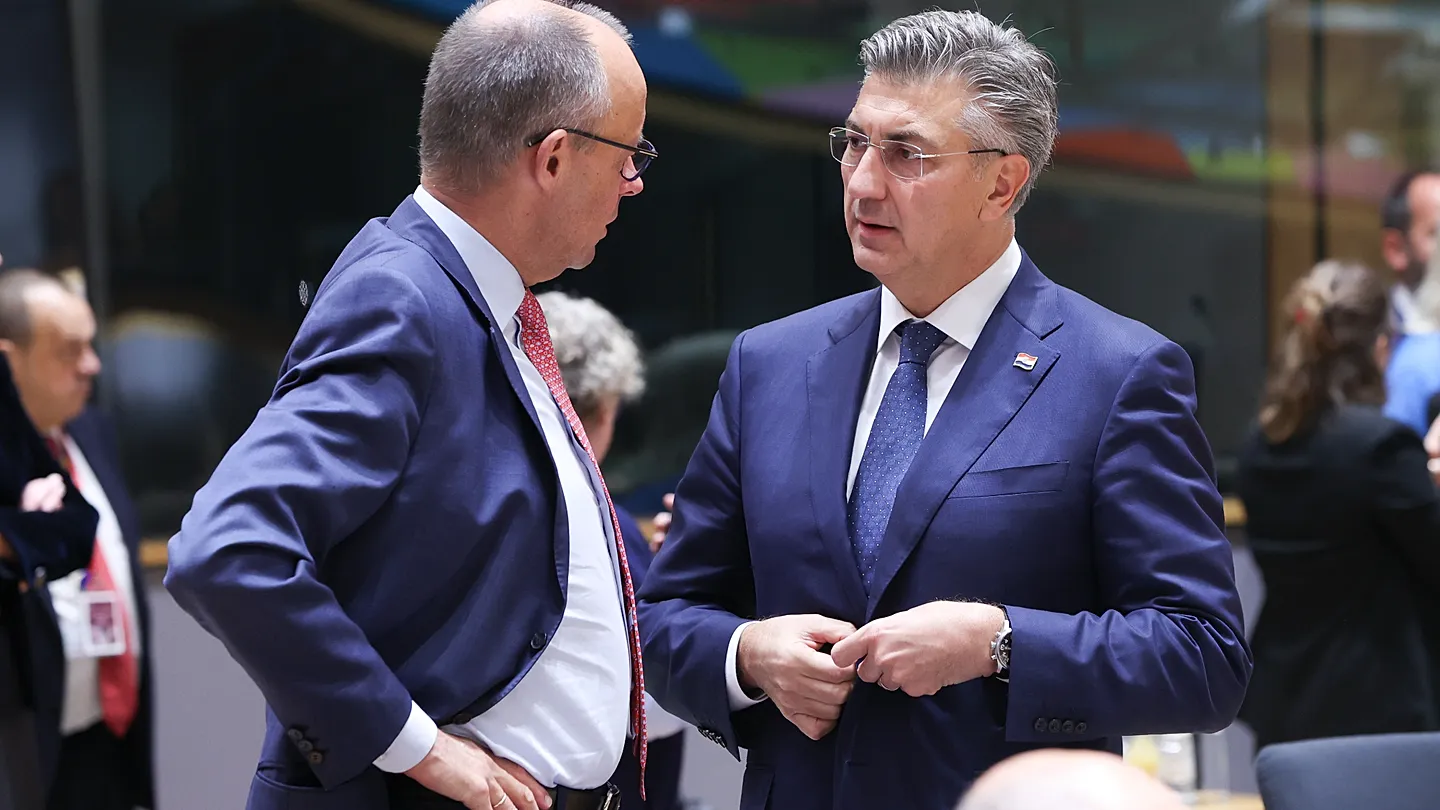
Germany urges compromise as unresolved disputes threaten the 2028 enlargement target.
BRUSSELS
Montenegro’s ambition to become the European Union’s 28th member by 2028 faces a diplomatic obstacle rooted in the violent breakup of Yugoslavia. Croatia is demanding progress on wartime grievances, historical memorials and territorial disagreements before allowing its neighbor’s accession process to advance, while Germany is pressing both governments to reach an agreement.
Zagreb recently circulated eight outstanding demands among EU member states, most connected to conflicts during the 1990s. Croatian Prime Minister Andrej Plenković maintains that the issues have remained unresolved for years and argues that Montenegro must demonstrate meaningful progress before its accession treaty reaches ratification.
Podgorica has begun responding through legislation. Montenegro’s parliament adopted measures protecting historical memorials, including a plaque commemorating Croatian victims detained at the former Morinj camp, operated by the Yugoslav People’s Army.
A separate law restricts the naming of sports facilities after people who died less than 40 years ago. Applied retroactively, it would require the renaming of a swimming pool in Kotor dedicated to Zoran Gopčević, a former water polo player alleged to have served as a guard commander at Morinj.
Other disagreements are more difficult to resolve. Croatia wants Montenegro’s cooperation in locating 14 missing Croatian victims of the Yugoslav wars. Relevant archival material may be held in Belgrade, placing part of the investigation beyond the direct control of either government.
Property restitution presents another challenge. The countries have reportedly agreed on compensation amounts for Croatian families whose property was unlawfully taken, but negotiations over the final agreement continue.
A remaining territorial dispute concerns approximately 200 meters of land along their shared border and the delimitation of nearby maritime waters. Croatia favors a negotiated settlement rather than arbitration, although diplomats do not currently expect this disagreement alone to prevent enlargement.
These issues reveal how EU accession involves more than satisfying economic and administrative requirements. Historical accountability, bilateral relations and political trust can become decisive even when a candidate country makes substantial progress toward meeting European standards.
Croatia’s position also reflects domestic political pressures. The government faces expectations that it defend the interests of wartime victims and their families, while critics question whether unresolved historical disputes should delay a neighboring country’s integration.
That disagreement became visible at a recent EU summit, when Croatia secured the removal of language referring to Montenegro’s objective of provisionally closing all remaining accession negotiations before the end of 2026.
Germany has taken a different approach. Chancellor Friedrich Merz argues that the remaining bilateral questions can be resolved and should not jeopardize Montenegro’s European prospects. Berlin is concerned that allowing individual member states to obstruct enlargement through bilateral disputes could complicate accession negotiations elsewhere in the Western Balkans.
The disagreement exposes a structural tension within the European Union. Enlargement depends on political agreement among existing members, giving individual governments considerable influence over a candidate’s progress.
At the same time, requiring resolution of historical grievances can reinforce accountability and cooperation. The difficulty lies in determining when legitimate bilateral demands become disproportionate obstacles to broader European integration.
Montenegro has generally avoided public confrontation, preferring negotiations with Croatian officials. Its approach suggests an effort to preserve diplomatic momentum while addressing issues that carry considerable emotional and political significance.
The country’s target of joining in 2028 remains an ambition rather than an approved accession date. Completing technical negotiations would still leave important political and institutional steps before membership becomes possible.
For the European Union, Montenegro represents a test of whether enlargement can proceed while unresolved questions from Europe’s recent history remain politically sensitive.
The dispute is therefore larger than the relationship between two neighboring states. It raises a difficult question about how Europe reconciles historical justice with the strategic objective of integrating the Western Balkans.
Montenegro’s path toward membership may ultimately depend not only on the reforms it completes, but also on whether existing EU members can distinguish necessary accountability from disputes capable of indefinitely postponing integration.
Beyond the Headlines, Accountability Matters.