

 Phoenix 24
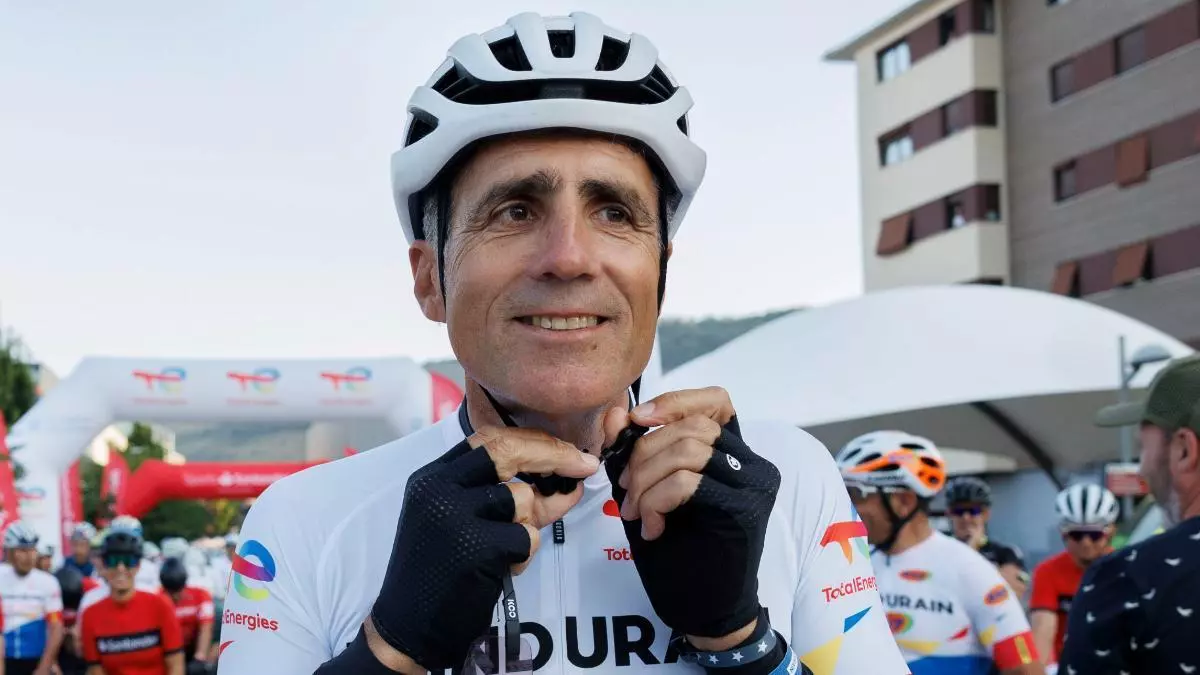
The five-time Tour champion reflects on endurance, technology and racing.
PAMPLONA
Spanish cycling legend Miguel Induráin has highlighted how television coverage, technological development and changing racing strategies have transformed professional cycling since his dominant years in the 1990s. At 62, the five-time Tour de France champion believes shorter, more intense stages have altered the demands placed on riders, creating a sport that differs substantially from the one in which he built his reputation.
Induráin won five consecutive Tours de France between 1991 and 1995, establishing himself as one of the defining figures of his generation. His success depended on extraordinary endurance, exceptional time-trial performances and the ability to manage physical effort across demanding mountain stages.
Reflecting on the evolution of the sport, the former champion has recalled that stages during his career frequently lasted between six and eight hours. Today’s television-oriented schedules, he argues, encourage shorter stages that deliver more concentrated action.
The change affects more than broadcasting. Race duration influences energy management, tactical decisions and the opportunities available for attacks. Riders competing over shorter distances may sustain greater intensity, while longer stages place different demands on endurance and recovery.
Induráin has also observed that modern cyclists benefit from substantially more information than previous generations. Advanced power meters, performance monitoring and improved nutritional strategies allow teams to measure physical effort with considerable precision.
During his own career, athletes relied more heavily on experience, sensation and the instructions available from their teams. Errors in pacing could become costly, particularly during long climbs or successive mountain stages.
The contrast is evident in his recollections of the 1996 Tour de France, when a difficult mountain stage contributed to the end of his five-year winning streak. Induráin has since reflected on how limited access to physiological information complicated decisions about maintaining a sustainable effort.
Technological advances have not eliminated uncertainty from racing. Weather, fatigue, crashes and tactical decisions still influence results, while the availability of performance data does not guarantee that riders will interpret it correctly.
The former champion has also expressed interest in the emergence of younger Spanish talent. He has praised the determination of a new generation of cyclists who compete with confidence and benefit from training methods that were unavailable during his own professional career.
His perspective offers a reminder that comparisons between cycling generations require caution. Equipment, race routes, preparation and team strategies have changed considerably, making direct assessments of individual performance difficult.
Induráin remains connected to cycling through recreational riding and public appearances. His life after retirement has been considerably quieter than the international attention that accompanied his victories, although his achievements continue to influence discussions about the sport’s development.
The transformation he describes also reflects wider changes in professional sport. Broadcasters, sponsors and audiences increasingly influence how competitions are presented, while scientific advances continually reshape athletic preparation.
For cycling organizers, the challenge involves maintaining competitive authenticity while responding to commercial expectations. Shorter stages may offer more immediate action, but endurance remains fundamental to the identity of major stage races.
Induráin’s reflections do not suggest that one generation was inherently superior to another. Instead, they illustrate how the conditions defining sporting excellence change over time.
The roads may remain familiar, but the demands placed on those who race them are continually being rewritten.
Beyond the Finish Line, Legacy Matters.