

 Phoenix 24
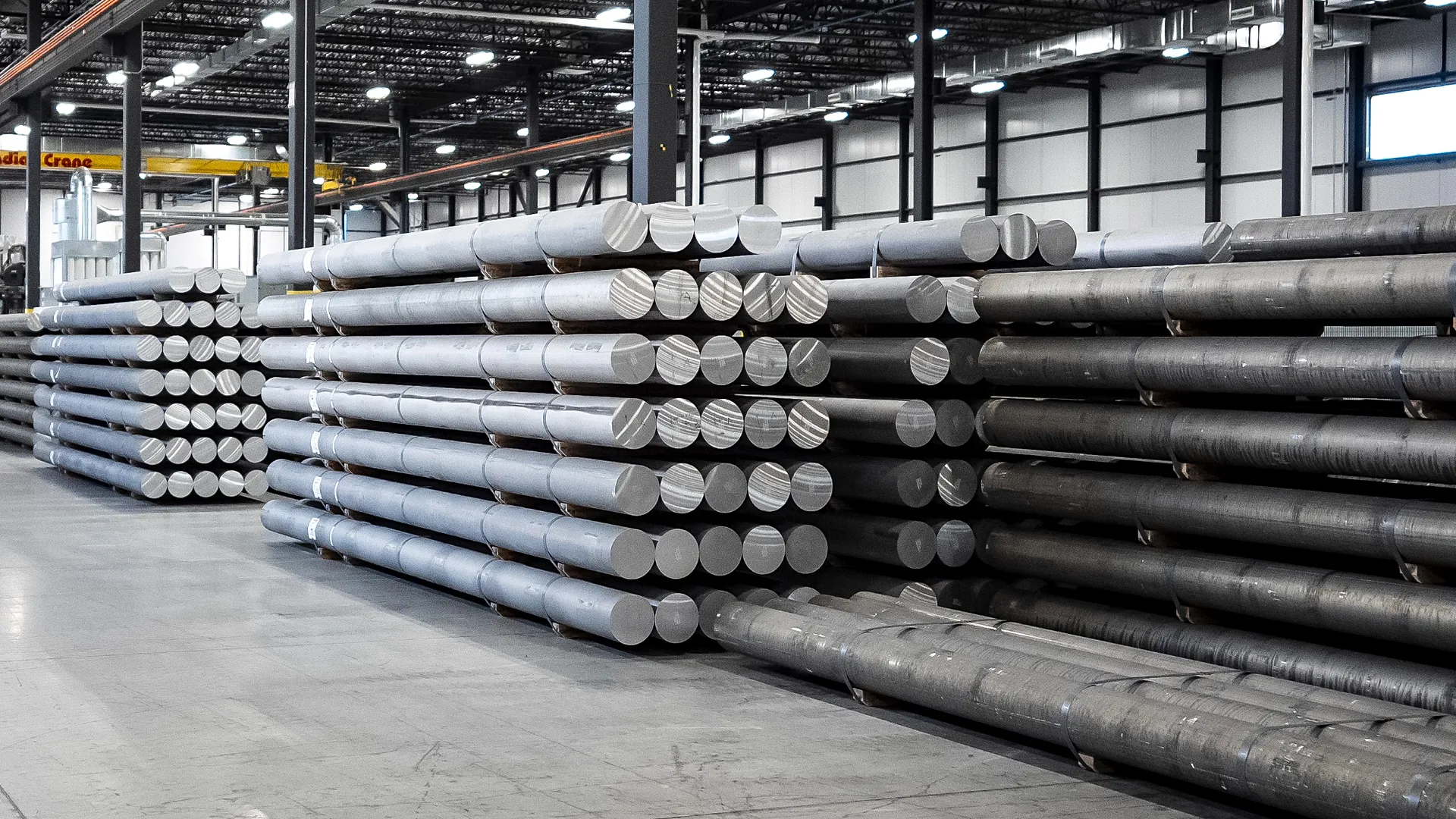
Policy rumors move prices faster than law.
London, February 2026.
Industrial metals slipped after reports indicated President Donald Trump may narrow parts of the United States tariff regime on steel and aluminum products, a shift traders interpreted as a possible easing of pressure on downstream buyers. The market reaction mattered because the current framework has acted as a wedge that lifts regional premia, distorts flows, and forces manufacturers to reprice inputs that show up in ordinary goods. Reuters reported that the discussion centers on rolling back tariffs on some downstream items, rather than removing the broader structure. Even so, markets price the direction of travel, not the final wording.
Aluminum absorbed the headline first because it sits at the intersection of policy and packaging, where tariffs can translate into visible consumer costs. Reuters reported that benchmark aluminum on the London Metal Exchange fell as much as 2.7% during the session, then recovered part of the move and still ended down about 0.9% at roughly 3,074 dollars per metric ton. That pattern is typical of policy driven tape action, an initial repricing wave followed by a sober reassessment of what is actually being changed. The move did not signal a collapse in fundamentals, but it did compress the risk premium that had built around policy rigidity. Traders treated the rumor as a test of how elastic the tariff perimeter might be.
The most revealing adjustment appeared in the United States physical market premium, which tends to move faster than exchange futures when policy risk shifts. Reuters reported that the duty paid Midwest aluminum premium slid about 6.8% to roughly 93 cents per pound. Premia are where the market registers friction, because they embed freight, scarcity, financing, and the perceived cost of getting metal through regulatory gates. When the premium falls on news of potential exemptions, it suggests the market is pricing easier access for certain categories. It also indicates that downstream manufacturers may see relief sooner than primary producers, at least at the margin.
Copper held up better, yet the broader complex leaned risk off, partly because the session coincided with thinning liquidity ahead of China’s Lunar New Year break. Reuters reported that London copper was near steady around 12,883 dollars per ton, cooling from a recent high as global inventories rose across major exchanges and physical demand softened before the holiday period. That context matters because thin liquidity amplifies headlines, making a policy rumor feel like a macro event. Other industrial metals drifted lower in sympathy, consistent with position trimming rather than a single metal story. The tape read like a repricing of policy uncertainty layered on top of seasonal caution.
The policy trigger, as described in the reporting, is not a full reversal but a narrowing of scope driven by political sensitivity around household facing products. Reuters, citing a Financial Times report, said the administration is considering exempting some downstream steel and aluminum goods, with examples such as beverage cans and pie tins circulating as emblematic items. The logic is straightforward, tariffs become politically expensive when they feed directly into everyday packaging and retail pricing. Reuters also reported that U.S. Treasury Secretary Scott Bessent said any narrowing ultimately depends on Trump, while signaling that only limited clarifications may occur. That combination, possibility plus constraint, is enough to move prices because it changes the distribution of outcomes.
This debate sits inside a wider tariff regime built on national security justification under Section 232, which has already reshaped domestic price formation. Reuters reported that the administration previously raised tariffs to as high as 50% on a broad set of steel and aluminum products, expanding coverage to many downstream categories. When tariffs reach deeply into manufactured components, they operate less like a border tax and more like a supply chain design rule. Producers may benefit from higher realized prices and protected market share, while manufacturers face higher input costs and less flexibility. The market is reacting to the possibility that Washington will preserve protection for primary metals while trimming pain points in consumer linked categories.
Domestic economic politics are clearly part of the signal, and Reuters reported that the Congressional Budget Office recently estimated that U.S. consumers absorb about 95% of tariff costs through higher prices. That kind of statistic becomes an internal weapon because it reframes tariffs from industrial defense to household burden, especially when voters feel cost of living pressure. Reuters also reported that the American Iron and Steel Institute urged against lifting the tariffs, warning that global overcapacity, particularly from China, remains a threat to domestic industry. This clash is structural, the state wants strategic capacity, manufacturers want affordability, and the public wants both without visible tradeoffs. Markets, by design, do not wait for that clash to be resolved before repricing it.
There is an international bargaining layer as well, because any U.S. recalibration on metals becomes a signal about how Washington may use tariffs as leverage across wider trade talks. Europe watches these moves through the lens of industrial competitiveness and supply security, since aluminum and steel feed directly into autos, machinery, and packaging. Asia watches through the lens of demand cycles and overcapacity narratives, especially with China’s role as a major producer shaping global marginal pricing. Even a small exemption list can be read as an admission that the current regime has political limits, which invites lobbying pressure from other sectors. The key variable for metals is not only whether tariffs change, but whether markets start believing the rules bend under stress.
The immediate takeaway is that the narrative has shifted from escalation to calibration, and that shift alone compresses price premia tied to uncertainty. Aluminum’s pullback reflects how quickly policy elasticity can remove a portion of the scarcity premium embedded in U.S. regional pricing. Copper’s relative stability suggests the demand picture still anchors the complex, even as headlines drive short term positioning. With seasonal liquidity thinning in Asia and tariff definitions under review in Washington, metals are likely to trade like politics, sharp moves on rumor, partial retracements on details, and persistent repricing of what protection actually means. Más allá de la noticia, el patrón. / Beyond the news, the pattern.