

 Phoenix 24
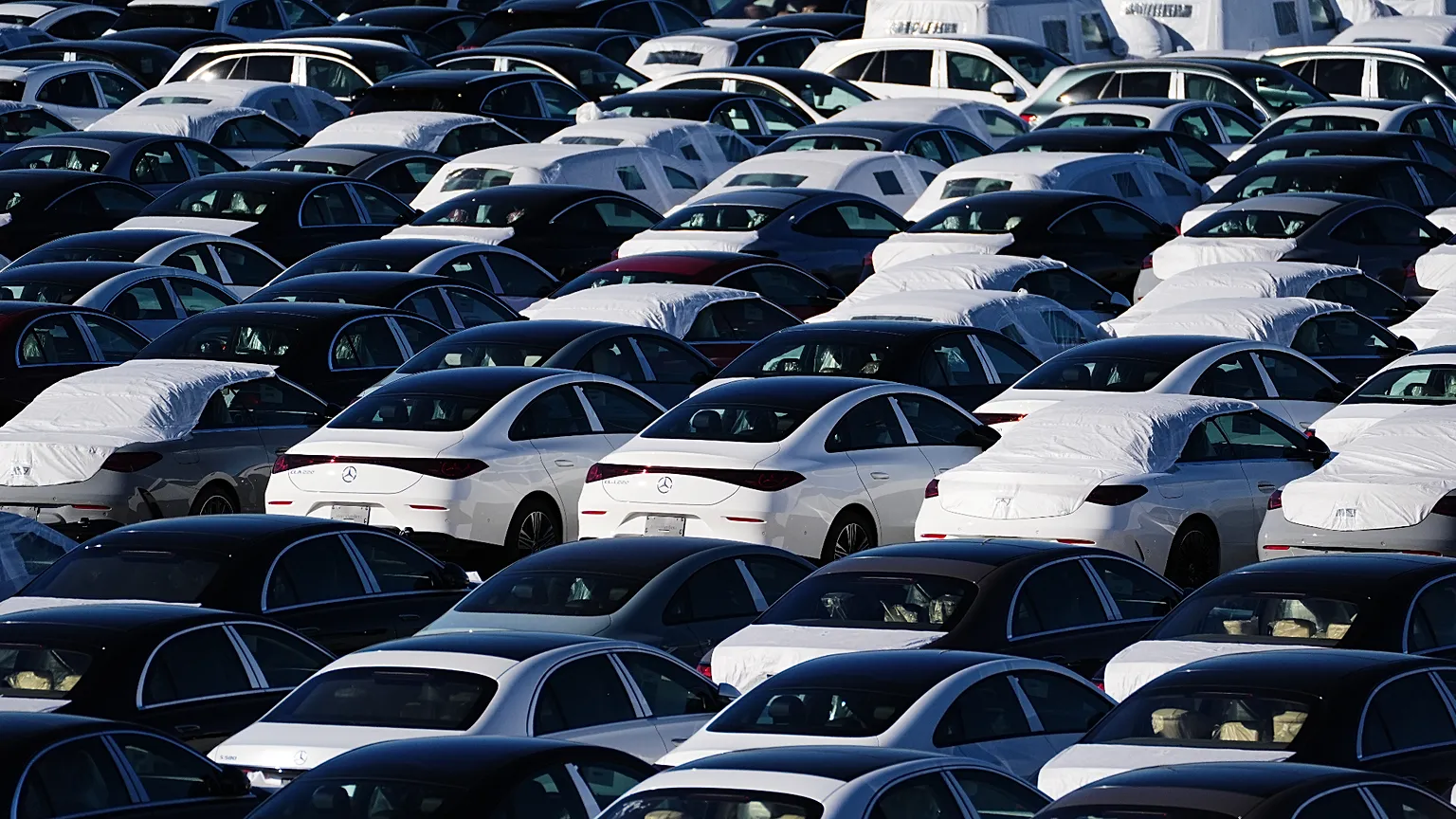
China’s shifting market exposes Europe’s automotive vulnerabilities.
STUTTGART, GERMANY.
Mercedes-Benz has lowered its 2026 earnings forecast as weakening demand in China and rising production costs place additional pressure on Germany’s premium automotive industry. The company announced on Tuesday that its operating profit is now expected to remain approximately unchanged from the previous year, abandoning expectations of significant growth. The revision reflects a broader challenge confronting established European manufacturers as competition intensifies in the world’s largest automobile market.
The Stuttgart-based automaker reduced its projected adjusted return on sales for its passenger car division to between 2% and 3%, down from an earlier range of 3% to 5%. Group earnings before interest and taxes are now expected to remain near the previous year’s level of approximately €5.8 billion. These figures represent revised management forecasts rather than final annual results, with the company citing deteriorating conditions in China and higher material costs anticipated during the fourth quarter.
The announcement unsettled investors. Mercedes-Benz shares declined more than 4% following the revised guidance, falling as much as 5.5% during trading. BMW and Volkswagen also experienced declines, reflecting market concerns that the difficulties facing one manufacturer are part of a wider adjustment across Germany’s automotive sector.
China has emerged as the most significant source of pressure. Mercedes-Benz vehicle deliveries in the country fell approximately 29% during the first nine months of 2026, while passenger car sales declined sharply again in the third quarter. The contraction follows several years in which Chinese consumers represented a critical source of demand for German luxury vehicles. That commercial dependence is becoming more difficult to sustain as local manufacturers strengthen their technological capabilities, expand their product portfolios and compete more aggressively on price.
Companies such as BYD and Xiaomi have contributed to a changing competitive environment, particularly through electric vehicles, software integration and increasingly sophisticated digital features. Their expansion is challenging traditional assumptions about the advantages enjoyed by European automotive brands. Engineering reputation, vehicle performance and established prestige remain commercially important, but they no longer guarantee the same pricing power in a market where consumers have access to a growing range of technologically competitive alternatives.
The financial consequences extend beyond declining vehicle deliveries. Lower sales volumes can reduce manufacturing efficiency, while price competition compresses margins and limits manufacturers’ ability to absorb higher operating expenses. For a company positioned in the premium segment, sustained pressure on profitability also raises questions about the relationship between brand exclusivity, product differentiation and the willingness of customers to pay higher prices.
Mercedes-Benz’s preliminary third-quarter results illustrate that tension. The company reported group earnings before interest and taxes of €1.77 billion, slightly exceeding market expectations, while the adjusted return on sales in its passenger car division reached just 2.5%. Industrial free cash flow was €172 million, substantially below the approximately €422 million anticipated by analysts. The divergence between operating earnings and cash generation underscores the importance of examining several financial indicators rather than relying exclusively on headline profitability.
Management has also revised its expectations for industrial free cash flow, now forecasting a substantially weaker outcome than in the previous year. The change matters because cash generation supports investment in new products, technological development, manufacturing operations and financial flexibility. Profitability can remain positive while a deterioration in cash flow constrains the resources available for future strategic decisions.
Not every business segment is facing the same deterioration. Mercedes-Benz maintained its forecast for the van division, with an adjusted return on sales of 8% to 10%, and its financial services operation, where adjusted return on equity is expected to range between 12% and 14%. These distinctions suggest that the company’s difficulties are concentrated in particular areas rather than reflecting an equivalent decline across its entire portfolio.
The German automotive industry is experiencing similar pressures. BMW and Volkswagen have also reduced their annual expectations, citing weaker market conditions and competitive challenges. Although the manufacturers differ in their product strategies and geographic exposure, their revised forecasts illustrate the financial consequences of competing in an industry undergoing simultaneous changes in technology, consumer demand and manufacturing economics.
The problem reaches further into Germany’s industrial structure. Automotive manufacturing supports an extensive network of component suppliers, engineering companies, logistics providers and specialized service businesses. When major producers adjust output or reconsider investment, the effects can extend across these interconnected activities. The magnitude of those consequences will depend on the duration of weaker demand and the restructuring decisions ultimately adopted by individual companies.
Mercedes-Benz is responding through cost reductions, operational adjustments and an accelerated product strategy. Chief Executive Ola Källenius has emphasized the importance of improving efficiency, while the company continues expanding manufacturing activities in Hungary, where production costs are substantially lower than in Germany. It also plans to introduce more than 40 models over the next two years, seeking to reinforce its position through product renewal and technological differentiation.
These measures involve difficult trade-offs. Shifting production toward lower-cost locations may strengthen financial competitiveness, but it also raises questions about employment, industrial investment and the future distribution of manufacturing activity across Europe. Introducing new vehicles can support commercial renewal, yet product development requires capital at a time when margins and cash generation are under pressure.
The implications are especially important for the transition toward electric mobility. German manufacturers must continue investing in electrification, software and digital architecture while protecting the profitability of their existing operations. Chinese competitors have demonstrated that technological development and competitive pricing can advance together, forcing established brands to reconsider how they create value and distinguish their products.
For Mercedes-Benz, the strategic challenge is not simply to recover lost sales in China. It is to determine whether its premium business model can sustain attractive margins in an international market where technological capabilities are spreading more widely and customer expectations are evolving. The outcome will depend on pricing discipline, manufacturing efficiency, product competitiveness and the company’s ability to adapt without undermining the characteristics that define its brand.
The revised forecast does not establish that Mercedes-Benz has entered a permanent decline. It does, however, demonstrate how quickly market conditions can weaken financial expectations even for manufacturers with substantial global recognition. The company’s forthcoming quarterly report will provide further detail on the operational and financial pressures shaping its outlook.
What is unfolding in Stuttgart reflects a larger transformation of automotive competition. Chinese manufacturers are increasingly influencing the technological and economic standards against which established European producers must compete. Mercedes-Benz’s latest warning is therefore not only an earnings development, but an indication of how global industrial leadership is being contested through innovation, production costs and changing consumer preferences.
Beyond the Numbers, the Consequences.