

 Phoenix 24
In Formula 1, decline becomes political before it becomes official.
Silverstone, April 2026
Felipe Massa has reopened one of Formula 1’s most uncomfortable questions by casting doubt on Fernando Alonso’s future at a moment when Aston Martin’s 2026 project is struggling badly. The Brazilian’s comments frame Alonso’s next months as potentially decisive, suggesting that this could become one of his most difficult seasons and raising the harder issue beneath the headline: whether the Spaniard still has a meaningful competitive horizon if Aston Martin cannot recover. That matters because in Formula 1, a driver’s decline is never judged only by results. It is judged by whether the machinery around him still justifies his defiance.
The timing is what gives the comments their sting. Aston Martin’s 2026 campaign has opened under severe pressure, with reliability issues, weak pace and a car that has looked fundamentally unready for the demands of the new rules. In that context, Alonso’s future stops being a sentimental question about age and becomes a harder question about whether elite patience still makes sense inside a structurally weak project. A great driver can extend his relevance for years, but even greatness begins to look different when the car around it stops offering a believable path upward.
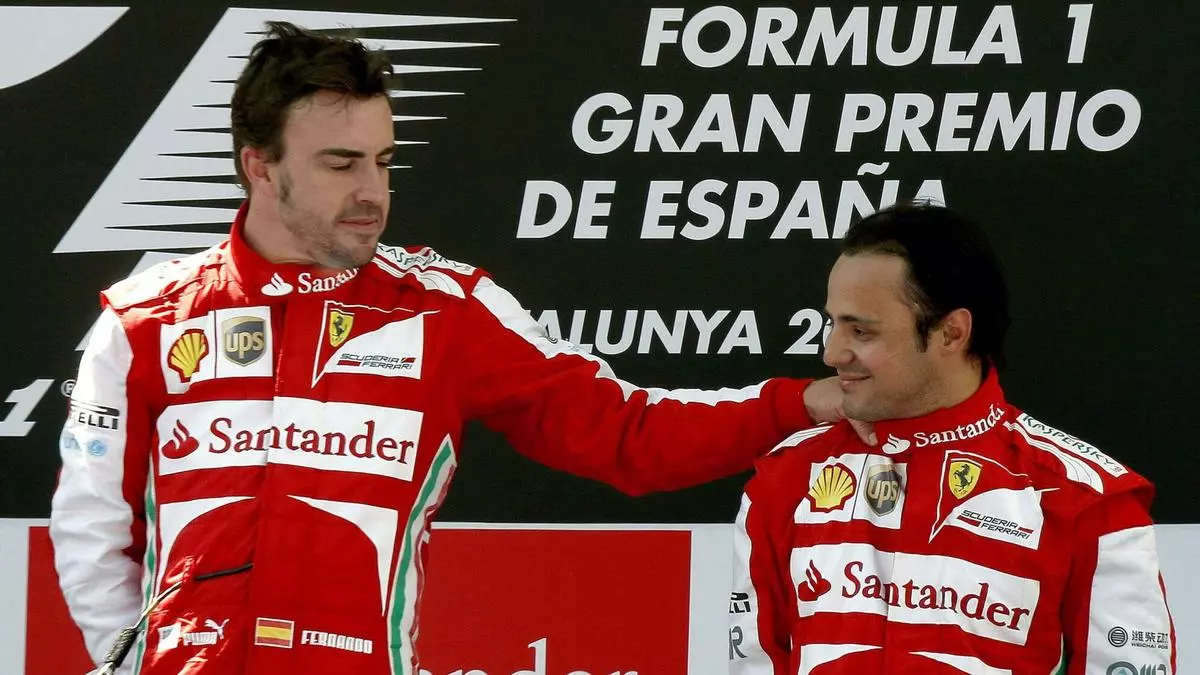
That is where Massa’s intervention becomes more than paddock nostalgia. He is not just another former driver offering loose commentary on a former rival. He is someone who shared Ferrari’s most pressurized years with Alonso and who understands the psychology of a champion trapped between competitive instinct and diminishing returns. When someone like Massa implies that Alonso may be reaching the edge of viable continuation, the remark lands less as gossip than as recognition of a familiar Formula 1 ritual: the moment when the sport begins discussing a legend’s exit before the legend is ready to say the word himself.
There is also a deeper irony here. Alonso has spent much of his career defeating the timelines others tried to impose on him. He came back when many thought his Formula 1 story was over, remained operationally sharp long after peers had faded, and continued to drive with a level of aggression and clarity that protected him from the usual language of decline. But Formula 1 is ruthless in one specific way: it eventually shifts the conversation from what a driver still is to what the project around him no longer is. A champion can outrun age for a while. He cannot indefinitely outrun a car that no longer justifies belief.
That is why Alonso’s case feels larger than a single season. It touches the old Formula 1 tension between legacy and timing. Champions rarely leave at the exact moment the public would script for them. They stay because they still feel the work inside them, because they still believe one more technical cycle might open the right door, because hunger usually survives longer than outside consensus. But the sport judges differently. It asks whether the surrounding project still offers enough return to justify the cost of persistence.
The deeper pattern is clear. This is not only about whether Fernando Alonso retires soon. It is about how Formula 1 decides when greatness has stopped being forward-looking and started becoming resistant to closure. Massa’s warning matters because it shifts the frame from admiration to timing, from talent to project viability, from legend to strategic exit. And in Formula 1, that is usually when the future stops belonging entirely to the driver.
Beyond the news, the pattern. / Beyond the news, the pattern.