

 Phoenix 24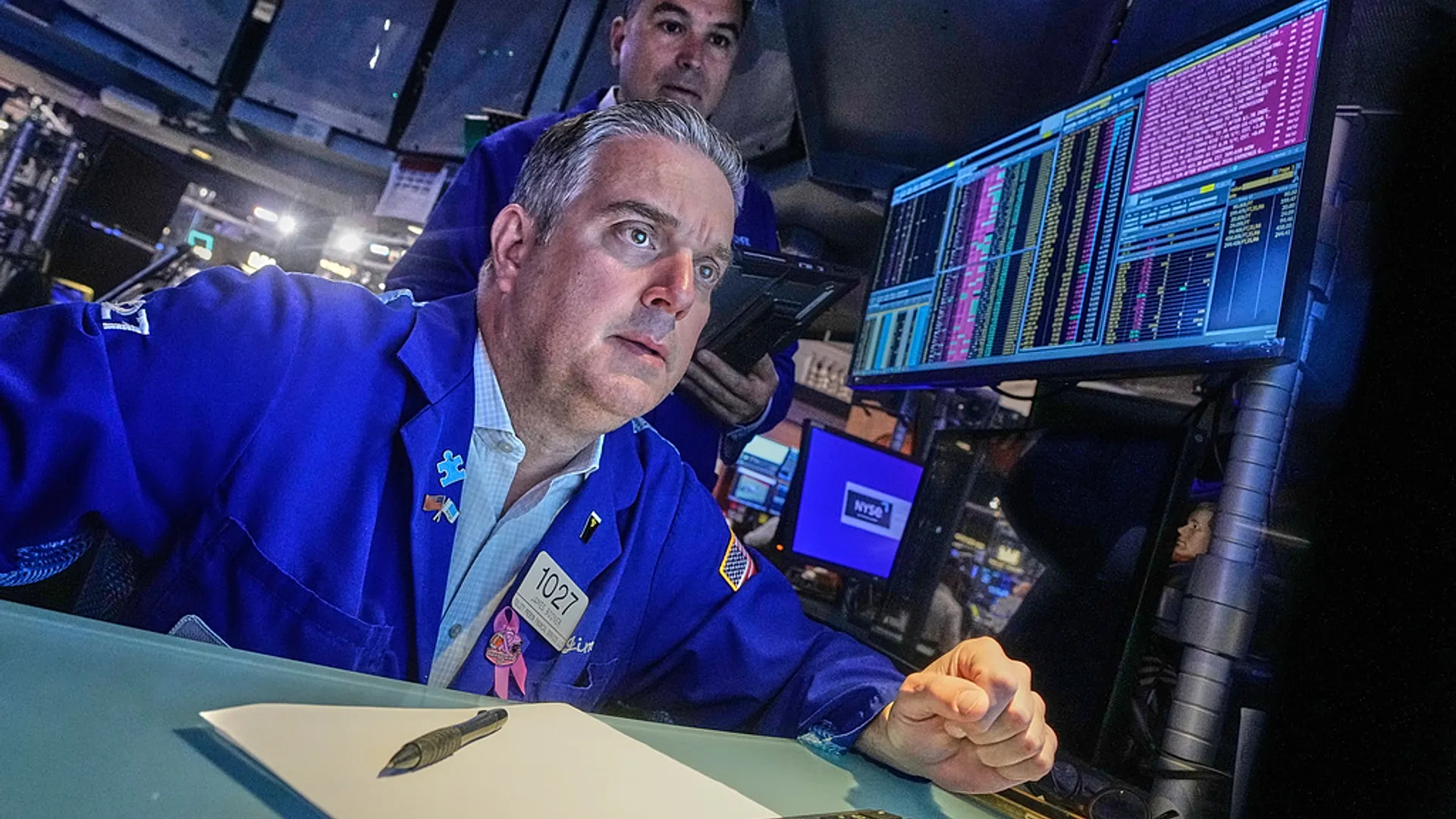
The trading floors from Frankfurt to Hong Kong moved in synchronized hesitation—a silence that said more than any statement. Every investor on the planet was waiting for two men to speak.
Shanghái, octubre 2025.
Hours before Donald Trump and Xi Jinping meet in Singapore, world markets have entered a state of suspended animation. Equity indices across Asia and Europe oscillated within narrow ranges, while bond yields and commodities froze under the weight of anticipation. The summit, the first direct encounter between both leaders since Trump’s re-entry into U.S. politics, could redefine the trade dynamics that have shaped global markets for nearly a decade.
In Tokyo, the Nikkei 225 dipped slightly, while Hong Kong’s Hang Seng clawed back early losses as traders bet on symbolic concessions rather than a breakthrough. Shanghai’s Composite Index remained flat—an unusual stillness for a market that normally reacts to every diplomatic tremor. According to analysts at the Bank for International Settlements, volatility indexes are behaving as if “the world’s liquidity valves have been half-closed.”
From London, the Financial Times described the mood as “a collective pause between two eras: the post-globalization hangover and the recalibration of power.” European stocks edged higher, supported by banking earnings and export optimism, yet investors avoided aggressive positions until the summit’s tone becomes clear.
The core issue, according to the Peterson Institute for International Economics, is not tariffs themselves but technology. Washington demands tighter restrictions on Chinese semiconductor and AI components, while Beijing seeks to dismantle remaining barriers on its electric-vehicle exports. The outcome will shape global supply chains more decisively than any speech since the 2019 trade truce.
Currency traders are treating the event as a geopolitical rate decision. The dollar index held firm near yearly highs; the yuan hovered at 7.31 per U.S. dollar after mild intervention by the People’s Bank of China. In Frankfurt, the euro strengthened marginally amid signs that Europe may benefit from renewed trade corridors if the two powers agree to reopen logistics channels.
Inside the U.S., corporate lobbies have been quietly recalculating their exposure. The U.S. Chamber of Commerce released a memo urging “stability of rules” for agricultural and digital sectors. Wall Street strategists from Morgan Stanley observed that “the market no longer prices peace—it prices predictability.” Meanwhile, commodity traders in Dubai reported sharp declines in hedging volume, reflecting collective restraint.
In Beijing, state media framed the meeting as an opportunity for “restoration of rational dialogue.” Foreign Minister Wang Yi reiterated that “a multipolar world is not a threat but an equilibrium.” His remark was interpreted as a message to both Washington and Brussels: China expects recognition as an equal partner, not a subordinate.
Across the Pacific, Trump’s team has signaled a transactional approach—linking tariff reductions to commitments on currency stability and agricultural imports. Yet his rhetoric remains combative. During a rally in Florida days earlier, he declared that “America must win again, at the table or in the markets.” For investors, that unpredictability is the real variable: whether Trump negotiates or improvises.
The International Monetary Fund warned that prolonged uncertainty could trim up to 0.4 percent from global GDP growth in 2026. The World Trade Organization added that logistical frictions between the two largest economies still account for nearly 40 percent of trade-flow disruptions worldwide. For many emerging nations—from Vietnam to Mexico—the summit’s outcome could determine which manufacturing corridors thrive or fade.
In Singapore, where security teams prepared the meeting venue, regional analysts described the moment as “half diplomacy, half theatre.” The symbolism is undeniable: two rival economic models seated at the same table, each claiming the mantle of global leadership. Yet beyond the cameras, negotiators are expected to focus on phased tariff rollbacks, digital-trade standards, and agricultural quotas—issues that directly affect the price of food, chips, and energy worldwide.
From Doha, energy experts emphasized how the summit also intersects with OPEC policy. If a thaw emerges, it could moderate oil demand projections; if talks fail, renewed tension could drive crude back above USD 90 per barrel. The dual dependence—China as consumer, the U.S. as producer—remains one of the world economy’s most delicate balances.
Markets, in essence, are not waiting for peace—they are waiting for a signal. The last time Trump and Xi shared a stage, in Buenos Aires (2018), a single phrase about “mutual respect” triggered a trillion-dollar rally. Now, with algorithmic trading systems scanning every syllable, even tone and body language can move indexes within seconds.
By late afternoon, European exchanges closed marginally higher, yet no one celebrated. The quiet optimism felt like holding breath underwater: calculated, tense, and temporary. When the summit doors open in Singapore, the first handshake will be measured in microseconds on trading screens from New York to Shenzhen.
Lo visible y lo oculto, en contexto. / The visible and the hidden, in context.