

 Phoenix 24

A forgotten kitchen note reveals the woman behind Hollywood’s legend.
Beverly Hills, United States
A handwritten Thanksgiving stuffing recipe attributed to Marilyn Monroe has sold for $16,000 at Julien’s Auctions, more than five times its highest presale estimate. The unusual document, believed to date from around 1954, was originally valued at between $2,000 and $3,000 before attracting considerable interest from collectors. Sold on June 4 during the 100 Years of Marilyn auction, the recipe offers an unexpected glimpse into the private life of one of Hollywood’s most enduring cultural icons. Its renewed attention ahead of Thanksgiving illustrates how ordinary personal belongings can acquire extraordinary historical and financial significance.

The manuscript consists of a single sheet of City Title Insurance Company stationery, covered in pencil handwriting on both sides. Rather than containing a simple holiday preparation, it describes an elaborate stuffing for chicken or turkey involving approximately 18 ingredients. Monroe’s instructions include soaking sourdough French bread in cold water, preparing chicken giblets and incorporating onions, celery, herbs, Parmesan cheese, raisins and several varieties of nuts. The actress also included instructions for securing the stuffed bird before roasting it and suggested serving the meal with potatoes, mushrooms and peas.

One handwritten detail has generated particular curiosity among historians and collectors. At the top of the page, Monroe wrote “No Garlic,” an instruction that auction specialists have tentatively connected to her marriage to baseball legend Joe DiMaggio. Some accounts suggest that the former New York Yankees star disliked garlic, raising the possibility that the recipe reflected his culinary preferences. However, there is no conclusive evidence that Monroe prepared the dish specifically for DiMaggio or that the manuscript was written during their marriage.
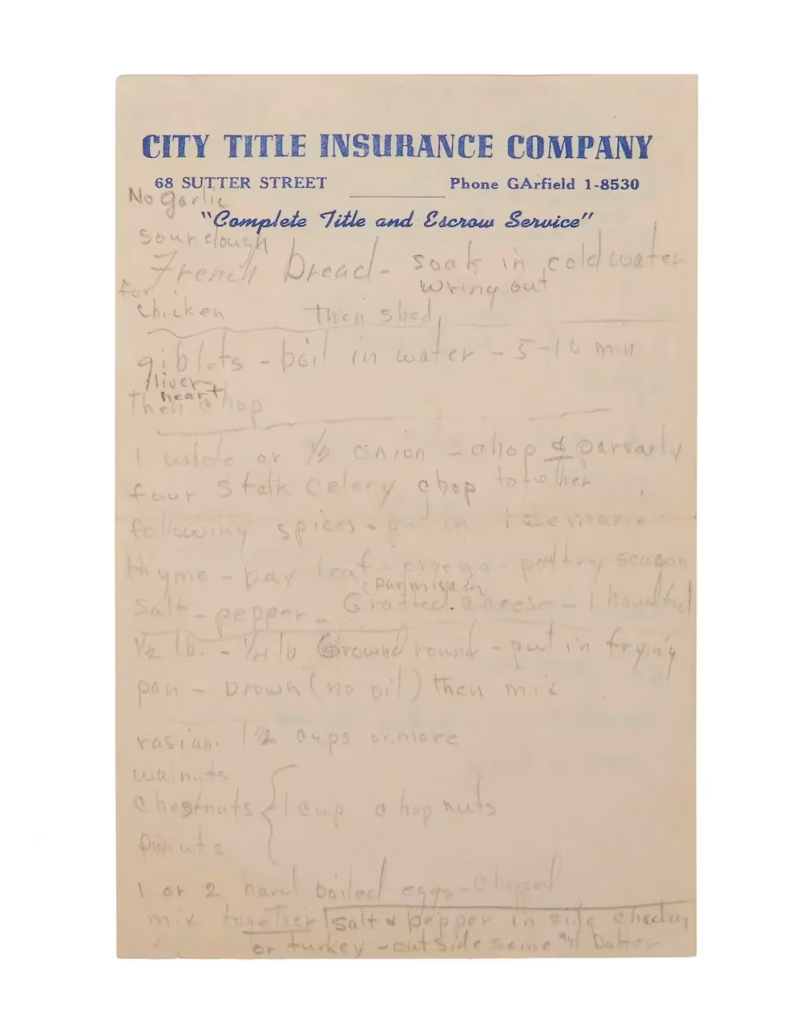
The couple married in January 1954 and separated nine months later, although they maintained a relationship after their divorce. Researcher and Monroe memorabilia specialist Scott Fortner has cautioned against interpreting the stationery or the reference to garlic as definitive evidence of when or why the recipe was written. The presence of a San Francisco business address on the paper does not establish that the actress composed the document in that city. Such uncertainties distinguish documented historical material from interpretations developed around celebrity memorabilia.
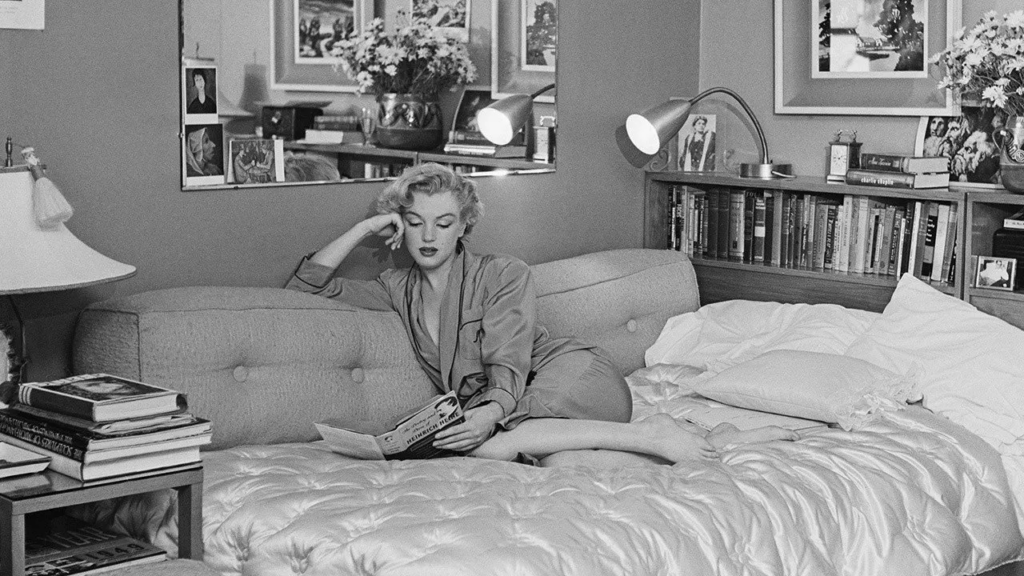
The recipe was reportedly discovered more than a decade ago among personal belongings associated with Lee Strasberg, Monroe’s influential acting teacher, who inherited much of her estate. Its appearance at auction coincided with celebrations marking the centenary of the actress’s birth in 1926. Julien’s Auctions assembled a collection of photographs, personal correspondence, makeup products, clothing and handwritten documents intended to reveal aspects of her life beyond the characters she portrayed on screen.
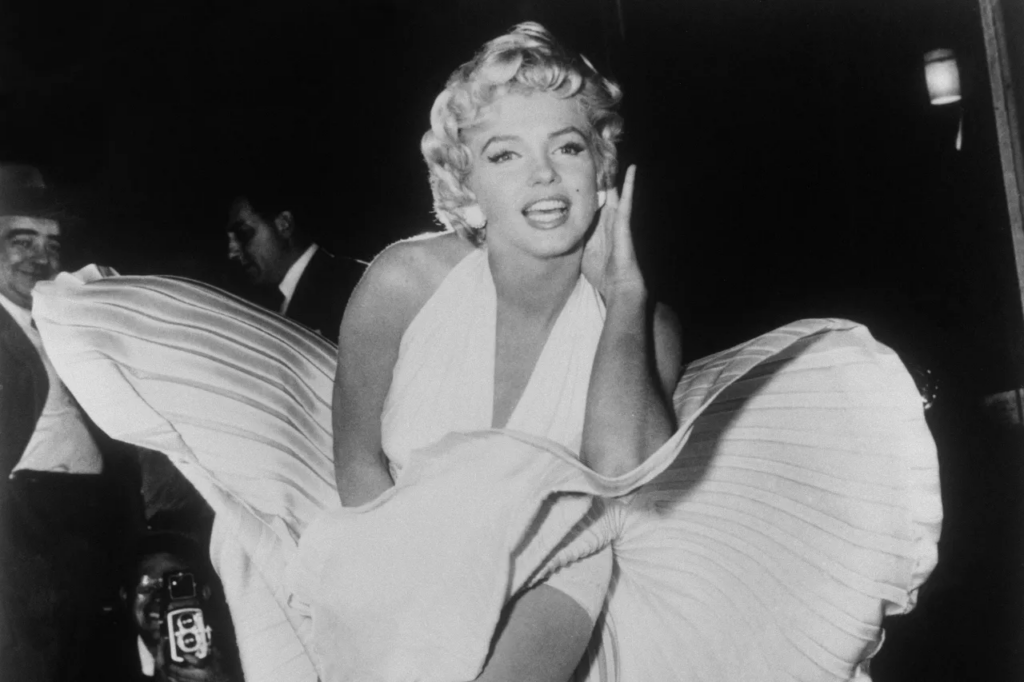
Other pieces attracted substantial bids. A 1950s evening gown associated with Monroe sold for $32,000, while her first contract with 20th Century Fox, signed in 1946, reached $76,800. These results demonstrate the continuing commercial appeal of objects connected to her career and personal history. Yet the appeal of the recipe lies in its distance from the glamour traditionally associated with Monroe.

The sale also reflects a broader phenomenon within the international collectibles market. Personal possessions can acquire value because they provide tangible connections to public figures whose cultural influence survives long after their deaths. Handwriting, ordinary household objects and private documents offer collectors a sense of proximity that photographs and films cannot always reproduce. Their financial value depends on provenance, authenticity, rarity and demand, rather than their original practical purpose.

For Marilyn Monroe’s admirers, the handwritten recipe presents a different perspective on an actress frequently remembered through glamorous photographs and celebrated film performances. Its ingredients and preparation instructions suggest the everyday interests of a woman whose private identity was often overshadowed by her public image. More than six decades after her death, even an ordinary kitchen note continues to invite curiosity about the person behind the legend.
Behind Every Fact, a Deeper Story.