

 Phoenix 24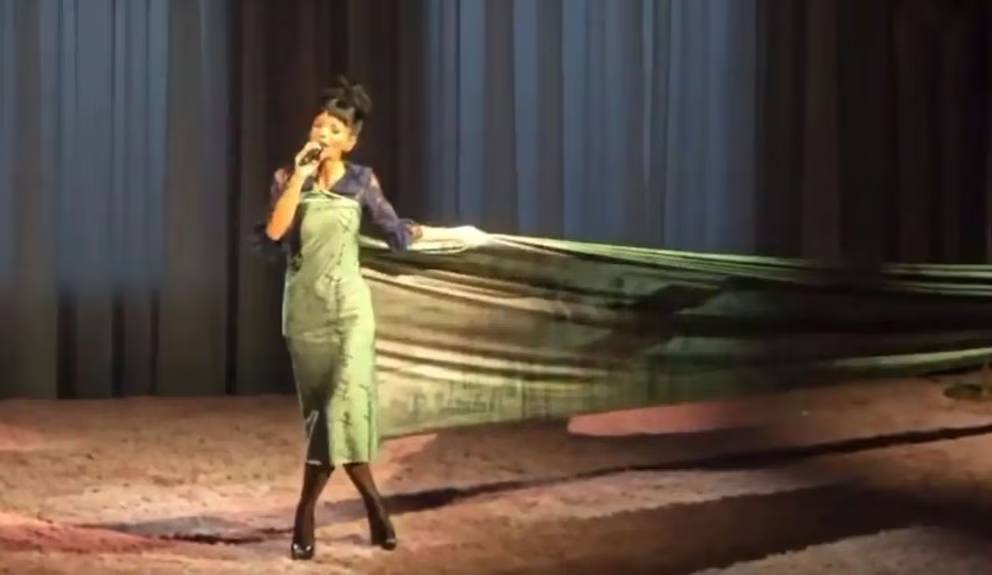
Revenge now wears fabric and spotlight.
Glasgow, March 2026
Lily Allen walked onstage and turned a breakup into an object that refuses to be ignored: a dress printed with what she framed as “receipts,” screenshots and purchase records that, in her performance narrative, point to alleged infidelity by her ex-husband David Harbour. The gesture is not just provocation. It is real-time narrative control, a way to fix a version of events before celebrity coverage dissolves it into vague hints and symmetrical statements. Entertainment reporting described the moment during the opening stretch of her West End Girl tour in Glasgow, tied to a song in which Allen channels betrayal as both trauma and argument. The “receipts” motif is the key cultural code here. In pop culture, receipts have become a synonym for proof, even when they function more as emotional evidence than as courtroom-grade verification.
The important point is the form of the act. Allen did not merely imply. She staged. The dress operates as a portable archive, a wearable exhibit designed to turn private suspicion into a public symbol. The audience does not receive only a song. It receives an “evidence object” engineered for photographs, clips, and repetition. In a media economy where attention is bought with shock and sustained with icons, Allen compressed pain, accusation, and aesthetics into a single surface. A dress made of “proof” becomes a headline without needing explanation, which is exactly why it travels so fast.

That speed also reveals the ethical fault line. The symbol is built on an allegation. Entertainment coverage tends to protect itself with careful language, alleged, reported, suggested, said. That caution is not politeness, it is legal insulation. But the audience’s cognitive process is rarely cautious. When an artist implies infidelity with documentary-looking artifacts, many people interpret it as confirmation, even without independent corroboration. Aesthetic proof is easily mistaken for factual proof. That confusion is part of the power of the gesture and part of its risk. The stage turns narrative into spectacle, and spectacle often bypasses verification.
There is a generational shift underneath this. Breakups used to be managed through interviews, publicist statements, and controlled silence. Now they are managed through performance, wardrobe, staging, and objects built for social sharing. The celebrity no longer waits for the media to interpret the story. She produces the medium live. Allen is not only singing about betrayal. She is building a symbolic courtroom: the dress becomes exhibit, the lyric becomes testimony, the crowd becomes jury, the applause becomes verdict. That is why the moment feels bigger than gossip. It is a format, and modern celebrity culture is optimized for formats that convert private conflict into public certainty.
From a reputational standpoint, the move also fits a strategic logic. Allen’s return to touring arrives alongside a new artistic phase that, according to coverage, draws heavily on divorce as narrative material. In that context, the dress is not an isolated stunt. It is a brand anchor for the era: I am returning with a story, and I will not let others soften it for me. In the attention economy, authenticity is both demanded and doubted. Allen’s approach is a kind of theatrical authenticity, and it often works precisely because it looks tangible. Pain becomes legible when it has form. Here, the form is the receipt.

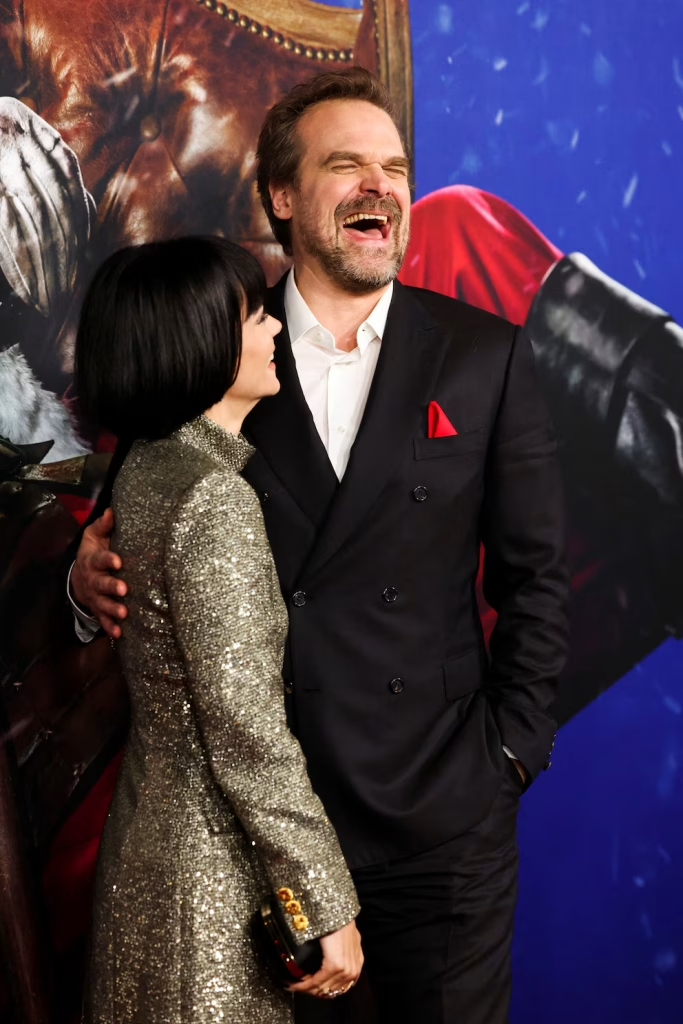
On the other side sits the trap for the person being implicated. Harbour, a globally recognizable actor, becomes a character inside a story he does not control. Silence is frequently read as guilt, not prudence. Response can amplify the cycle and validate the story as a central public question. This is the modern dilemma: if you answer, you escalate. If you do not, you surrender the frame. Allen’s performance pushes toward that choke point, because the gesture is designed to force reaction under conditions she has already shaped.
There is also a cultural reason the “receipt” symbol works so well right now. Public trust is thin, and people are tired of vague narratives. In an era saturated with disinformation, audiences hunger for artifacts: screenshots, timestamps, records. Allen responds to that hunger with a simulation of evidentiary certainty. Even if no one reads every line on the dress, the viewer absorbs the idea of trace. And in platform culture, trace often equals truth, or at least truth-feeling. The emotional logic becomes: if it can be printed, it must be real. That logic is powerful, and it is also dangerously incomplete.
Because even if a receipt is real, meaning is rarely automatic. A receipt can show a purchase, not necessarily intent. A message can exist and still require context. The aesthetics of proof accelerates judgment and reduces nuance. That is why this kind of stage gesture is both effective and controversial. Allen is not playing a neutral game. She is playing an interpretation game, where impact matters more than public precision. In entertainment, impact usually wins.
So the deeper question is not whether the dress proves anything in the strict sense. The question is what it accomplishes when people feel that it does. Is it catharsis, marketing, or symbolic justice. It can be all three at once. Modern pop has normalized turning wounds into product without implying the wound is fake. The industry offers an unspoken rule: if you are going to suffer publicly, monetize the narrative. Allen turns that rule into stage art and makes it visible.
Ultimately, this is less a story about a relationship than about how public truth is manufactured through performance. The “receipts” dress is a tool of narrative power: it transforms a breakup into an icon, turns a version into an image, and forces everyone else to respond inside a frame already designed by the person wearing it. The dress may not function as proof in any formal sense. But it functions as proof in the only currency that matters in viral culture: belief.
Narrative is power too. / Narrative is power too.