

 Phoenix 24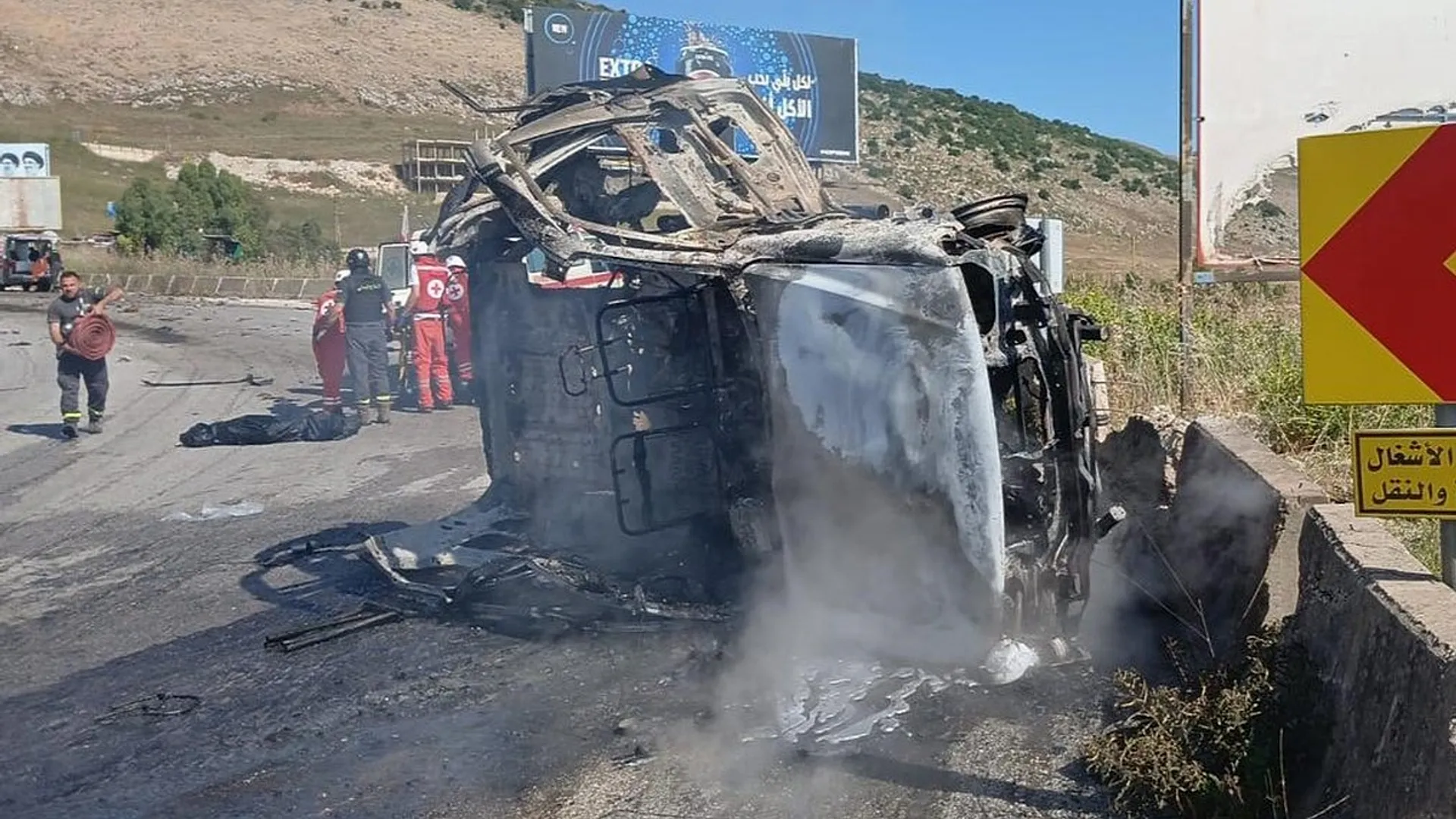
A ceasefire survives only when sovereignty is respected.
Southern Lebanon | June 2026. Israel’s latest airstrike in southern Lebanon has turned a fragile ceasefire into a diplomatic stress test, killing nine people, including three Lebanese soldiers, and reopening the central question that has haunted the border for months: whether any security framework can survive when state institutions themselves become targets. The strike hit a Lebanese military vehicle between Khardali and Nabatieh, killing a brigadier general, a captain and another soldier, according to Lebanon’s army. For Beirut, the incident was not merely another battlefield episode, but a direct assault on the state structure expected to stabilize the south.
Israel said the vehicle was moving suspiciously inside what it described as an active combat zone, adding that its operations are aimed at Hezbollah, not the Lebanese Army. That explanation may limit immediate diplomatic damage in Israeli strategic messaging, but it does not erase the political effect of the strike. When a national army loses officers during a ceasefire environment, the conflict shifts from militia confrontation to sovereignty crisis. That is precisely why Lebanese officials framed the attack as a deliberate blow against efforts to consolidate a durable halt to hostilities.
The timing matters. The attack came only days after Lebanese and Israeli officials accepted a United States backed framework designed to reduce violence along the border. Under that proposal, Hezbollah would stop attacks, move its forces away from the Israeli frontier and allow the Lebanese Army to assume exclusive security control in designated areas. But Hezbollah has rejected any formula that does not include a full Israeli withdrawal from Lebanese territory, leaving the ceasefire architecture trapped between external mediation, Israeli security doctrine, Lebanese institutional weakness and Iranian regional leverage.
President Joseph Aoun’s response added another layer to the crisis. By denouncing the strike as a violation of Lebanese sovereignty while also criticizing Iran’s role in treating Lebanon as a bargaining chip, he exposed the double bind of the Lebanese state. Beirut faces Israeli military pressure from the south and Hezbollah’s strategic autonomy from within, while Tehran and Washington treat the Lebanese arena as part of a broader negotiation map. In that equation, Lebanese sovereignty becomes both the stated objective and the most fragile variable.
The immediate risk is not only renewed fire across the border, but the collapse of confidence in the Lebanese Army as the neutral security pillar envisioned by diplomatic proposals. If Israeli forces continue operating in zones where Lebanese soldiers are deployed, and if Hezbollah continues presenting itself as the indispensable resistance force, the state loses the very space it needs to reclaim authority. A ceasefire that cannot protect soldiers tasked with enforcing stability is not a ceasefire; it is a pause inside a larger war structure.
The new strike therefore complicates more than a truce. It tests whether Lebanon can be treated as a sovereign actor rather than a battlefield corridor between Israel, Hezbollah, Iran and Washington. The deaths of Lebanese soldiers may harden domestic pressure on Beirut, deepen mistrust toward Israeli guarantees and give Hezbollah fresh political material to challenge any demilitarization framework. In southern Lebanon, the question is no longer whether the ceasefire is fragile. The question is whether anyone with power in the conflict still needs it to hold.
Más allá de la noticia, el patrón. / Beyond the news, the pattern.