

 Phoenix 24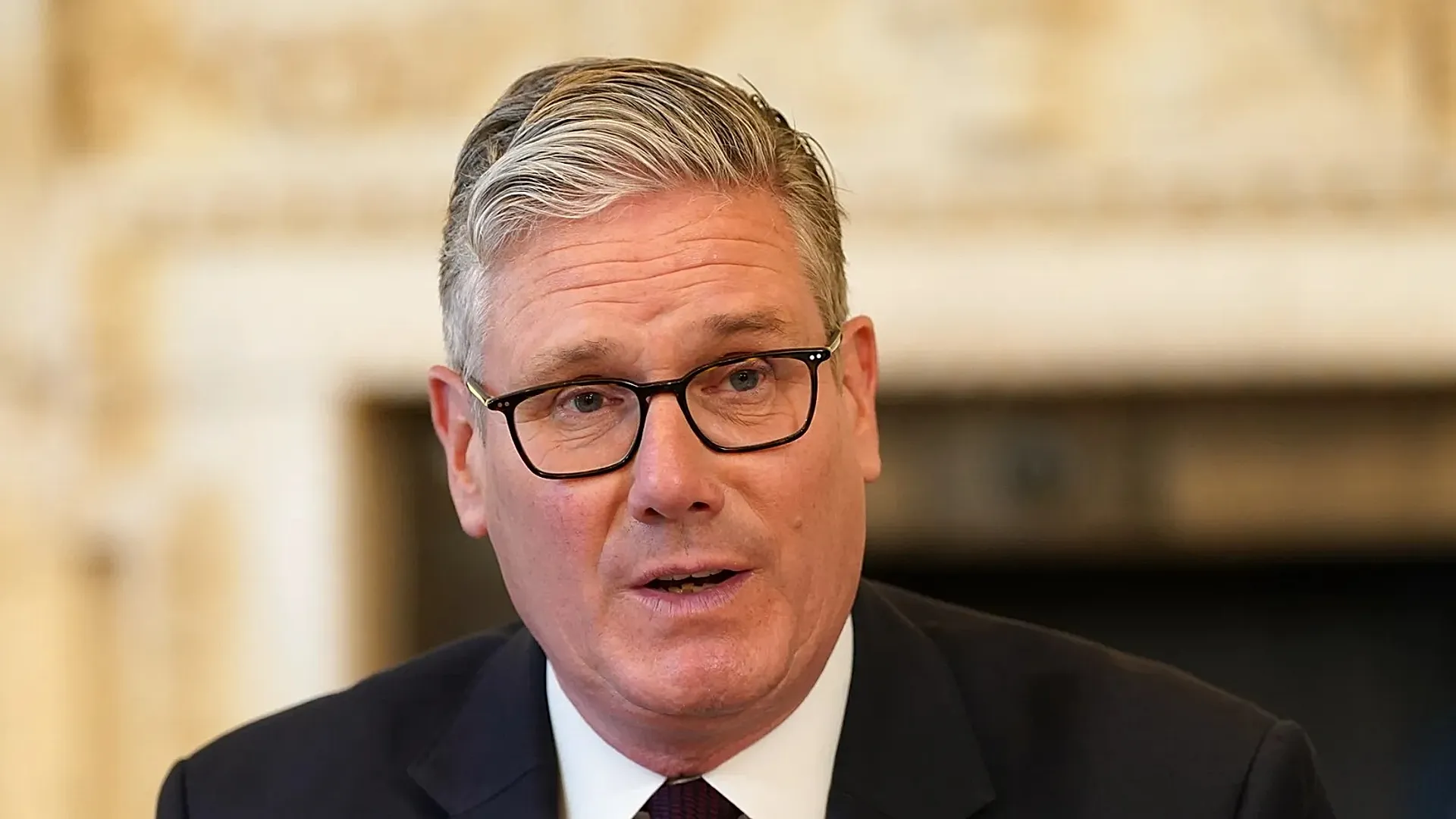
Britain prepares for another political transition.
LONDON, UNITED KINGDOM — July 2026.
Outgoing British Prime Minister Keir Starmer has described his decision to resign as “deeply personal,” acknowledging the emotional and political weight of leaving Downing Street. In his first interview since announcing his departure in June, the Labour leader said the process had been difficult and required him to consider what was best for himself, the country and the Government. Starmer will remain prime minister until the Labour Party completes the process of selecting his successor. His departure opens another period of political uncertainty for the United Kingdom only two years after Labour returned to power with a commanding parliamentary majority.
Starmer did not present his resignation simply as the consequence of a single political crisis or internal disagreement. Instead, he portrayed it as the result of a broader personal calculation shaped by the pressures of office and the demands placed on a modern prime minister. His language suggested that political leadership cannot always be separated from the physical and emotional strain experienced by the individual holding power. The admission offered an unusually personal perspective from a politician often associated with discipline, restraint and institutional seriousness.
Attention has quickly turned toward Andy Burnham, the former mayor of Greater Manchester and newly elected member of Parliament for Makerfield. Burnham recently returned to Westminster after winning the June by-election and is widely regarded as a likely contender for the Labour leadership. Starmer said he had always maintained a good relationship with Burnham, while also directing several warnings toward whoever succeeds him. The transition could therefore become not only a contest between personalities, but a debate over the political priorities Labour should adopt after Starmer’s departure.
Burnham has positioned himself as a politician focused heavily on domestic affairs, regional inequality and economic reform. He has promised to challenge trickle-down economics and move Labour away from policies he associates with neoliberalism. Following his victory in Makerfield, Burnham argued that the party had one final opportunity to change and develop a new politics based on unity and hope. That message may appeal to members who believe Labour must recover a stronger social and economic identity after a period dominated by administrative stability and international diplomacy.
Starmer, however, warned that his successor would not be able to reduce Britain’s diplomatic engagement without accepting serious consequences at home. He argued that international conflicts now influence household finances, national energy security and living standards too directly for a prime minister to concentrate exclusively on domestic policy. The wars involving Ukraine and Iran were presented as examples of crises whose economic effects reach British families through prices, supply chains and financial uncertainty. His warning challenged the idea that foreign policy can be treated as secondary when voters are primarily concerned about wages, housing and public services.
The outgoing prime minister specifically connected the conflict in Ukraine with the long-term pressure placed on European economies and household budgets. He also pointed to instability surrounding Iran and the Strait of Hormuz, one of the world’s most strategically important energy corridors. Any disruption in that region can affect oil prices, transportation costs and inflation far beyond the Middle East. Starmer’s central argument was that a British leader concerned about household bills must also be concerned about diplomacy, war and the stability of international trade routes.
His emphasis on international affairs carries a degree of political irony because Starmer was repeatedly criticized for spending too much time abroad during his premiership. Opponents accused him of prioritizing meetings with foreign leaders while domestic problems continued to accumulate, leading some critics to label him “Keir the absent.” Starmer’s defense is that diplomacy was not an escape from national problems, but one of the instruments required to confront them. The disagreement reflects a broader tension in democratic politics, where leaders are expected to remain visible at home while responding continuously to crises that develop beyond national borders.
The leadership contest is therefore likely to expose competing interpretations of Labour’s future. One vision may emphasize domestic renewal, redistribution, regional development and a clearer break with the economic policies of previous decades. Another may insist that Britain cannot protect its prosperity without sustained involvement in European security, global diplomacy and international economic coordination. These priorities are not necessarily incompatible, but limited political capital and public patience could force the next leader to decide which message receives greater prominence.
Starmer leaves office after governing during a period of continuing geopolitical instability and intense pressure on living standards. His resignation also demonstrates how quickly large electoral victories can lose their protective force when public expectations exceed the Government’s capacity to deliver visible change. Labour’s parliamentary strength may provide institutional continuity, but it cannot eliminate dissatisfaction over prices, public services, growth and political direction. The next prime minister will inherit not only the authority of government, but the unresolved tensions that contributed to Starmer’s departure.
His final intervention may ultimately be remembered less for its personal tone than for its warning about the nature of contemporary leadership. Domestic prosperity can no longer be separated easily from war, energy, shipping routes, alliances and international markets. Britain’s next leader may promise to spend more time focused on conditions at home, but the outside world will continue entering British households through electricity bills, food prices and economic insecurity. Starmer’s departure closes one premiership while leaving open the deeper question of whether any successor can successfully govern both the nation and the pressures surrounding it.
Phoenix24 — Global news with clarity and perspective.