

 Phoenix 24

When mentorship and fame intertwine, the unseen weight can shape an artist’s inner world.
Los Angeles, December 2025
Actor Jeremy Allen White, known for his versatile performances on screen and stage, recently opened up about a personal chapter involving late-night text exchanges with Bruce Springsteen, a figure whose influence extends beyond music into the broader culture of entertainment. In candid remarks made during a public conversation, White described how, early in his rise, Springsteen reached out to him through texts that arrived after most of the world had gone quiet. Those messages, supportive yet intense, underscored a dynamic that White characterized as both affirming and pressure-laden, reflecting the complexities of navigating artistic relationships under the glare of public attention.
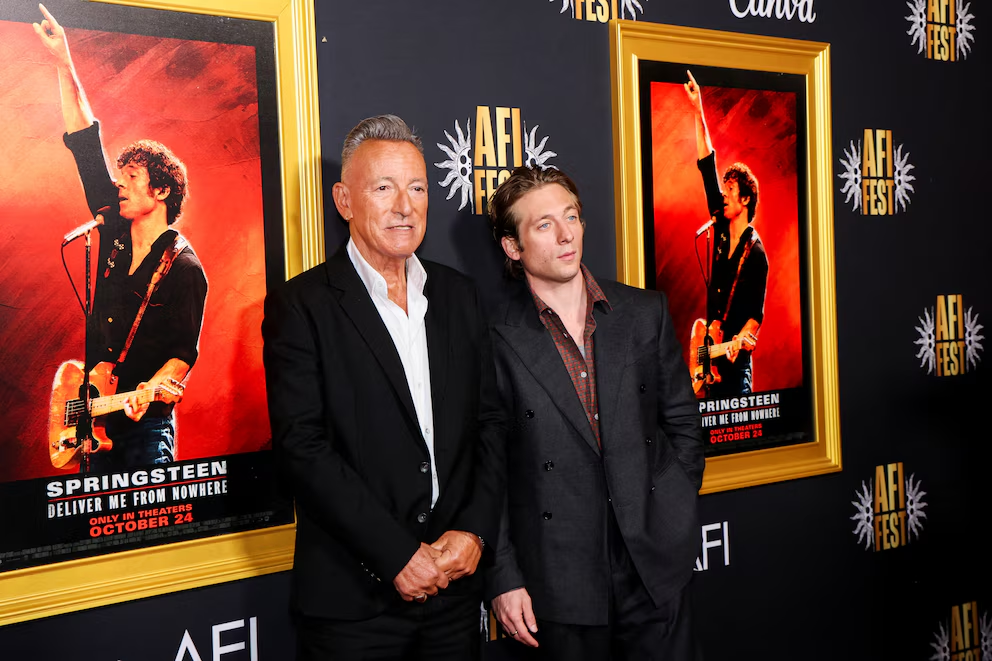
White’s reflections illuminated a facet of the creative life that rarely makes headlines: the emotional terrain navigated by performers when external expectations collide with internal resolve. Springsteen, an icon whose own career spans decades and genres, offered White words that White interpreted as encouragement, yet delivered in a manner that heightened the stakes of his own professional journey. According to White, the messages “came at night, when everything felt heavy,” and carried a dual weight: the excitement of recognition and the burden of living up to a standard associated with one of the most revered names in contemporary art.
The actor’s openness about this experience resonated widely, sparking conversations about the nature of influence, validation and the psychological pressures that accompany mentorship in high-profile environments. White did not frame Springsteen’s messages as criticism, but pointed to the emotional ambivalence that arises when praise and expectation arrive together. The phenomenon, he implied, reveals how the reception of encouragement can vary dramatically depending on the moment it is received and the personal context of the recipient.
For White, the experience became a teaching moment in his broader relationship with his craft and his sense of identity as an artist. He spoke about learning to differentiate between external signals of validation and the internal compass that guides his own creative instincts. That distinction, he suggested, is pivotal for anyone striving to maintain authenticity in a milieu where public perception and personal ambition often intersect.

Observers in the entertainment community noted that White’s disclosure underscores a recurring theme in artistic circles: the intricate interplay between support and expectation, praise and pressure. Mentorship, especially from established figures, can inspire burgeoning talent, yet it can also magnify self-scrutiny and intensify internal dialogues about worth, performance and trajectory. In this case, the connection between White and Springsteen highlights both the generosity that can reside in artistic support structures and the unintended pressures that can accompany them.
Springsteen’s own career, marked by decades of critical acclaim and public affection, exemplifies the cultural weight that certain figures carry. His outreach to White reflected a willingness to engage with younger generations of performers, yet the reception of that gesture illustrates how mentorship can be emotionally nuanced. White’s account did not diminish the respect he holds for Springsteen; rather, it offered a layered view of how relationships in the public sphere can shape personal narratives in unexpected ways.
The broader conversation sparked by White’s remarks invites reflection on how artists manage the confluence of external influence and internal equilibrium. In an industry where private moments are often refracted through public interpretation, finding a path that honors both personal integrity and professional guidance becomes a nuanced endeavor. White’s narrative contributes to that discourse by highlighting that support, when filtered through the realities of expectation and self-doubt, can have complex emotional resonances.
Ultimately, White’s experience points to a universal theme that transcends celebrity: the challenge of integrating outside voices without losing sight of one’s own creative heartbeat. The actor’s honesty about pressure and expectation may serve not only as a personal reflection but as an invitation for audiences to understand the unseen emotional ecosystems that underpin artistic life.
Phoenix24. The visible and the hidden, in context. / Phoenix24. Lo visible y lo oculto, en contexto.