

 Phoenix 24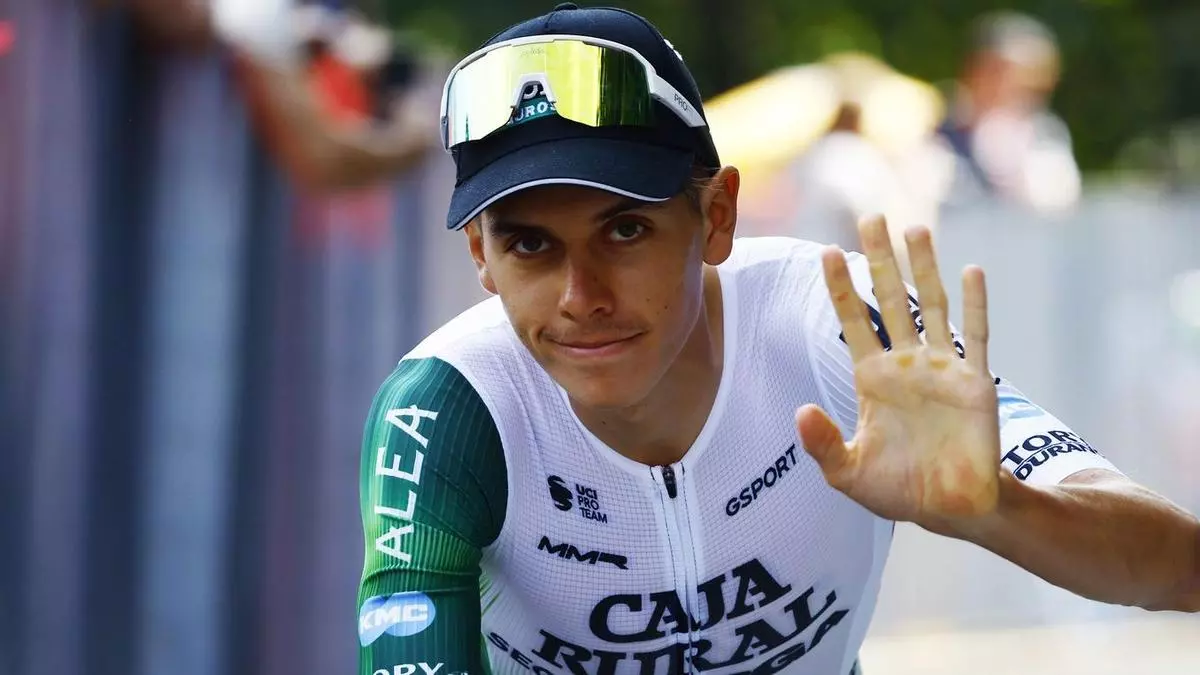
The season can disappear in a single descent.
Barcelona, April 2026
Jaume Guardeño’s serious training accident has shaken Spanish cycling far beyond the usual register of sporting concern. At 23, he had already begun to look less like a distant prospect and more like one of the most credible young climbers in the national scene. His hospitalization after a crash involving a vehicle has therefore landed not only as a medical emergency, but as a sudden interruption of a trajectory that was gaining real force. In cycling, promise always feels vulnerable. Yet moments like this remind the sport just how brutally literal that vulnerability can become.
What makes the news especially painful is the timing. Guardeño had recently come off a strong stretch, including a visible performance in the Volta a Catalunya and the growing sense that he was entering a more decisive phase of his professional development. Riders at that stage are no longer living only on potential. They begin to attract expectation. Teams, analysts, and fans start to read their efforts not as isolated flashes, but as signs of structural arrival. A serious accident does more than halt momentum. It throws the entire rhythm of emergence into uncertainty.
Cycling remains one of the most unforgiving sports in this regard. Great talent can be built over years through discipline, endurance, and tactical intelligence, only to be destabilized in seconds by a training incident on an ordinary road. That is part of what gives the sport its strange emotional climate. Riders do not only compete against each other. They also compete against exposure itself, against terrain, speed, weather, fatigue, and the thin line separating control from disaster. Even outside race day, the profession never fully exits danger.
In Guardeño’s case, the seriousness of the injuries gives the story a weight far beyond seasonal disappointment. The immediate issue is not rankings, calendars, or race invitations. It is physical recovery and neurological stability. When a rider suffers major head trauma, the conversation changes completely. The sport pauses. Ambition pauses. The body becomes the whole story. That shift is often difficult for the public to absorb because cycling culture is built on endurance, on heroic continuity, on the idea that suffering can be pushed through. But certain moments resist all that language. They demand something quieter.
There is also a wider emotional impact on the peloton. Young riders rising quickly often become symbols of a team’s future and of a country’s sporting renewal. Guardeño had started to occupy that kind of space in Spain, where every emerging climber is watched through the longer memory of national cycling tradition. When such a rider is suddenly removed from the road by injury, the reaction is not only personal sympathy. It is the abrupt awareness that the sport’s future is built on bodies exposed to extraordinary precarity even in their most promising years.
The team dimension matters too. For Caja Rural, this is not just an operational setback but a human rupture. Development teams and second-tier structures in cycling depend heavily on continuity, trust, and incremental growth. A rider like Guardeño represents not only results, but investment of time, confidence, and strategic planning. When that line is broken by an accident, the consequences spread through the sporting project as well as through the emotional core of the team. In smaller structures especially, one rider’s trajectory can carry disproportionate symbolic value.
Still, the larger truth is more difficult and more important. Cycling often celebrates risk aesthetically while struggling to fully reckon with it morally. Descents, speed, aggressive training loads, open roads, and the culture of permanent exposure are treated as normal elements of the discipline. And they are. But every serious crash reopens the same unresolved question: how much danger has the sport truly normalized in order to preserve its identity. There are no easy answers there, only recurring reminders that talent in cycling is always developing inside a fragile pact with chance.
For now, everything else is secondary. Guardeño’s season, his possible race calendar, and the hopes already gathering around him all recede behind the immediate question of recovery. That is the harshest reset elite sport can impose. One day a rider is ascending toward a breakthrough. The next, the only meaningful victory is survival, then stability, then the slow and uncertain process of returning to self. In that suspended space, sport becomes very small, and life becomes the only result that matters.
Phoenix24: clarity in the grey zone. / Phoenix24: claridad en la zona gris.