

 Phoenix 24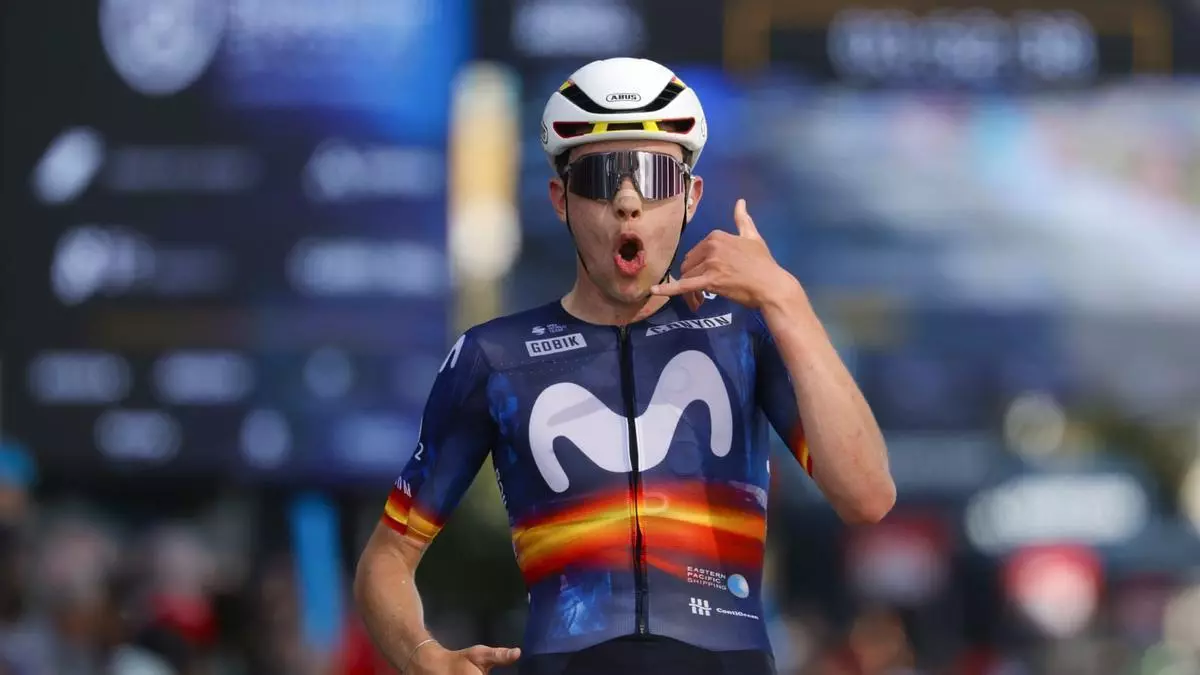
A solo attack turned promise into authority.
Padrón, April 2026. Iván Romeo delivered the kind of performance that does more than win a stage. It changes the tone around a rider. In the third stage of O Gran Camiño, the young Spanish cyclist turned aggression into control and control into a decisive solo victory, confirming that his name is no longer attached only to potential, but increasingly to competitive authority. What emerged in Galicia was not simply a strong day on the bike. It was a display of timing, strength and tactical conviction.
The move that defined the stage was built with distance still left to race, which made the victory more significant. Romeo did not wait passively for a final sprint or for others to shape the outcome. He helped break the race open on the key climb, contributed to the selection among the strongest riders and then trusted his own legs once the moment arrived to go clear alone. That choice matters because it reflects a rider beginning to compete with personality, not just talent. In elite cycling, that transition is often what separates prospects from real contenders.
His victory also reinforced the impression that Movistar is finding momentum in this edition of the race. After already showing tactical sharpness in previous stages, the team again managed to place itself at the center of the action rather than reacting from the margins. Romeo’s ride gave the squad another high value result, but it also projected something more important. It suggested internal depth, confidence and the ability to impose shape on a race instead of merely surviving it. That kind of authority always carries meaning beyond a single finish line.
What made the performance especially compelling was its composition. Romeo was not gifted a late gap by hesitation alone. He created the conditions for separation through repeated initiative and then sustained the effort with enough power to resist the chase. A win like that carries a different symbolic weight from a routine sprint or a conservative tactical success. It shows a rider willing to expose himself to failure in order to secure victory on his own terms. That is often the clearest sign of maturation in stage racing.
There is also a broader Spanish cycling angle behind the result. Romeo has long been regarded as one of the country’s most promising young riders, but expectations in Spanish cycling are never neutral. They are shaped by history, by the memory of grand tour champions and by the constant search for the next figure capable of carrying relevance across stages, classics and national identity. A ride like this inevitably feeds that conversation. Not because one stage victory rewrites a career, but because it reveals the kind of instinct around which bigger careers are often built.
The tactical context of O Gran Camiño gives the win even more texture. This is not a race won only through spectacle. Its varied terrain and selective stages reward riders who can read transitions, survive changes in rhythm and choose the exact moment to attack. Romeo did that with notable clarity. He rode with enough patience to stay in the right group and enough ambition to refuse a passive ending. That combination is not common in young riders unless something deeper is beginning to consolidate.
His performance also came with implications for the general classification, because the stage did not unfold in isolation from the race’s wider hierarchy. The attacks, splits and time gaps helped reshape the standings, reinforcing the sense that Romeo was not simply hunting a headline. He was intervening in the architecture of the race itself. Even if overall victory is not yet the central measure of his week, a rider who can influence both the stage and the broader competitive order announces himself differently. He becomes harder to dismiss as a specialist of the moment.
What Galicia witnessed, then, was more than a flashy exhibition. It was a controlled expression of rising authority from a rider entering a more serious phase of recognition. Romeo’s victory in Padrón does not complete his evolution, but it sharpens the outline of what he may become if the trajectory holds. In cycling, the most revealing wins are often the ones that show not only strength, but intent. This was one of them.
Beyond the news, the pattern. / Beyond the news, the pattern.