

 Phoenix 24
When bots outnumber humans, reality becomes speculative.
Global, September 2025
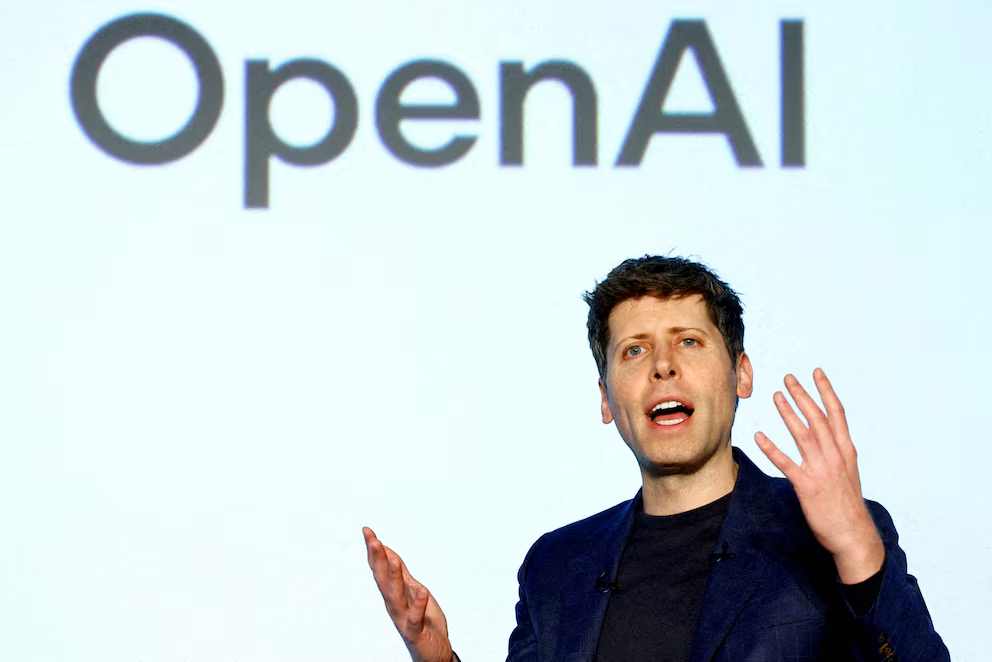
The so-called Dead Internet Theory has moved from obscure corners of online culture to mainstream debate. At its core, the idea is unsettling: much of the internet may now be driven less by human interaction and more by bots, algorithms, and automated systems. OpenAI’s chief executive, Sam Altman, recently suggested that the theory might hold some truth, acknowledging the exponential growth of large language model–driven accounts on platforms such as X. His admission reignited scrutiny over how much of what we encounter online is genuinely human.
The theory first emerged in niche forums nearly a decade ago, then circulated through alternative media spaces and gained visibility when it was profiled by established publications. It claims that since around 2016, human voices have been steadily displaced by automated engagement. While the conspiratorial tone of its earliest adherents made it easy to dismiss, the increasing presence of algorithmically generated content lends the argument a degree of plausibility.
Academics studying digital culture describe this shift as the rise of artificial interaction. Online environments are optimized for engagement metrics and scale, rather than authenticity. Social platforms reward what can be produced in bulk, often sidelining genuine expression in favor of endless streams of content shaped by machine logic. As a result, many users report that their online experiences feel oddly synthetic, as if they were interacting with a mirror of themselves rather than with other individuals.
Empirical data supports part of this perception. Estimates suggest that nearly half of all web traffic today is generated by automated systems. These range from advertising fraud bots to artificial intelligence crawlers and content farms. Increasingly, what appears as authentic interaction is the product of automated influencers, support chatbots, or mass-produced viral imagery. Distinguishing between human and machine presence has become harder than ever.
Still, the internet is not devoid of human life. Within private chat groups, encrypted messaging channels, and decentralized networks, human connection persists. Niche communities continue to thrive on authentic participation. These smaller spaces remind us that even amid a flood of automation, the drive for human conversation and creativity endures.
Altman’s change of tone is significant. Initially skeptical of the Dead Internet Theory, he has now acknowledged that the sheer volume of machine-driven accounts alters the very fabric of digital life. His perspective highlights the tension confronting the technology sector: rapid innovation in artificial intelligence can simultaneously empower and erode the human presence it seeks to augment.
The debate can be mapped across three dimensions. First, in terms of cultural origin, the theory reflects anxieties that began in North America but now resonate globally. Second, on the technological front, the infrastructure of the internet itself increasingly favors automated systems that mimic human presence. Third, in terms of resilience, ordinary users respond by retreating into smaller communities that preserve authentic interaction. These strands converge to suggest that while the internet is not literally dead, it is undeniably transformed.
The current landscape can be described through three dynamics. The first is content commodification. Algorithms prioritize whatever generates scale, regardless of authenticity. The second is the erosion of trust. The proliferation of machine-made profiles and posts undermines confidence in identifying real human voices. The third is escape into enclaves. Users seek intimacy and credibility in smaller digital spaces as they grow disillusioned with mainstream platforms.
Taken together, the Dead Internet Theory is less a conspiracy than a warning. It underscores the risks of mistaking activity for authenticity, of confusing a flood of signals with meaningful dialogue. Even if not all its claims can be verified, the theory captures a mood that millions recognize in their daily scrolling: the sense of inhabiting a landscape where human presence feels diluted, where silence and noise blur into something indistinguishable.
What matters is not whether the internet has literally died, but how its transformation shapes society. Every automated post, every synthetic profile, contributes to a reality in which interaction is no longer a reliable marker of human exchange. The lesson is simple yet sobering. To preserve the vitality of digital spaces, users must remain vigilant, seeking out communities of trust and resisting the inertia of automation.
Phoenix24: beyond the news, the pattern.
Phoenix24: más allá de la noticia, el patrón.