

 Phoenix 24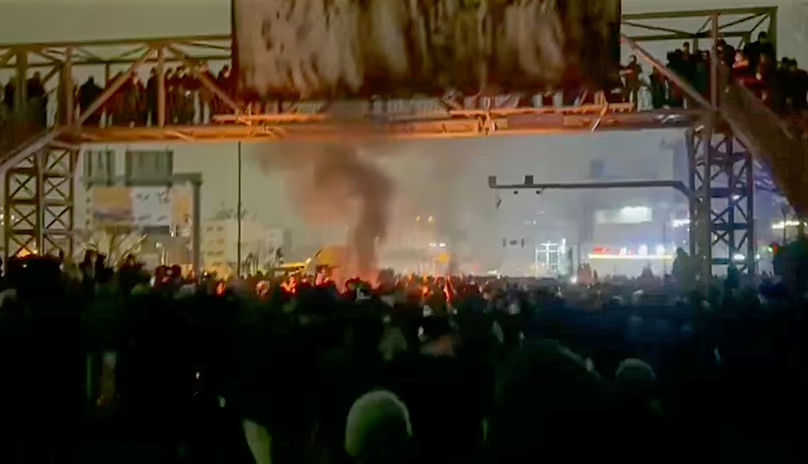
The struggle between the streets and power has entered a phase where any mistake can trigger regional consequences.
Tehran, January 2026. Iran’s streets once again filled with dissenting voices in one of the strongest waves of protest since the uprisings of 2022. This time, the trigger was not a single symbolic event, but an accumulation of pressures: runaway inflation, currency collapse, youth unemployment and a widespread sense of structural corruption. In cities such as Tehran, Isfahan, Shiraz, Tabriz and Mashhad, thousands took to the streets despite heavy security deployments and movement restrictions.
Authorities responded with familiar tools: intermittent internet shutdowns, university closures, militarized urban patrols and mass arrests. International human rights organizations reported dozens of deaths and hundreds of injuries during clashes between protesters and security forces. Exact figures remain hard to verify due to information controls, but the scale of unrest cannot be fully concealed even by state media.
Unlike previous protests, this wave is not limited to students or urban youth. Bazaar merchants, factory workers, teachers and public employees have joined. The street narrative no longer focuses only on prices, but also on political legitimacy, clerical control and the absence of real participation channels.

As the domestic crisis intensified, it rapidly became international. Iranian parliamentary figures and leaders close to the religious establishment warned that any foreign intervention would be met with direct action against US interests in the region and against Israel. The message was explicit: military bases, strategic infrastructure and allied territories would become legitimate targets if Washington chose military action or covert destabilization.
From the United States, the tone has been ambiguous. Officials voiced rhetorical support for “the Iranian people’s right to protest,” while political factions push for stronger measures combining sanctions, cyber operations and indirect support to opposition networks. Israel raised its military alert level, strengthening defenses against possible indirect attacks from Iranian-aligned groups.
Europe watches cautiously. Some governments condemned repression but avoid direct confrontation that could escalate into open regional war. Meanwhile, Iranian communities in European cities organized solidarity marches, showing that the crisis has moved beyond national borders into a global narrative battle.
Iranian leaders argue that protests are not spontaneous, but part of a “hybrid war” driven from abroad. In this view, social media, foreign funding and psychological operations are tools designed to undermine state stability. This narrative justifies expanded surveillance and internal control.
Economic pressure deepens the crisis. Previous sanctions, combined with current instability, reduced investment, weakened energy exports and strained the financial system. Citizens feel these effects daily, fueling a cycle of hardship and protest that repression alone cannot end.
Security analysts warn the main danger is not invasion, but gradual escalation: cyber attacks, selective sabotage, proxy operations across the Middle East and asymmetric retaliation from Tehran. This fragmented confrontation increases the risk of miscalculation that could pull more actors into conflict.
Meanwhile, the Iranian street remains the most unpredictable factor. There is no single opposition leadership or clear structure to negotiate with. This makes dialogue difficult, but also makes total suppression harder. Each mass arrest sparks new outrage, and every death becomes a mobilizing symbol.
The regime faces a strategic dilemma: concessions risk weakening its power structure, but unlimited repression increases international pressure and extreme isolation. For citizens, the choice is harsher: protest means danger, but silence means accepting continuous decline.
At this point, Iran is not only facing a domestic crisis. It is embedded in a web of tensions where every internal move has geopolitical meaning and every foreign statement reshapes domestic dynamics. The outcome will depend not only on Tehran or Washington, but on a fragile interaction between restless streets, nervous governments and global powers calculating their next step.
La narrativa también es poder.
Narrative is power too.