

 Phoenix 24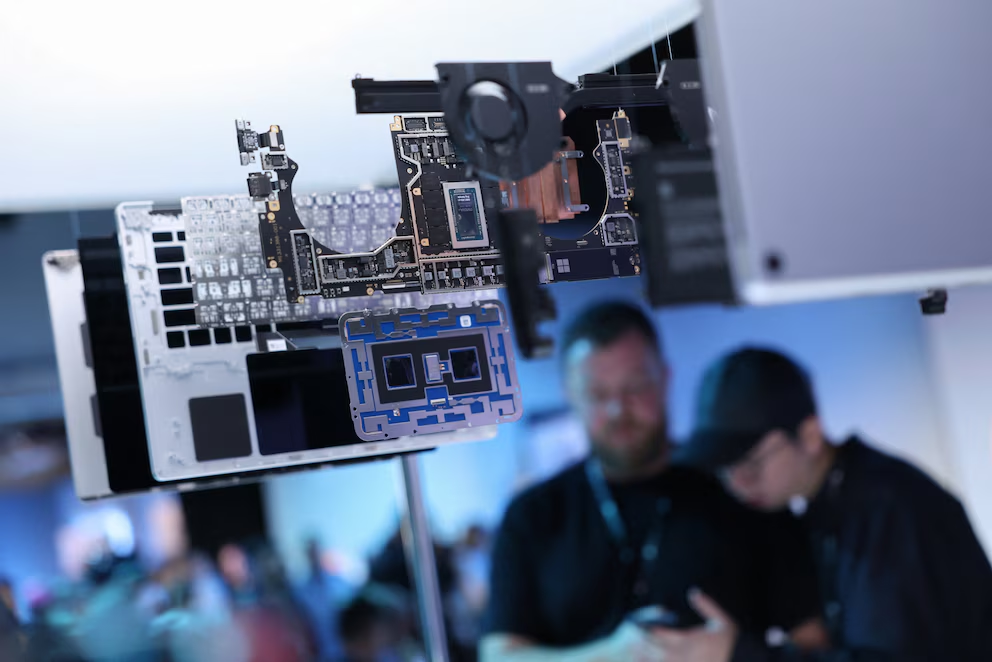
A technology once considered transitional is becoming relevant again because the economics of upgrading have changed faster than the hardware itself.
Global Technology Market
Intel and AMD are extending the life of DDR4 memory as sharply higher RAM prices force the PC industry to reconsider the pace of its transition toward DDR5.
The shift is not being driven by a technical breakthrough. DDR5 remains faster, more efficient and better suited to newer computing platforms. The reason DDR4 is returning is simpler: cost.
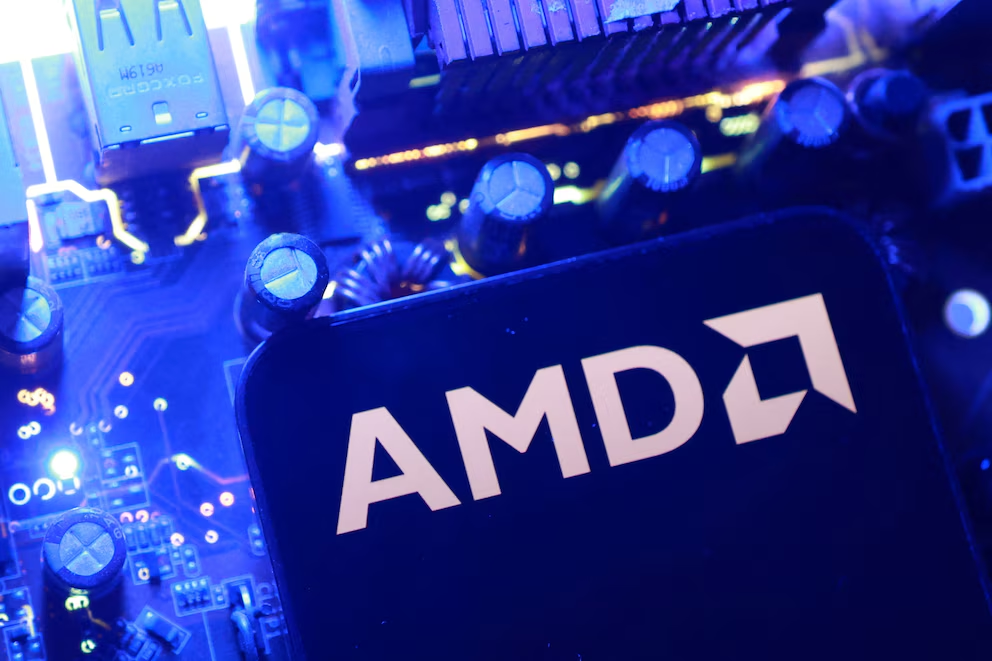
Memory prices have risen dramatically as semiconductor manufacturers redirect production toward higher-margin technologies needed for artificial intelligence infrastructure. Data centers training and running large AI models consume enormous quantities of advanced memory, including DRAM and high-bandwidth memory, increasing competition for manufacturing capacity across the broader semiconductor industry.
For ordinary PC buyers, the consequences are becoming increasingly visible. Memory and storage components that once represented a relatively modest share of a computer’s manufacturing cost now account for a much larger percentage. That pressure has already contributed to weaker PC shipments and higher retail prices across several markets.
Intel is responding by keeping its older LGA1700 platform alive longer than expected. Gigabyte has indicated that new processors compatible with the socket are planned for early 2027, allowing users to continue using motherboards that support DDR4 as well as DDR5.
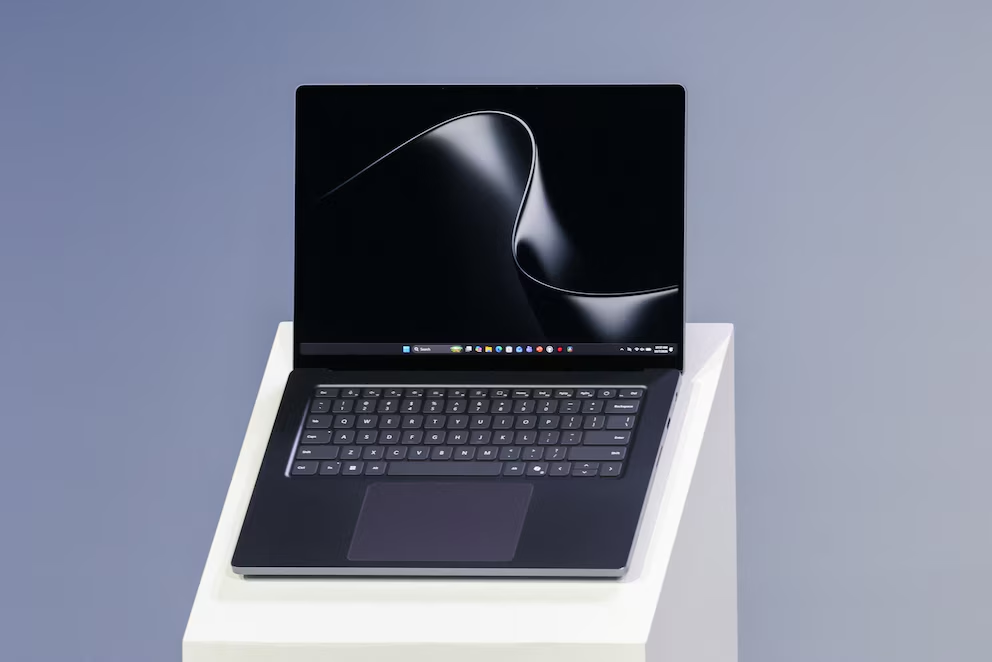
AMD is following a similar logic. Its AM4 platform, introduced years ago and built around DDR4, is receiving renewed attention through additional motherboards and continued availability of processors such as the Ryzen 7 5800X3D. For consumers who already own DDR4 memory, that creates an upgrade path without requiring an entirely new system.
The strategy effectively turns compatibility into a form of price protection. A user replacing a processor or motherboard may be able to retain existing RAM rather than purchasing a new DDR5 kit at substantially higher prices.
That flexibility matters because DDR5 memory can now cost more than twice as much as comparable DDR4 configurations in some markets. For gaming PCs, home systems and mid-range workstations, the performance difference may no longer justify the additional cost for every buyer.
The return of DDR4 also reveals an important tension inside the technology industry. Hardware companies have spent years encouraging faster adoption of new standards, but artificial intelligence is now distorting component markets in ways that make older technologies economically attractive again.
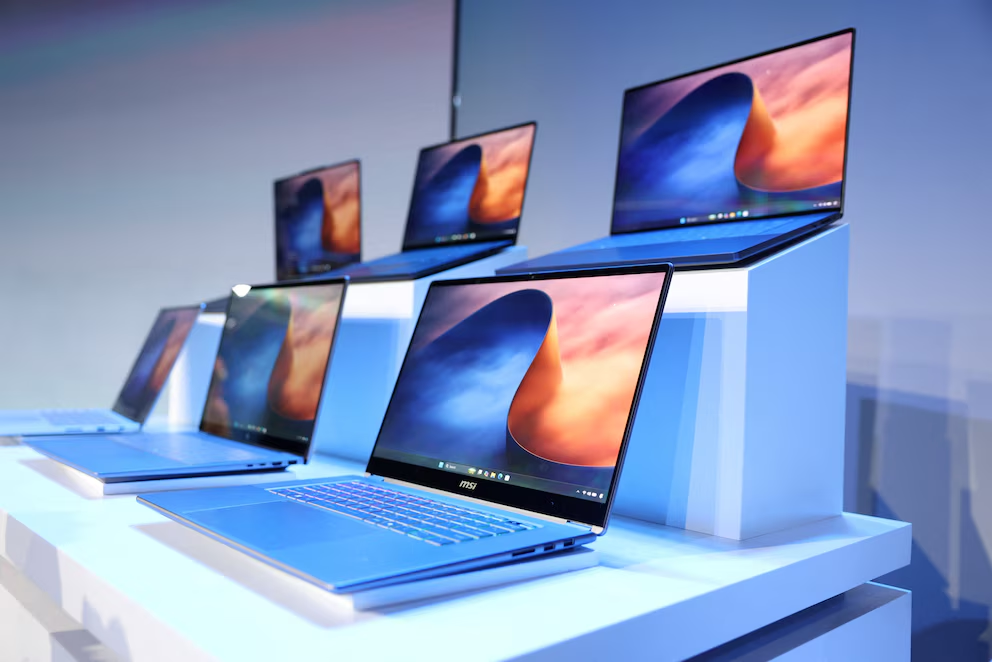
This does not mean DDR4 is replacing DDR5. High-performance systems, AI PCs and future platforms will continue moving toward newer memory architectures. What is changing is the assumption that technological transitions always proceed in a straight line.
The current memory crisis is forcing manufacturers to preserve multiple generations simultaneously, balancing innovation with affordability.
Artificial intelligence is accelerating some parts of computing faster than ever. Paradoxically, it is also making yesterday’s technology useful again.