

 Phoenix 24
Protocols matter only when consequences follow.
Zurich, February 2026.
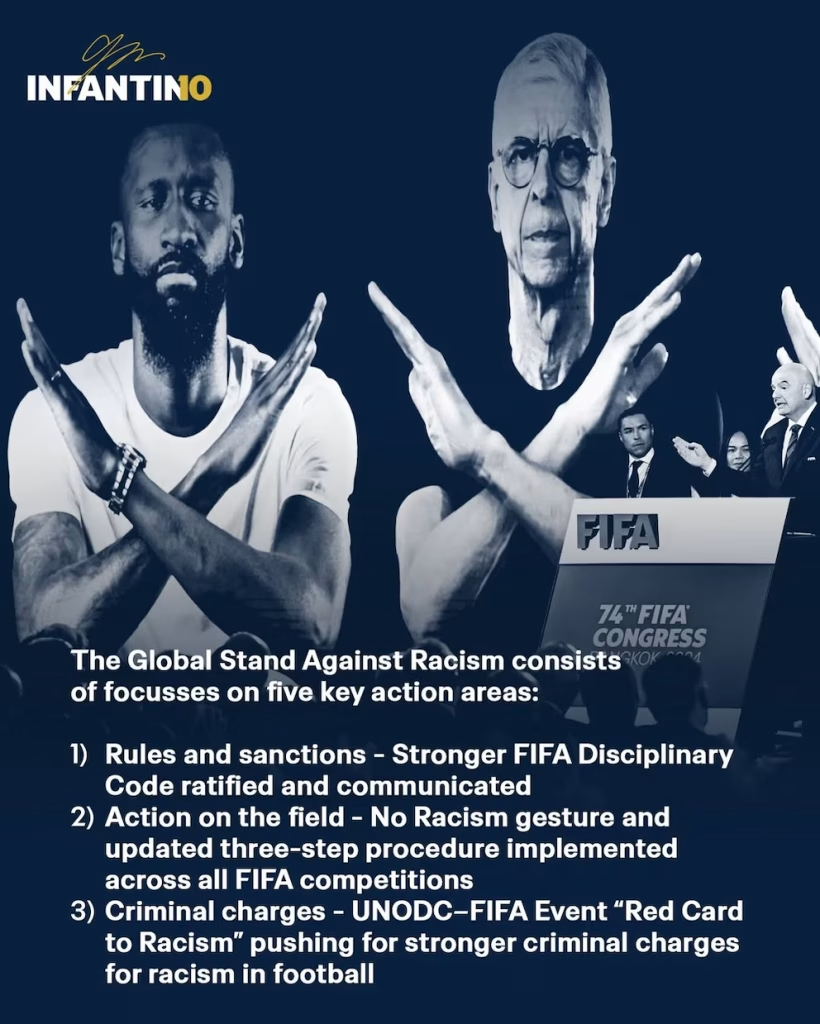
Gianni Infantino’s response to Vinícius Júnior’s allegation of racist abuse against Benfica’s Gianluca Prestianni was rapid and deliberately institutional. He framed the episode as proof that football cannot treat discrimination as a recurring scandal managed by statements and sympathy. Instead, the message was that anti-racism has to operate like governance, with procedures that trigger automatically, evidence that is preserved, and sanctions that can withstand public scrutiny. In an era where a single accusation travels globally in minutes, FIFA’s leadership understands that credibility is lost less through one incident than through repeated perceptions of weak follow-through.
The match itself illustrates why procedure became the center of gravity. Reports indicate the game was stopped for roughly ten to eleven minutes after the referee initiated the competition’s anti-racism steps following Vinícius’ complaint. That interruption is not cosmetic; it is how an on-field dispute becomes an auditable event rather than a rumor. It creates a formal record, locks the incident into the disciplinary machinery, and signals to players and spectators that the allegation is being treated as more than provocation. The pause also becomes a reputational hinge, because audiences interpret it as either seriousness or theatre depending on what happens next.
Benfica publicly backed Prestianni while he denied racist intent, and Real Madrid indicated it had provided material to investigators. In parallel, coverage has described competing accounts over what language was used, including claims that the insult was not racist but homophobic. That dispute does not reduce the severity of the situation; it changes the evidentiary battlefield and the legal framing. This is the modern pattern in discrimination cases: the player experiences harm in a compressed emotional moment, institutions must slow down to establish facts, and the information space fills the gap with hardening narratives. The longer the gap persists without visible procedural gravity, the more both sides are pushed toward public posture rather than disciplined cooperation.
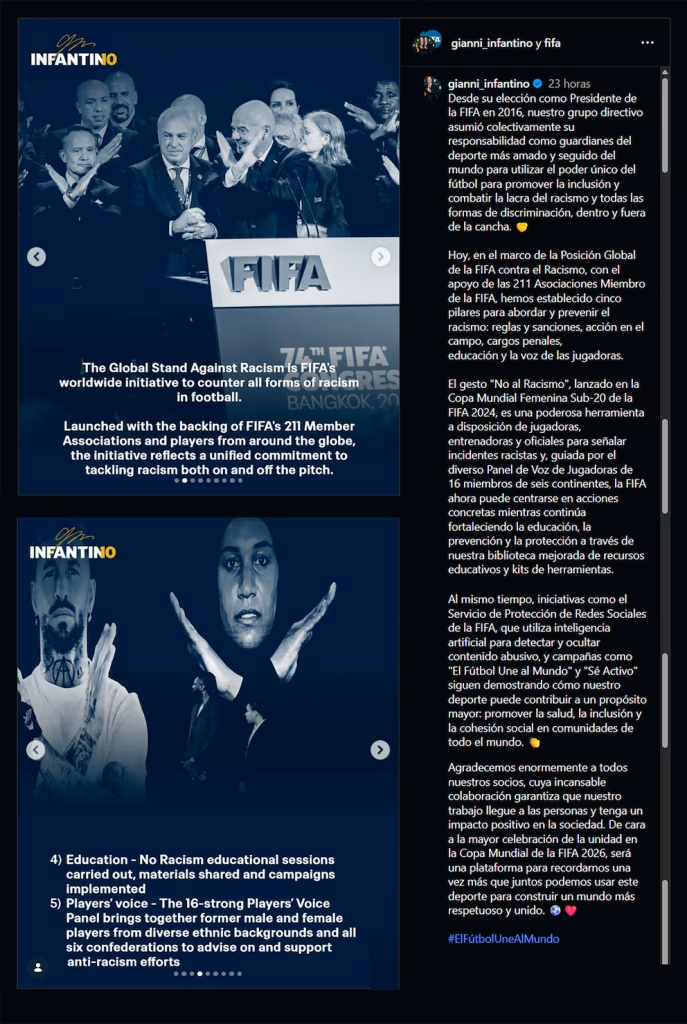
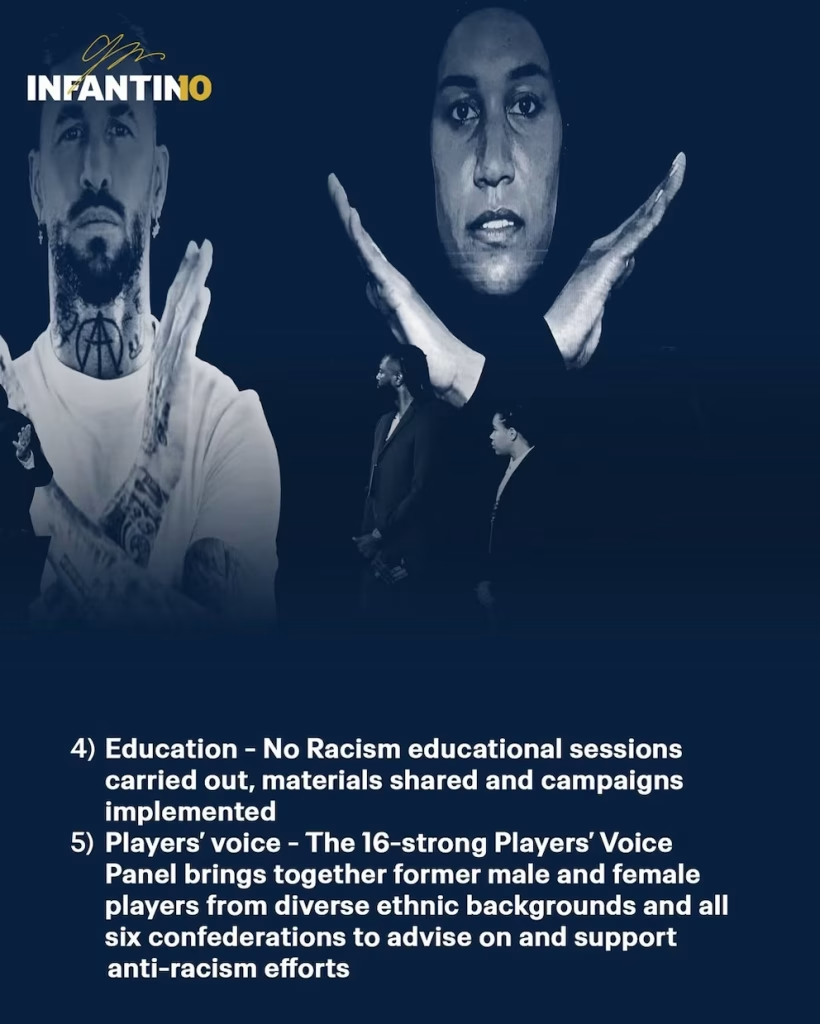
Infantino’s “announcement” was effectively a reactivation of FIFA’s global anti-racism framework, presented as an operational blueprint rather than a moral slogan. The logic is straightforward: stricter disciplinary rules and sanctions, standardized on-field procedures to pause or suspend matches, stronger education and prevention work, and formal structures that keep players’ experiences inside policy design instead of outside it. The emphasis was also on moving beyond purely sporting punishment, pushing the idea that racist abuse should carry real-world legal consequences where national laws allow it. That is a strategic escalation because it shifts deterrence from losing access to the sport to facing consequences that extend into identity and record.
The pivot toward legal accountability is also a reputational hedge. Football has been accused repeatedly of protecting commercial value over human dignity, and calling for law enforcement pathways is a way to signal that the sport is not trying to adjudicate moral failure alone. Yet this approach carries a built-in fragility: criminal definitions, evidence thresholds, and enforcement consistency vary widely across jurisdictions. If a global sport urges criminal consequences but the practical follow-through is uneven, the policy becomes vulnerable to accusations of performative seriousness. In this context, the strength of the framework will be judged not by how forcefully it is described, but by whether it can produce comparable outcomes across different legal environments.
Another arena FIFA cannot ignore is the online ecosystem that amplifies abuse. Vinícius has repeatedly faced harassment that migrates from stadium incidents to social media campaigns, and institutions increasingly treat that migration as part of the same threat surface. When a sport turns athletes into global brands, it also inherits responsibility for the predictable abuse that follows visibility, even when platforms and algorithms complicate enforcement. The governance question therefore expands from what happens inside a stadium to what happens after the final whistle, and whether reporting, filtering, and escalation mechanisms protect players without becoming opaque censorship theater. If the online layer is ignored, the sport ends up punishing symbols while leaving the main harm channel intact.
Structurally, this case sits at the intersection of three authorities. UEFA owns the disciplinary process for a Champions League match. The clubs control evidence strategy, public messaging, and internal support for their players. FIFA controls the meta-narrative about global norms and what “real action” should look like across football. Infantino’s statement does not decide guilt, but it sets expectation pressure on the system that will. It also narrows the acceptable outcomes: a quiet administrative conclusion without clear reasoning will be read as institutional retreat, while an overly aggressive outcome without transparent justification will trigger due process backlash.
The core risk for football is that the protocol becomes a ritual that changes nothing. If investigations resolve without persuasive clarity, victims will read the system as brand protection. If sanctions arrive without a credible public account of reasoning, critics will argue procedural injustice. If the sport promises legal escalation but never operationalizes it, deterrence collapses back into slogans. The Vinícius case is therefore less a referendum on one allegation and more a test of whether modern football can align moral clarity with procedural rigor in an information environment designed to reward confusion.
Cada silencio habla. / Every silence speaks.