

 Phoenix 24
One extended hand leaves romance deliberately unresolved.
NEW YORK, United States | June 2026
The final scene of Netflix’s I Will Find You was designed to leave viewers hoping that David Burroughs and Rachel Mills might eventually become a couple, according to series creator and showrunner Robert Hull. The eight-episode thriller closes with Rachel reaching for David’s hand after both characters emerge from a story shaped by imprisonment, deception and the search for David’s missing son. Hull said the gesture was intended to suggest emotional possibility without confirming a romantic future. The ambiguity allows the audience to decide what their bond may become.
The scene differs slightly from the ending of Harlan Coben’s 2023 novel, which inspired the adaptation. Hull explained that his objective was not to force David and Rachel into a conventional relationship at the final moment. Instead, he wanted viewers to desire that outcome after watching everything the characters survived together. The hand-holding creates intimacy while preserving uncertainty.
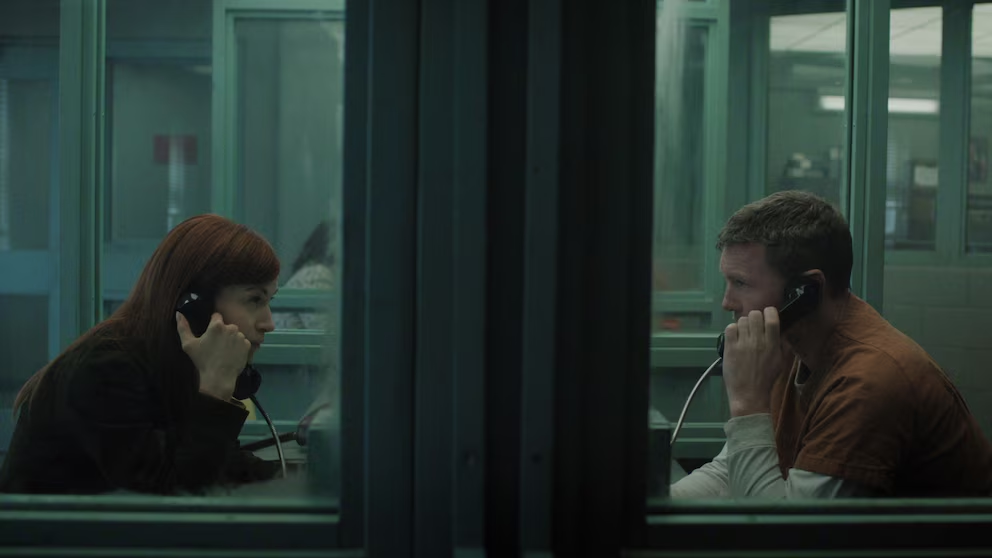
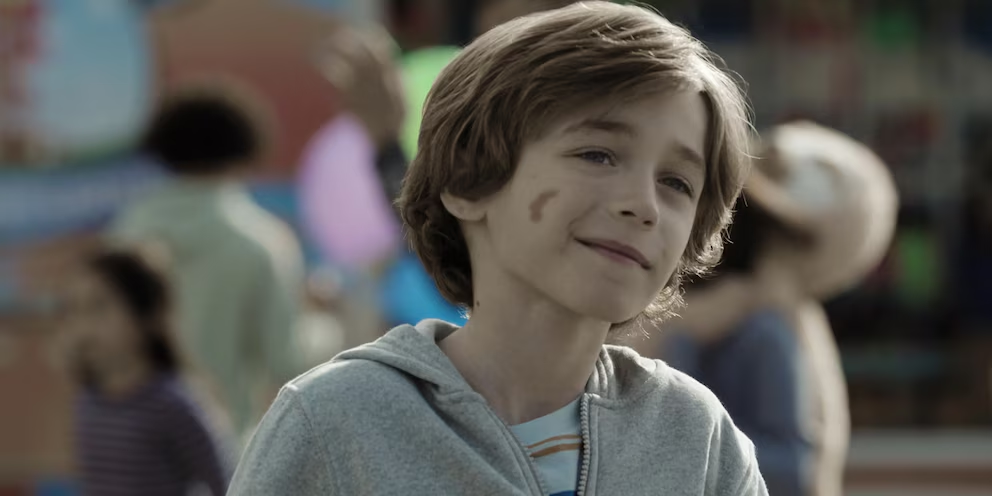
David, played by Sam Worthington, begins the series serving a life sentence for the supposed murder of his young son. His life changes when Rachel, portrayed by Britt Lower, brings him evidence suggesting that the child may still be alive. What follows is an escape, a dangerous investigation and the gradual exposure of the lies behind David’s conviction. Rachel becomes essential to every stage of that search.
The relationship contains an immediate complication because Rachel is David’s former sister-in-law. She is also presented for part of the story as reconnecting with Hayden, her former partner, played by Milo Ventimiglia. That history made the development of romantic tension especially delicate. Hull said the writers wanted to avoid crossing into a predictable storyline before the characters had earned the emotional connection.
The showrunner described David and Rachel as people linked by a journey that may fit more than one definition of soulmates. Their connection does not need to become romantic in order to remain profound. They understand losses, loyalties and family wounds that few other people could fully share. The final image recognizes that emotional intimacy without deciding how it will be expressed.
Hull nevertheless acknowledged that a romance would be welcome from his perspective. His principal goal was to make the audience want David and Rachel together. Once that desire existed, he believed the series had completed its work. The unanswered question becomes part of the ending rather than a loose thread that must be resolved immediately.
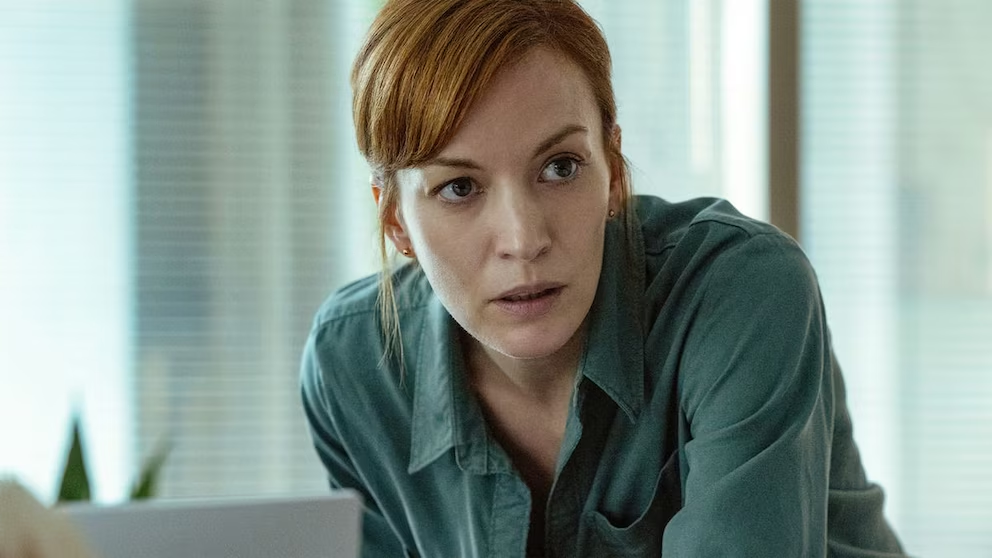
The relationship was also constructed to protect Rachel’s independence as a character. Hull emphasized that the series never wanted her to exist only as the woman helping the male protagonist. She receives her own emotional arc, confronts personal decisions and repeatedly becomes the person who saves David. In the creator’s view, Rachel rescues him more often than he rescues her.
That balance changes the way the story can be interpreted. David initially appears to be the unquestioned center because the mystery begins with his conviction and missing child. As the series progresses, Rachel’s choices drive increasingly important parts of the narrative. By the ending, the story has partially shifted toward her perspective and what she has risked to uncover the truth.
Hull credited that structural idea to Coben’s original conception. The apparent protagonist remains crucial, but another character gradually becomes the emotional center. Rachel is the person who recognizes the possibility that David’s son survived, pushes the investigation forward and refuses to abandon him when the situation becomes dangerous. Her hand in the final scene therefore represents agency as much as affection.
Coben also supported the decision to leave the future open. He said he wanted viewers to imagine where the characters might be one year later. That invitation reflects his preference for endings that resolve the central mystery while allowing emotional lives to continue beyond the screen. The audience receives answers about the crime but not a complete map of what happens afterward.
The novelist described himself as optimistic about the characters. David endures imprisonment, grief and betrayal, while Rachel sacrifices personal safety to help reveal the truth. After so much suffering, Coben said he wanted the best for them. The final gesture suggests that hope without reducing their recovery to a simple romantic reward.
The ending also respects the psychological consequences of the story. David cannot immediately return to an ordinary life simply because his conviction is overturned and his son is found. Rachel also carries the consequences of her relationship with Hayden and the danger surrounding the investigation. Any future between them would have to develop through recovery rather than begin as an instant happy ending.
That restraint gives the final scene greater emotional credibility. A dramatic kiss or explicit declaration could have felt disconnected from the trauma the characters had just experienced. Holding hands is quieter and more appropriate to the uncertainty ahead. It offers companionship before promising romance.

The series itself marks the first collaboration between Coben and Netflix set in the United States. Earlier adaptations connected to the author were produced in several European countries and languages. I Will Find You was filmed largely on real streets and locations rather than artificial sets. Hull said that practical environments, real stunt work and physical effects helped the actors bring greater immediacy to the story.
The production features Worthington, Lower and Ventimiglia alongside Erin Richards, Jonathan Tucker, Madeleine Stowe, Clancy Brown, Logan Browning and Vas Saranga. Its combination of family tragedy, conspiracy and pursuit follows familiar elements of Coben’s work. The emotional triangle involving David, Rachel and Hayden, however, gives the ending a more personal layer than the central mystery alone.
The extended hand ultimately functions as both closure and invitation. It confirms that David and Rachel will not leave the experience as strangers, even though the precise nature of their future remains uncertain. Their bond has been formed through loyalty, danger and shared loss. Whether it becomes romantic is left beyond the final frame.
Some endings answer the mystery while preserving the feeling. / Algunos finales resuelven el misterio mientras conservan la emoción.