

 Phoenix 24
Machines are now learning friction, not just motion.
Beijing, May 2026
A humanoid robot capable of skating on ice has captured attention after demonstrating an unexpected level of balance and dynamic control, marking a new step in robotics beyond simple locomotion. The machine does not just walk or run; it adapts to a low-friction surface that requires constant micro-adjustments, something traditionally difficult even for advanced robotic systems.
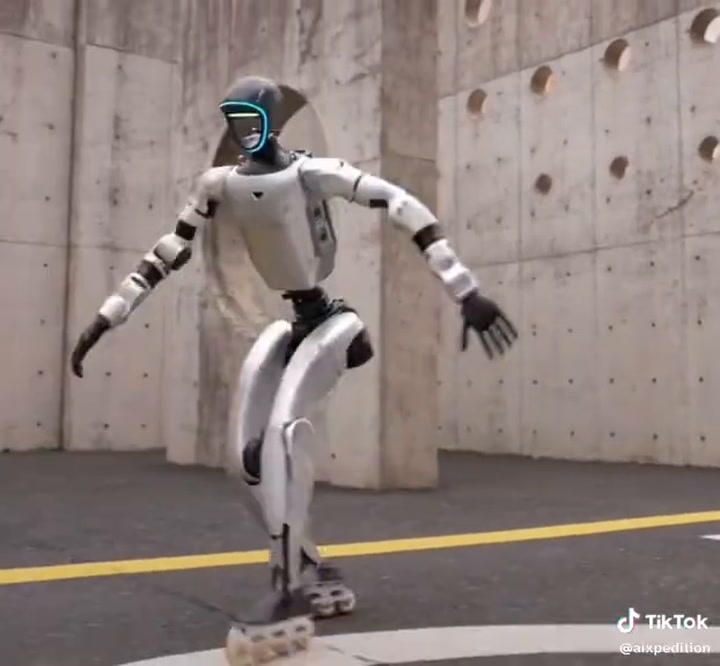
What makes this development relevant is not the spectacle, but the underlying engineering. Maintaining stability on ice forces the robot to process real-time data from sensors, adjust posture continuously and redistribute weight with precision. In robotics, these capabilities are critical because they move machines closer to functioning in unpredictable, real-world environments rather than controlled laboratory conditions.
This progress reflects a broader shift in humanoid robotics: moving from controlled demonstrations toward adaptive movement in unstable settings. The challenge is not only speed or strength, but control under uncertainty, where even minor errors can cause collapse. Ice makes that challenge visible because the surface punishes hesitation, imbalance and delayed correction.

The skating robot suggests that machines are beginning to handle precisely that kind of instability. By responding to sliding forces and changing surfaces, robots expand their possible applications beyond entertainment or laboratory showcases. Similar principles could eventually support rescue operations, industrial tasks, polar research or hazardous environments where terrain is unpredictable.
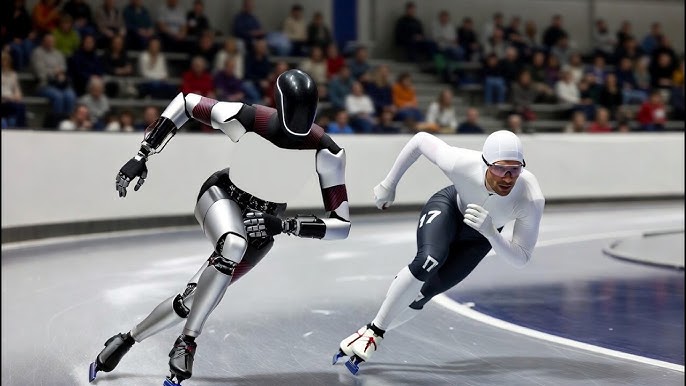
Beyond the technical layer, the symbolic impact is clear. Each advance in balance and coordination narrows the gap between mechanical movement and human-like adaptation. Humanoid robots are no longer defined only by their ability to imitate posture, but by their capacity to adjust in real time to physical uncertainty.
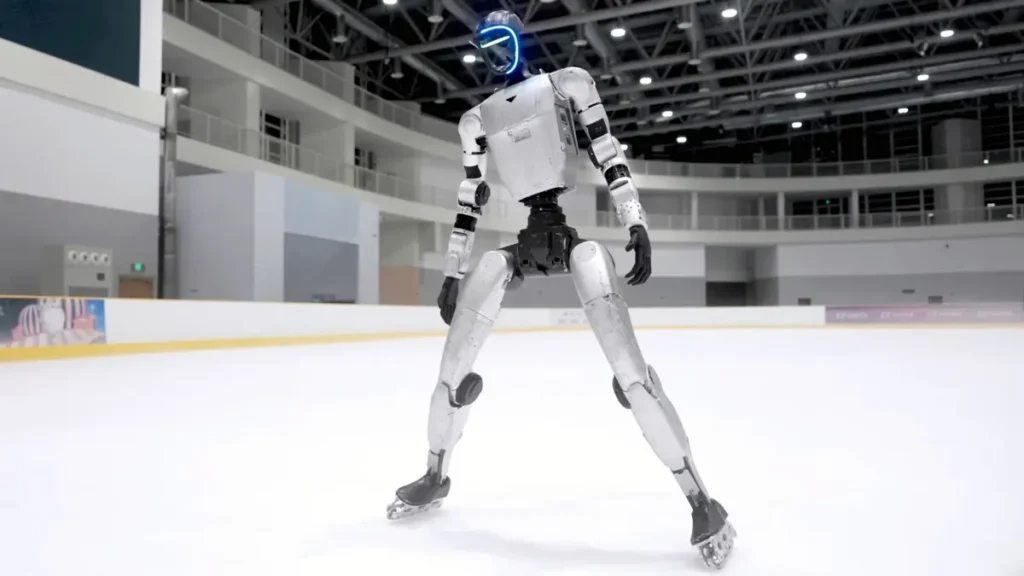
The result is a shift in how robotics is understood. Walking was once the benchmark. Now, the frontier is stability under chaos. On ice, that frontier just moved forward.
Phoenix24: periodismo sin fronteras. / Phoenix24: journalism without borders.