

 Phoenix 24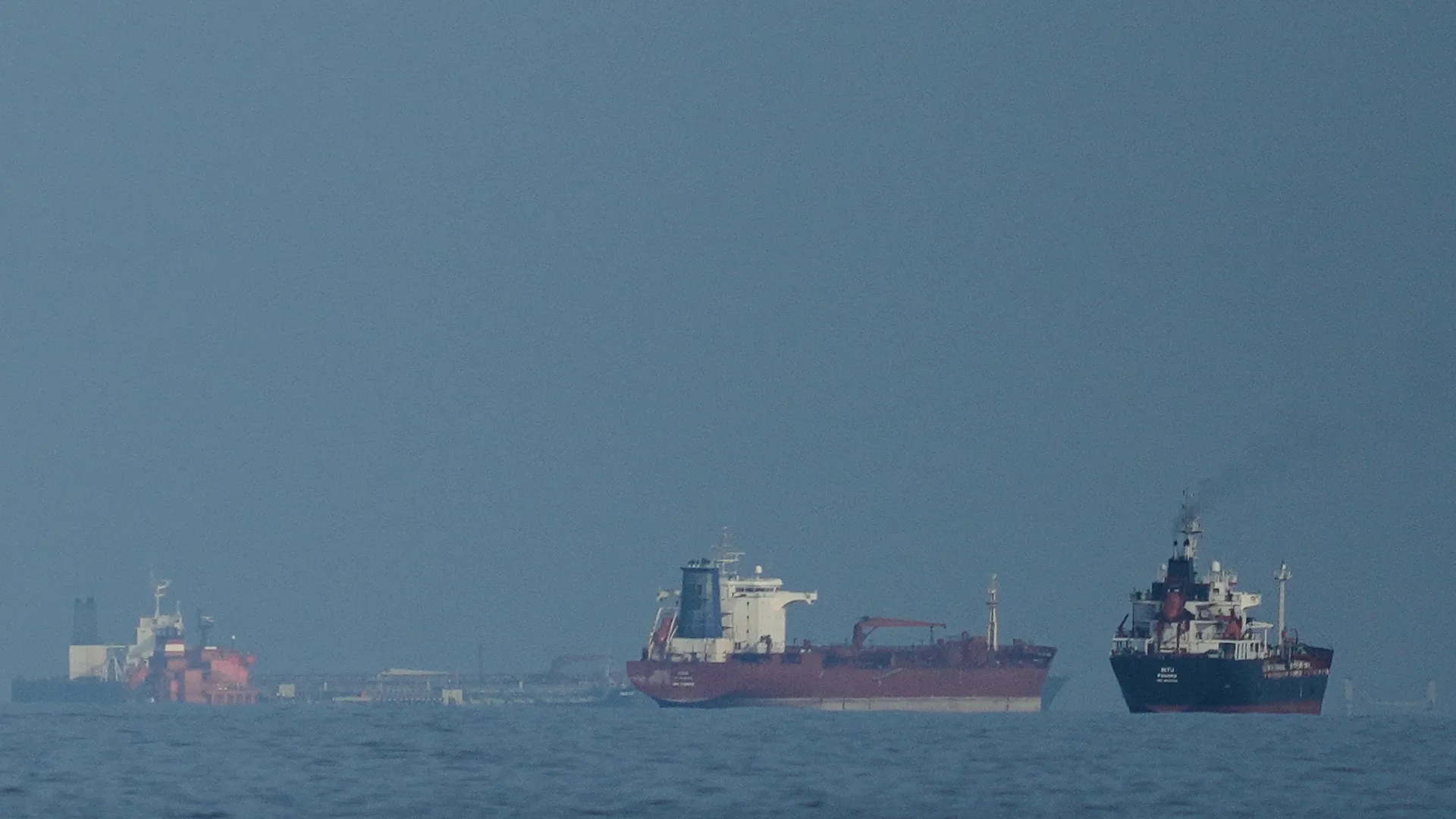
A ceasefire does not end leverage.
Washington, April 2026. The reopening of the Strait of Hormuz has lowered the immediate temperature around one of the world’s most sensitive maritime corridors, but it has not restored strategic normality. Iran announced that the passage was fully open for commercial navigation during the ceasefire period, while also making clear that transit would continue under a coordinated route already defined by Tehran. That detail is not minor. It suggests that, even amid de-escalation, Iran is still trying to project authority over the choreography of regional maritime order.
Donald Trump quickly seized on the announcement as a political opportunity. He publicly thanked Iran after the reopening became known and framed the development as proof that pressure had worked. Yet the celebratory tone was accompanied by a harder message: Washington would maintain coercive restrictions on Iranian maritime activity until a broader arrangement was reached. That posture reveals the real logic behind the moment. The reopening is being presented not as a final settlement, but as a tactical pause inside a larger contest of pressure, signaling, and negotiated advantage.
The NATO angle adds another layer. Trump reportedly rejected the possibility of allied involvement in Hormuz security and insisted that the United States did not need external assistance to manage the crisis. This was more than a rhetorical flourish. It reflects a recurring strategic instinct in Trump’s political grammar: keep coalition frameworks at a distance when unilateral control offers greater political credit and sharper symbolic dominance. In this reading, Hormuz becomes not only an energy artery, but also a theater for demonstrating that crisis management still revolves around American will rather than multilateral procedure.
Iran, however, is telling a different story. By stressing that the route is open but coordinated, Tehran appears determined to avoid any impression of retreat. The message is calibrated: commerce may resume, but not outside the shadow of Iranian influence. This matters because the Strait of Hormuz is not simply another shipping lane. It is one of the most consequential pressure points in the global energy system, a narrow maritime funnel through which a critical share of oil and gas flows still passes. Every phrase used to describe access, control, or supervision carries implications far beyond the Gulf.
That is why the economic meaning of this reopening cannot be separated from the military one. The interruption of traffic had already exposed how fragile energy security remains when supply chains depend on a handful of geographically compressed chokepoints. Europe, already facing pressure in fuel logistics, had reason to watch the situation with increasing concern. Markets do not need a total closure to panic. They only need ambiguity, a credible threat, and a corridor whose vulnerability is impossible to ignore. Hormuz delivered all three.
The broader geopolitical lesson is neither new nor comforting. Global trade does not move through a neutral landscape governed only by efficiency and rules. It moves through militarized geography, guarded by fleets, shaped by deterrence, and constantly vulnerable to the political decisions of states that understand the value of strategic interruption. The ceasefire may have reopened the lane, but it has not reopened trust. Washington continues to use pressure as a language of order. Tehran continues to use conditional access as a language of relevance. The result is not peace, but managed tension.
There is also an information war nested inside the maritime one. Trump wants the reopening to read as a victory for American pressure. Iran wants it understood as a controlled reopening under its own terms. Both sides are trying to define the same event before markets, allies, and adversaries assign it their own meaning. One narrative sells deterrence. The other sells endurance. Neither offers the world a genuinely stable security framework for the waters that matter most.
That is the real significance of the moment. The Strait of Hormuz may be open again, but openness is not the same as stability. The ships may move, the headlines may cool, and the immediate panic may soften, yet the architecture of risk remains in place. What changed was not the nature of the struggle, but its register. The crisis shifted from visible obstruction to negotiated control, from rupture to guarded passage. And in that transition lies the warning: the next disruption may already be embedded in the conditions of the current calm.
Detrás de cada dato, hay una intención. Detrás de cada silencio, una estructura.
Behind every data point, there is an intention. Behind every silence, a structure.