

 Phoenix 24
A chokepoint can shake the whole system.
Dubai, March 2026
The renewed fear surrounding Iranian mines in the Strait of Hormuz is not just another episode of maritime brinkmanship. It is a reminder that the global oil market still rests on a narrow corridor where military pressure, shipping risk, and political signaling can converge with extraordinary speed. The latest warnings followed U.S. claims that it destroyed more than a dozen Iranian mine-laying vessels near the strait, while Tehran and affiliated messaging continued to project the possibility of keeping energy flows under threat. The real significance lies not only in whether mines are present in large numbers, but in how quickly the possibility of mining changes behavior across the entire energy chain.
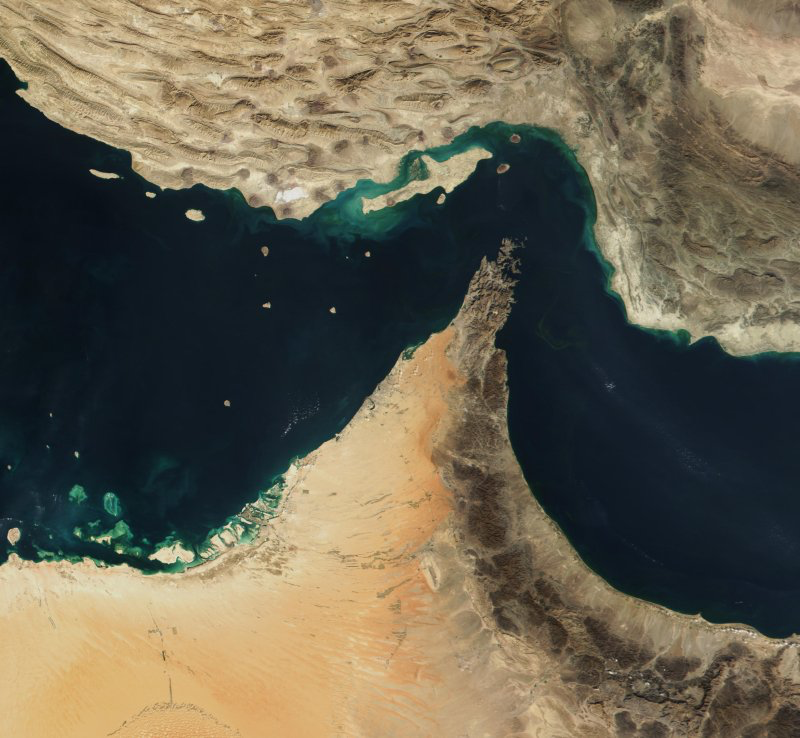
Hormuz matters because geography still defeats abstraction. Roughly one fifth of the world’s crude normally moves through that passage, which means even a partial disruption can ripple outward into freight costs, insurance premiums, refinery planning, inflation expectations, and strategic reserve calculations. Reuters reported that analysts have already raised price outlooks because the disruption is lasting longer than initially expected, while the International Energy Agency described the current Middle East shock as the largest oil supply disruption on record, with March supply projected to fall sharply as flows through the strait remain impaired. When a single corridor can reshape the assumptions of traders and governments at once, the issue is no longer regional. It becomes systemic.
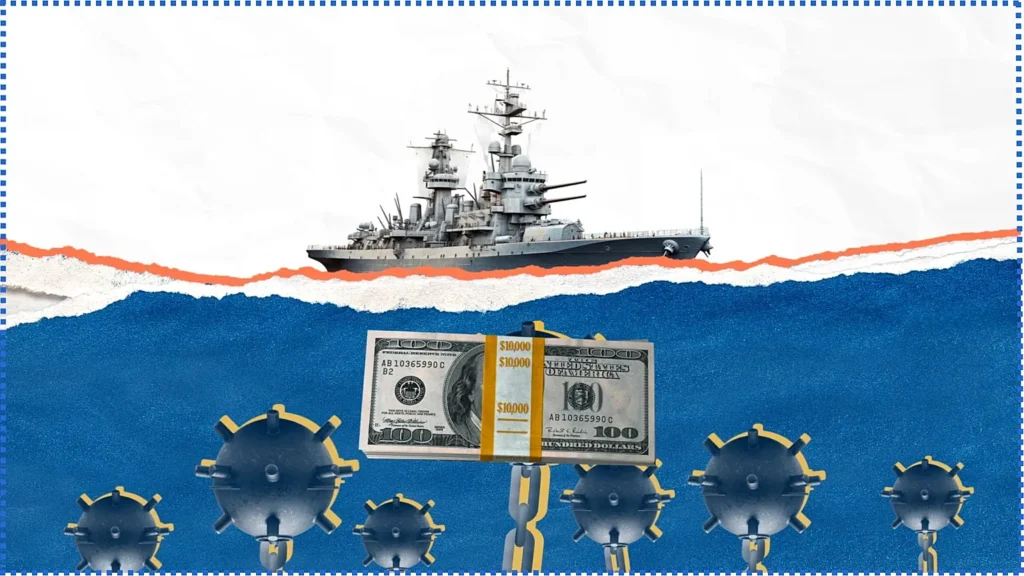
The danger of mines is not simply their destructive capacity. It is their ability to produce uncertainty at low cost and high strategic effect. Mines do not need to sink large numbers of tankers to succeed politically. They only need to make navigation appear risky enough that shipowners hesitate, insurers reprice, naval escorts multiply, and delay becomes normalized. That is why even intelligence assessments that place greater emphasis on direct missile or drone attacks do not make the mining threat irrelevant. On the contrary, the mine scenario remains powerful because it is slow, sticky, and psychologically corrosive. It turns every transit into a calculation of hidden exposure.
There is also an asymmetry here that favors Tehran’s strategic logic. Iran does not need to impose a perfect blockade to generate leverage. It only needs to keep the perception of instability alive long enough for markets and governments to internalize risk. Reuters reported that some Iranian oil still continued moving through Hormuz even as exports from neighboring Gulf producers were severely disrupted, which underscores a key feature of this contest: Iran can weaponize the corridor while still preserving selective channels for itself. In practical terms, that means the strait can become less a closed gate than a manipulated filter, one in which pressure is distributed unevenly across rivals and regional competitors.
For the United States and its partners, the problem is operational as much as strategic. Destroying mine-laying craft and increasing naval presence may reduce immediate danger, but it does not restore confidence overnight. Reopening traffic in a mined or potentially mined environment requires more than firepower. It requires surveillance, mine countermeasure capacity, convoy discipline, commercial reassurance, and a credible sense that the next transit will not become a spectacle of vulnerability. Associated Press has described the challenge of reopening the strait as substantial after Iran’s disruption of traffic and the broader war environment since late February. In narrow maritime chokepoints, reassurance is never purely military. It must also be commercial and psychological.
Europe and Asia will feel this pressure differently, but neither can dismiss it. European governments are watching the risk through the lens of inflation, industrial costs, and another energy shock layered onto wartime budgets and domestic political fatigue. Asian economies, particularly those with deep dependence on Gulf flows, see Hormuz as a vulnerability embedded in the core of their manufacturing and transport systems. That is why the crisis cannot be reduced to a bilateral confrontation between Washington and Tehran. It touches the wider architecture of global interdependence, where a naval incident in one corridor can rapidly translate into price stress for consumers, strategic anxiety for governments, and volatility for financial markets across several continents.
Yet the crisis is also exposing contradictions inside the message coming from Iran itself. On one side, Tehran’s new leadership has spoken in favor of keeping Hormuz closed as a tool of pressure. On the other, Iran’s ambassador in Geneva told Euronews that Tehran does not intend to block the strait, openly contradicting the harder line associated with the new wartime posture. That contradiction is not a minor diplomatic inconsistency. It is part of the strategy. Ambiguity gives Iran room to threaten without fully committing, to unsettle markets without automatically triggering the maximum response, and to test how much pressure can be generated through uncertainty alone.
What emerges from the Hormuz mine scare is not merely a shipping hazard. It is a demonstration that oil remains vulnerable not only to destruction, but to suggestion. Mines embody that logic perfectly. They are weapons of interruption, suspicion, and delay, capable of magnifying fear far beyond their physical footprint. Iran is signaling that geography can still punish superior military coalitions. The United States is signaling that it will strike preemptively to prevent that leverage from hardening. Between those positions lies the global market, forced once again to price war into the movement of energy. And when a chokepoint begins to function as a strategic hostage zone, the whole system starts negotiating with uncertainty.
Phoenix24: clarity in the grey zone. / Phoenix24: clarity in the grey zone.