

 Phoenix 24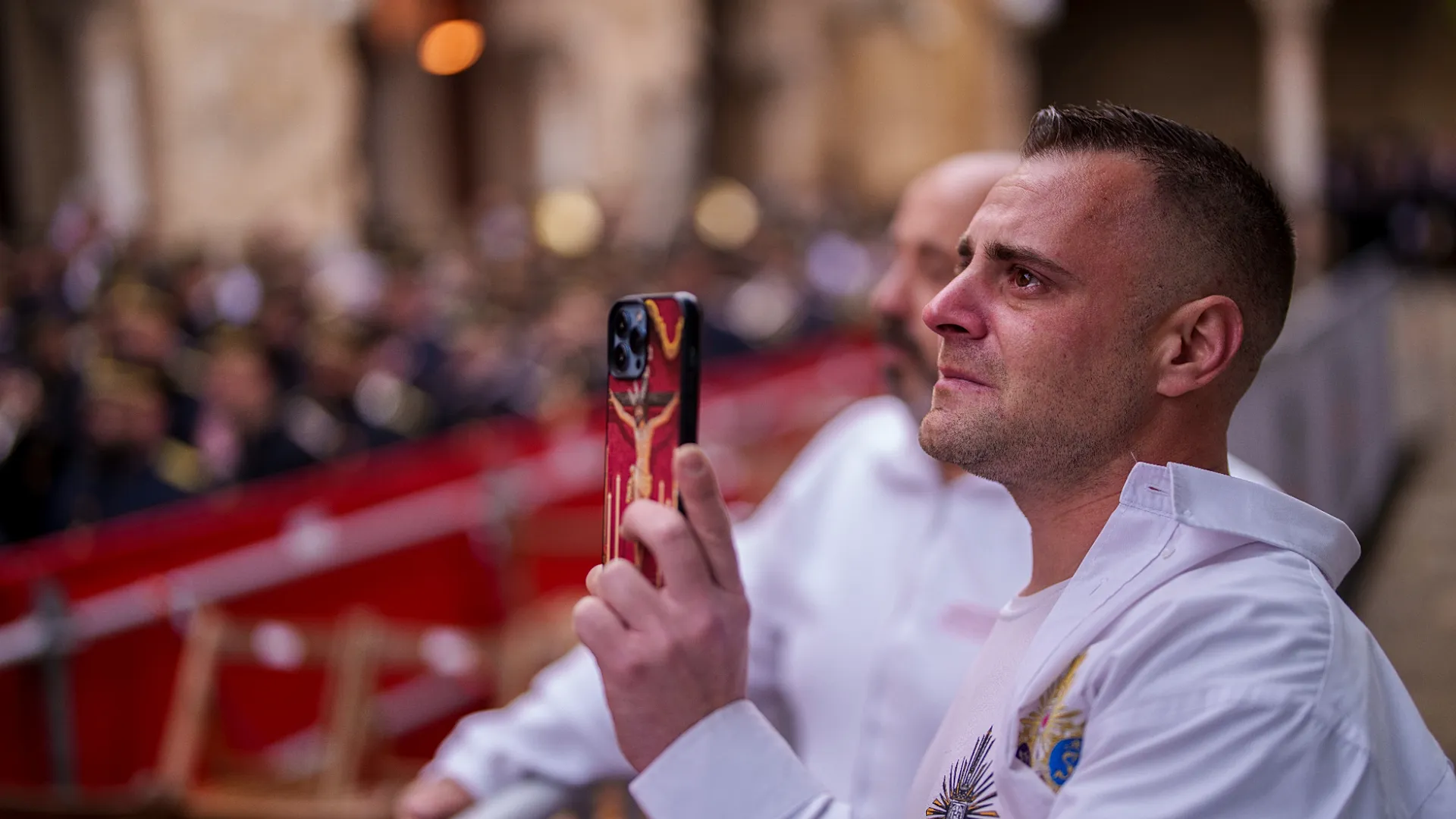
Devotion has entered the age of live data.
Seville, April 2026
Spain’s Holy Week is not being replaced by technology, but it is being reorganized by it. What was once navigated through printed schedules, local memory, and patient waiting is now increasingly managed through GPS tracking, live alerts, weather apps, streaming platforms, and personalized procession planning. The change may look secondary beside the ritual gravity of the week itself, yet it is already altering how people move through one of the country’s most symbolically charged traditions. The phone in the pocket is becoming part of the procession’s invisible infrastructure.
That matters because Holy Week has always depended on timing, position, and anticipation. Knowing when a brotherhood leaves, where the cross guide is, whether a route has changed, or how long a paso will take to reach a key point can determine the experience of the entire day. Technology now compresses that uncertainty. In many cities, users can follow processions in real time with a precision that would have seemed excessive a decade ago and indispensable now. Information no longer arrives by rumor or by printed program alone. It arrives as immediate tactical advantage.
This is not simply a convenience story. It reveals a broader transformation in how tradition survives under digital conditions. Holy Week remains rooted in liturgy, public emotion, silence, music, neighborhood loyalty, and inherited ritual language. But around that core, an operational ecosystem has grown. Apps tell users where a brotherhood is, streaming services allow remote spectatorship, artificial intelligence helps plan travel, and real time weather platforms shape decisions on where to stand and how long to wait. The tradition remains ancient in meaning, yet increasingly contemporary in its logistics.
The smartphone changes something more subtle as well. It alters the position of the spectator. The cofrade or observer is no longer only present in the street, reacting to what unfolds. That person now arrives equipped with predictive tools, route intelligence, notifications, and a capacity to optimize movement from one procession to another. Devotion and planning begin to overlap. The result is a more informed experience, but also a more managed one. The street still surprises, though less innocently than before.
For broadcasters and institutions, this shift opens another layer of transformation. Holy Week is no longer experienced only in physical proximity to the pasos. It is increasingly consumed through screens, from public channels to multi angle live feeds that let viewers follow different cities or key points simultaneously. This expands access for those far from traditional centers, but it also changes the rhythm of spectatorship. The ritual becomes more available, more distributable, and in some ways more mediated by production logic than by the limits of place.
There is also a cultural opportunity in the way technology is being used beyond live tracking. Some projects are applying artificial intelligence, 3D scanning, and virtual reality to the patrimonial dimension of Holy Week, allowing sculptures, pasos, and devotional imagery to be explored with new depth. In this sense, the digital layer does not only serve efficiency. It also creates new forms of access to craftsmanship, iconography, and religious memory. The sacred object remains what it was, but its visibility expands through tools that belong unmistakably to the twenty first century.
Still, the change carries tension. Not every tradition is strengthened by becoming more measurable, more optimized, or more permanently available. Part of Holy Week’s power has always come from waiting, uncertainty, physical endurance, and the emotional charge of encountering a procession in lived time rather than through total control. Once every route can be tracked and every delay can be calculated, something of the older experiential opacity begins to thin. The week becomes more legible, but perhaps slightly less mysterious.
That is the deeper pattern beneath the apps and alerts. Spain’s Holy Week is not becoming less traditional. It is becoming more operationally intelligent. The devotional core remains, yet the experience around it is being reshaped by the same digital logic that now organizes transport, travel, attention, and public space elsewhere. The phone does not displace the ritual. It helps administer it. And in that quiet shift lies one of the clearest signs of how even the most enduring traditions adapt when time, movement, and faith begin to flow through the architecture of the screen.
Phoenix24: claridad en la zona gris. / Phoenix24: clarity in the grey zone.