

 Phoenix 24
A living bridge quietly leaves the wall.
Cuernavaca, February 2026.
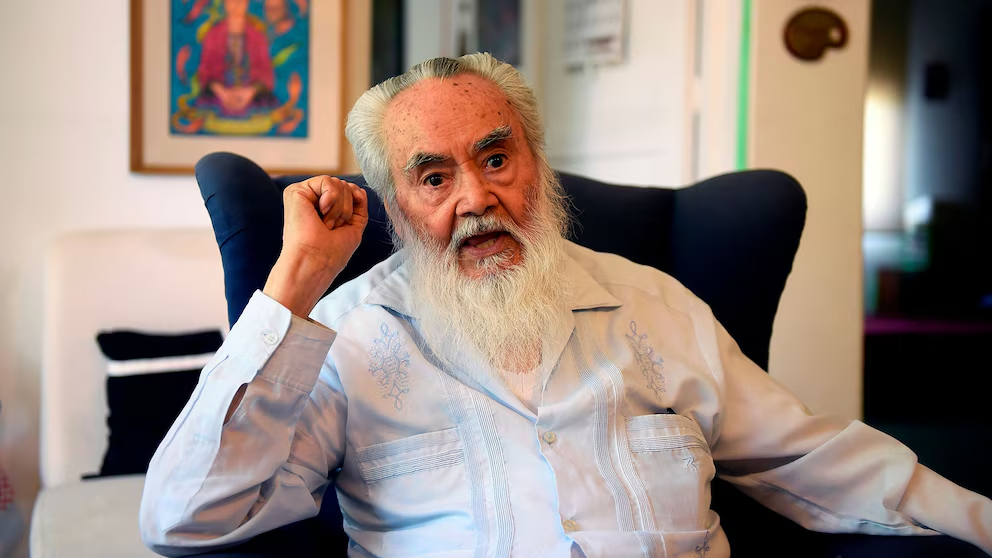
Guillermo Monroy Becerril’s death at 102 is not just the passing of an artist, it is the disappearance of a witness who carried Mexico’s muralist century in his own hands. He spent decades insisting that public painting is not decoration, it is a civic argument made in pigment, scale, and placement. When someone like that goes, what fades is not only a personal biography, but a way of understanding how art negotiates power in shared space. For contemporary audiences trained to consume images in isolation, his life reads like an older, heavier grammar, one built for streets rather than screens.
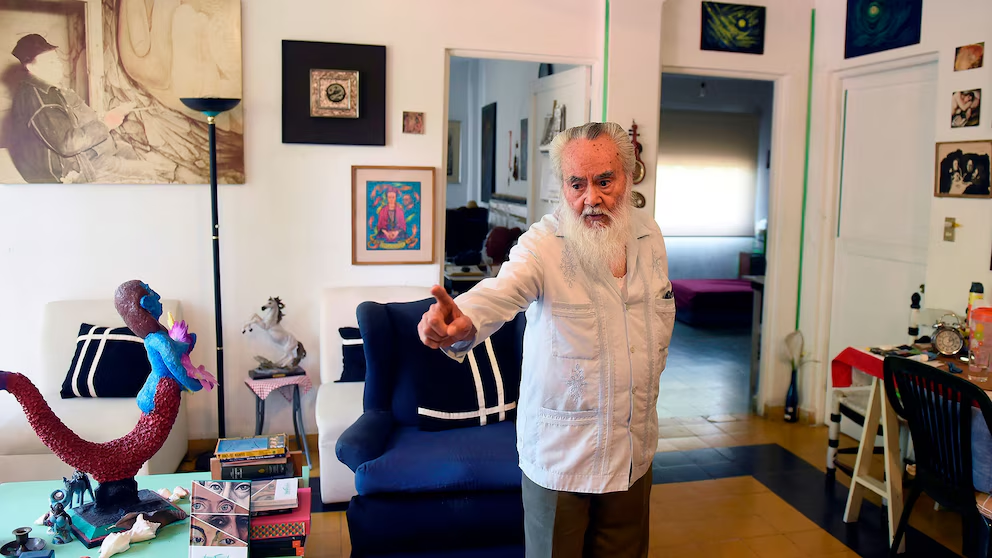
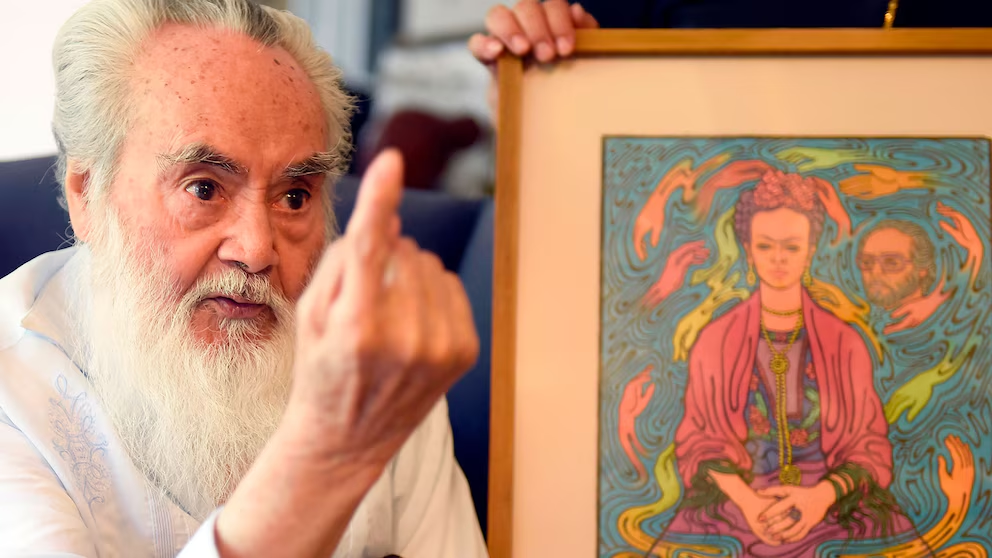
Monroy was born in Tlalpujahua, Michoacán, in 1924, and his formation unfolded inside the institutional ecosystem that shaped much of Mexico’s twentieth-century visual culture. Over time, he became widely described as a disciple of Frida Kahlo and an assistant within Diego Rivera’s orbit, details that draw immediate attention because those names function as global shorthand. Yet the deeper point is apprenticeship in a tradition where technique and ideology were never fully separable. In that tradition, the wall was a public instrument and the artist was expected to carry responsibility, not only style. Monroy belonged to the generation that treated that expectation as normal rather than theatrical.
Muralism has always been easy to romanticize, and it is also easy to misunderstand outside its political context. A mural is not merely large art, it is art that cannot avoid its audience. It operates without invitations, without ticket gates, and without algorithmic targeting, which means it lives under constant scrutiny, affection, rejection, and reinterpretation. That exposure forces a discipline that differs from gallery logic because the work must survive weather, time, and the shifting mood of the street. Monroy worked within that exposure, and by doing so he embodied a craft where permanence is a risk and visibility is never neutral.
Accounts of his career often emphasize his alignment with left-leaning artistic circles and his sympathy for campesino, worker, and student causes. In the muralist tradition, that sympathy was not a branding choice, it was part of the moral vocabulary of the era, and it shaped what subjects were treated as worthy of monumentality. The modern temptation is to reduce that stance to slogans or to dismiss it as ideology. A more precise reading is that his politics functioned as a framing device for scale, for who appears on a wall and who remains invisible. The artist’s judgment, not only his skill, becomes the substance of the public image.
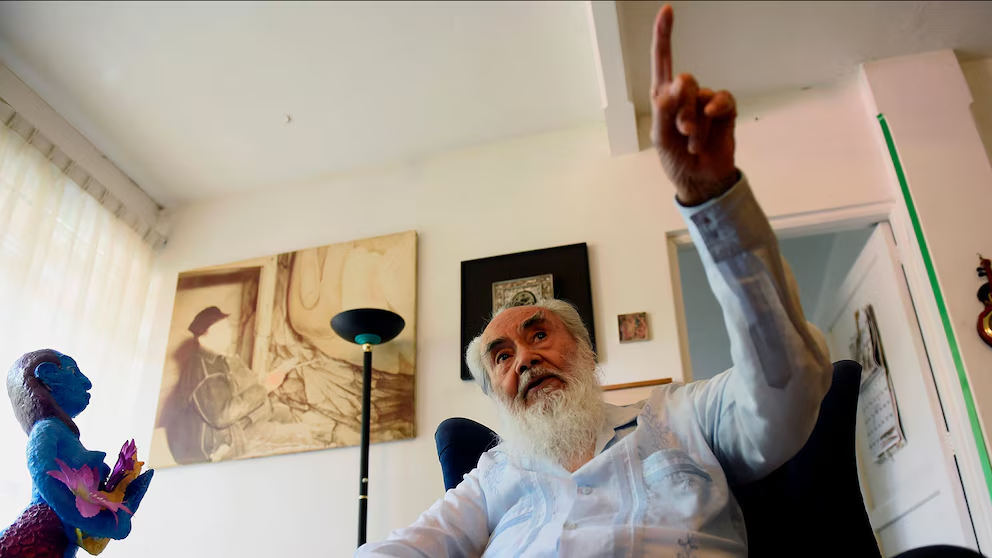
That judgment also had to survive institutional shifts, because public art is entangled with patrons, permits, and changing cultural gatekeepers. One of the paradoxes of muralism is that it can critique authority while depending on public infrastructure. Monroy navigated that paradox across decades, which suggests a kind of pragmatic intelligence often ignored in heroic narratives of artists. To keep producing, he had to manage not only paint and composition, but relationships, timing, and the limits of what could be placed in public without being erased. Longevity in that environment is not accidental, it is a measure of strategic endurance.
Formal recognition arrived clearly late in his life. In 2024, Mexico’s National Institute of Fine Arts and Literature awarded him a Gold Fine Arts Medal in Visual Arts, an institutional canonization that carries its own tension. When the state honors a muralist, it is honoring a tradition that historically positioned itself as the conscience of the state. That does not cancel the honor, it simply shows how cultural systems absorb what they once had to negotiate. It also confirms what many already knew, that Monroy was not a footnote to famous names, but part of the scaffolding that kept a public tradition alive between major historical icons.
What is striking, and often missed, is that he did not spend his later years as a static heritage symbol. Profiles and interviews in recent years described him as still painting, still attentive to discipline, and still committed to the routine of making. That detail matters because it rejects the idea that muralism is a closed chapter preserved only through archives. A tradition that continues to produce work, even at the edge of a century of life, is not merely memory. It is a living practice refusing to become only a museum label.
His death lands in a moment when image production is accelerating and when visual culture is increasingly mediated by systems that reward speed and novelty. Muralism resists that logic by design. It is slow, physical, territorial, and accountable, and it insists that public space is a moral arena rather than a feed. In an era of synthetic imagery and frictionless sharing, that insistence becomes newly relevant. It raises a question modern platforms rarely force, what do you say when you cannot choose your audience and cannot retreat behind personalization.
Monroy’s absence will be felt most in that question. Mexico’s twentieth-century art is often narrated globally as a story starring a handful of icons, but cultural ecosystems are built by continuities, apprenticeships, and local institutions that keep craft alive between headline moments. He represented that continuity, the quiet structure beneath the mythology. Losing him means losing someone who could speak, from direct experience, about how legends were made in workshops, studios, and long conversations that do not appear in official histories.
His legacy, then, is not nostalgia, it is a structural challenge. When a society produces fewer artists who treat the wall as a civic language, something else fills the space, commercial messaging, entertainment, state narrative, or silence. Monroy spent a century proving that a wall can still carry an argument without becoming noise. Now the question is who remains fluent enough to keep that language alive.
La verdad es estructura, no ruido. / Truth is structure, not noise.