

 Phoenix 24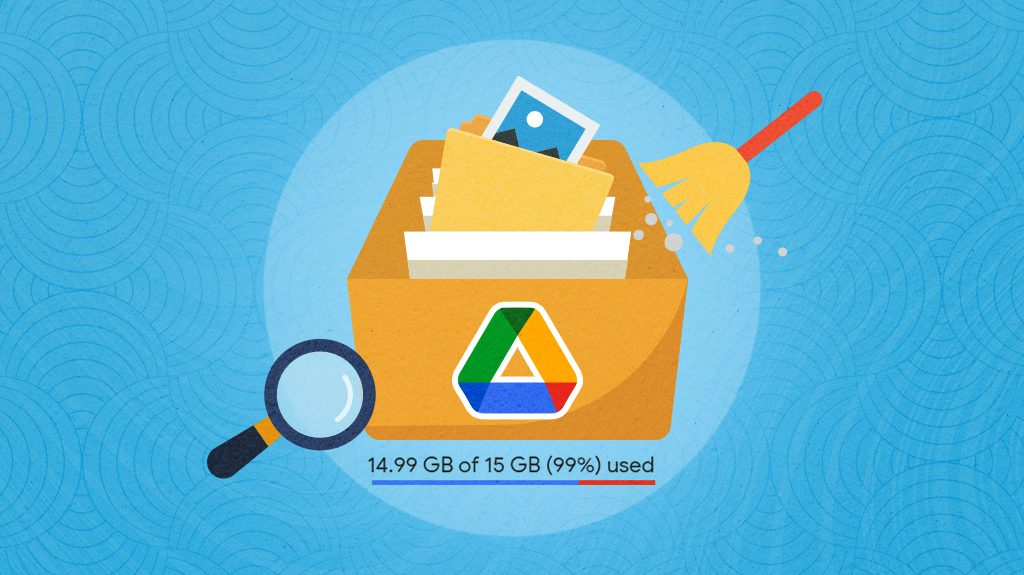
Free storage now demands active discipline.
Mountain View, March 2026
Google Drive’s 15 GB of free storage still sounds generous on paper, but for many users it has quietly become one of the easiest digital resources to exhaust. The reason is simple: that space is not reserved for Drive alone. It is shared across Google Drive, Gmail, and Google Photos, which means years of email attachments, backups, screenshots, and forgotten files accumulate inside the same limited quota. What looks like a cloud convenience problem is increasingly a daily management problem tied to how modern digital life stores everything by default.
That matters because running out of space on a Google account is no longer a minor inconvenience. Once the limit is reached, the effects spill across multiple services at once. Files stop uploading properly, Gmail can become restricted, and photo backups are interrupted right when users assume the cloud is still protecting their data. In practical terms, free storage has turned into an invisible bottleneck that affects productivity, communication, and personal archiving at the same time.
The most effective way to recover room is not random deletion, but selective triage. Large videos, duplicate files, high weight attachments, old backups, and forgotten documents usually consume more space than users realize. Gmail often plays a bigger role than expected because years of messages with images, PDFs, and forwarded files build up silently. Google Photos can be even more demanding, especially when backup habits are automatic and visual content grows faster than people monitor it.
This is why storage cleanup now requires a broader digital awareness. Deleting a few files from Drive is rarely enough if photos and email remain untouched. The smarter approach is to treat the account as a shared storage ecosystem rather than as three separate platforms. Once users understand that the same quota is feeding multiple services, cleanup becomes more strategic. The goal is no longer to free a few megabytes, but to regain control over where digital clutter is actually concentrated.
There is also a behavioral lesson in this trend. Cloud services were sold for years as a liberation from local memory limits, but in practice they often encouraged a new kind of accumulation. People save faster than they organize, and platforms make retention easier than deletion. That creates the illusion that storage is endless until the warning arrives. By the time users start cleaning up, the problem is usually not one oversized folder but years of unfiltered digital sediment.
Google’s own storage logic reinforces that reality. High volume photos, Gmail attachments, and archived materials continue to weigh on the same quota, which means the free plan now functions less as a permanent archive and more as an entry level system that rewards constant maintenance. Users who want to stay inside the free tier must behave more intentionally than before. They have to review backups, empty trash, identify heavy files, and decide what truly belongs in the cloud. The free 15 GB still exists, but it increasingly favors disciplined users over passive ones.
That does not mean everyone needs to pay for more space immediately. For many people, the real issue is not insufficient storage but unmanaged storage. Old newsletters, unused shared files, duplicate images, and giant attachments often occupy a surprisingly large share of the account. A careful audit can recover enough capacity to postpone any paid upgrade. In that sense, the cleanup process becomes less about austerity and more about digital hygiene.
Still, the pressure to upgrade is built into the modern platform economy. As users create more content, receive more media, and rely on automated backups, the free quota feels smaller every year even when the number itself does not change. The storage warning becomes part utility alert and part subscription funnel. That does not make the cleanup tools useless, but it does explain why digital housekeeping now sits at the intersection of user convenience and platform monetization. The cloud remains helpful, but it is no longer neutral.
The larger pattern is clear. Managing free Google storage is no longer just a technical trick for organized users. It has become a basic competence in an economy where personal archives, communications, and memories all compete for the same invisible space. Knowing how to clean Drive, Gmail, and Photos is now part of digital self management. The question is no longer whether 15 GB can be enough. The question is whether users are willing to manage their digital lives as carefully as the platforms manage the limits around them.
Phoenix24: inteligencia para audiencias libres. / Phoenix24: intelligence for free audiences.