

 Phoenix 24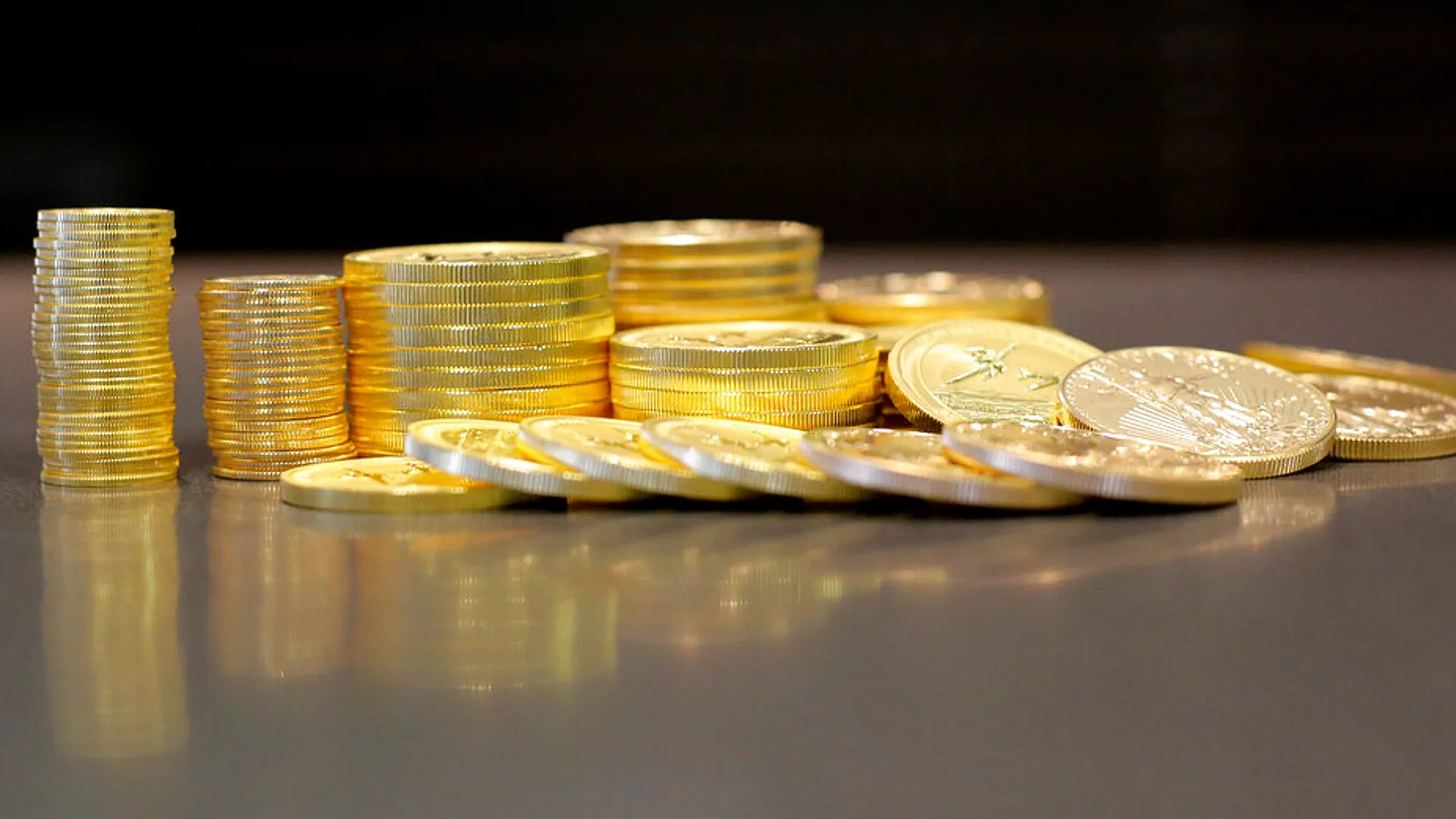
Global investors rush to safe-haven assets as market volatility, political risk, and monetary shifts converge to push gold beyond record levels.
New York, September 2025
Gold has reached a historic all-time high, surpassing previous records as a wave of economic uncertainty in the United States drives investors worldwide toward safe-haven assets. The surge, which analysts describe as one of the most significant bullion rallies in over a decade, reflects a complex convergence of political instability, weakening monetary confidence, and shifting expectations about the global financial order.
According to data from major commodities exchanges, the price of gold broke through the symbolic threshold of 2,650 dollars per ounce this week, outpacing previous highs set during the COVID-19 pandemic and the 2022 inflation crisis. Traders attribute the spike to growing concerns over U.S. fiscal policy, a deepening federal deficit, and heightened political gridlock in Washington, all of which have undermined market confidence in the dollar and increased demand for tangible stores of value.
“The flight to safety is accelerating,” said analysts at the Bank for International Settlements, noting that institutional investors, sovereign wealth funds, and central banks have all increased their gold holdings over the past quarter. The U.S. Federal Reserve’s signals of a potential shift toward more accommodative monetary policy, following signs of slowing growth and persistent inflationary pressures, have further fueled demand for precious metals, as lower interest rates tend to weaken the dollar and increase the appeal of non-yielding assets like gold.
Geopolitical instability has added additional momentum to the rally. Rising tensions in the South China Sea, continued uncertainty surrounding the Russia–Ukraine conflict, and political turbulence ahead of the U.S. presidential election have all contributed to a growing perception of systemic risk. Investors are increasingly hedging against potential shocks to global supply chains, currency volatility, and sudden shifts in capital flows.
The surge in gold prices also reflects deeper structural changes in global financial behavior. Over the past decade, central banks, particularly in China, India, and Turkey, have steadily increased their gold reserves as part of a broader strategy to diversify away from U.S. dollar assets. Analysts at the Peterson Institute for International Economics argue that this trend signals a gradual erosion of dollar dominance in the international monetary system. “Gold is not just a hedge,” one report noted, “it is becoming a strategic asset in a multipolar world.”
Market reactions have been swift. Shares of major mining companies in Canada, South Africa, and Australia surged as investors anticipate increased production and higher profit margins. Exchange-traded funds backed by physical gold saw significant inflows, while futures markets reflected rising expectations that prices could climb even further in the coming months. Commodity strategists at Société Générale forecast that gold could approach 2,800 dollars per ounce by the end of the year if macroeconomic conditions deteriorate further.
The ripple effects extend beyond financial markets. A stronger gold price tends to pressure emerging-market currencies, raise input costs for electronics and jewelry manufacturing, and influence sovereign debt strategies in commodity-dependent economies. For nations with substantial gold reserves, such as Russia and China, the rally provides a fiscal cushion and additional leverage in international negotiations. Meanwhile, economies heavily reliant on dollar-denominated debt may face higher borrowing costs if investors shift toward non-fiat assets.
Historical parallels are striking. Previous gold rallies, including those during the 1970s oil crises, the 2008 global financial meltdown, and the 2020 pandemic, coincided with moments of profound geopolitical uncertainty and declining trust in traditional financial instruments. The current surge, however, appears driven by a broader realignment in global economic power, with multipolarity, supply chain fragmentation, and competing monetary systems redefining the nature of financial risk.
While some analysts caution that a rapid reversal is possible if U.S. political and economic conditions stabilize, others argue that the structural drivers behind gold’s ascent are unlikely to dissipate soon. “We are entering an era where gold plays a larger strategic role, not just for investors but for states,” said a senior researcher at the World Gold Council. “This is less about fear and more about recalibration.”
As markets brace for a turbulent final quarter of 2025, gold’s record-breaking rise serves as both a barometer of current anxieties and a signal of deeper transformations in the global economy. Whether the rally represents a temporary flight to safety or a lasting shift in the world’s financial architecture, one thing is clear: the age-old metal remains central to how nations and investors navigate uncertainty.
Beyond the news, the pattern. / Más allá de la noticia, el patrón.