

 Phoenix 24
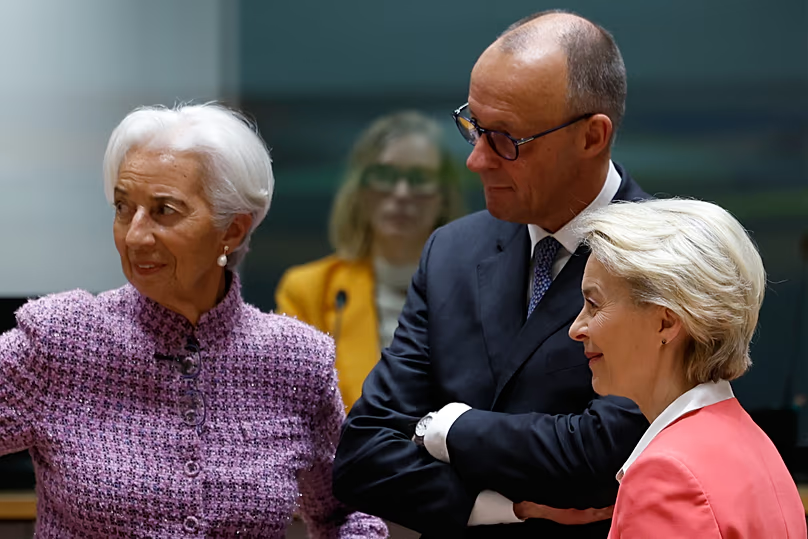
Europe’s growing ambitions face a widening financial divide.
BRUSSELS, BELGIUM
European Union leaders failed to agree on the bloc’s next seven-year budget after tense negotiations in Brussels, with German Chancellor Friedrich Merz leading opposition to increased spending despite mounting demands for greater European investment in defence, economic competitiveness and geopolitical security.
The special summit, scheduled for November 26 and 27, ended without a breakthrough after European Council President António Costa acknowledged that significant differences remained among the 27 member states. Negotiations will resume in December, with governments under pressure to settle the financial framework for 2028 through 2034 before the end of the year.
European Commission President Ursula von der Leyen originally proposed a budget approaching €2 trillion in current prices, designed to strengthen Europe’s strategic autonomy while maintaining support for agriculture, regional development and existing commitments. Costa subsequently presented a reduced framework worth €1.582 trillion in constant 2025 prices, approximately 10.2% below the Commission’s original proposal on a comparable basis.
For Germany, Europe’s largest economy and biggest net contributor to the EU budget, the proposed financial expansion remains difficult to justify. According to figures reported by the German Economic Institute, Berlin contributed approximately €14.9 billion more than it received from the EU budget in 2025.
Merz has consequently aligned Germany with the Netherlands, Austria, Belgium, Sweden, Finland and Denmark in a coalition opposing further increases in national contributions. The group maintains that European institutions should exercise greater fiscal discipline rather than continually expand financial commitments.
France has adopted a different position. President Emmanuel Macron argues that reducing Europe’s collective financial ambitions could undermine its capacity to respond to mounting international challenges. Paris is also determined to protect agricultural subsidies, demonstrating how national economic interests continue to shape competing visions of European integration.
Yet the financial equation extends beyond national contributions. Germany’s industrial economy benefits substantially from the European single market, while investment in infrastructure across Central and Eastern Europe can generate commercial opportunities for businesses operating throughout the bloc. Net budget balances therefore provide only a partial measure of the economic returns associated with EU membership.
The negotiations have also exposed disagreements over proposed new revenue sources. Costa’s plan envisages approximately €60 billion annually from mechanisms involving emissions trading, digital activities, tobacco, electronic waste and carbon-related charges. Several governments remain unconvinced about the financial estimates or the economic consequences of additional levies.
The dispute has immediate geopolitical implications. Leaders also failed to settle a proposed €45 billion loan for Ukraine, with Germany seeking broader financial participation from member states as Russia’s war continues to strain European security commitments.
Beyond the numerical disagreement lies a fundamental institutional dilemma. European governments increasingly support stronger defence capabilities, technological competitiveness and greater international influence, yet remain divided over the fiscal responsibilities required to finance those objectives.
The December negotiations will therefore test more than the European Union’s ability to approve another budget. They will reveal how far its member states are prepared to convert shared strategic ambitions into binding financial commitments.
Behind Every Decision, a Larger Consequence.