

 Mario López Ayala, PhD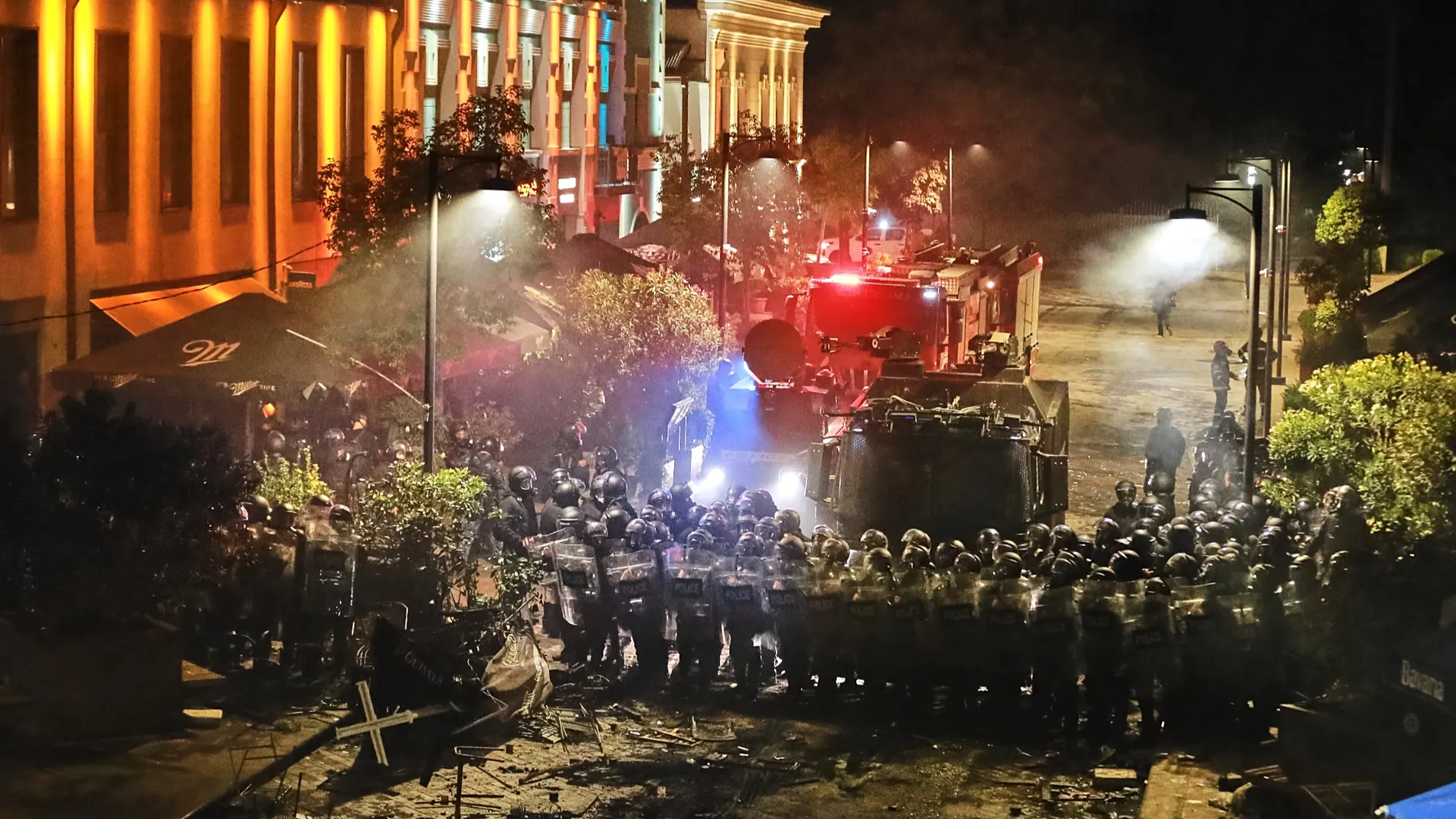
A tense capital under pressure, opposition pushes boundaries, authorities respond with force.
Tbilisi, October 2025
In Tbilisi, security forces mounted a heavy response after protesters attempted to breach the grounds of the presidential palace during local elections. Riot police used water cannons, tear gas and pepper spray to repel those pushing through perimeter barriers. The crackdown came as thousands of citizens rallied against the ruling party, accusing it of eroding democratic norms and steering the country toward authoritarianism.
The unrest erupted late in the afternoon. A segment of the crowd managed to break part of the palace fence and force their way toward the central compound. Authorities quickly mobilized, deploying riot units and tactical barriers. Several protest leaders and participants were detained. Government spokespeople later described the act as an attempt to overthrow constitutional order.
Prime Minister Irakli Kobakhidze framed the incident as a politically orchestrated assault. He alleged foreign interference and called on diplomatic missions to condemn the disruption. The prime minister claimed that the European Union had instigated or supported elements of the protest, demanding accountability from the EU ambassador in Tbilisi.
Opposition figures rejected those accusations. They portrayed the demonstrations as a legitimate expression of popular discontent after successive rounds of contested elections and a political climate increasingly hostile to dissent. Demonstrators carried national and European flags, calling for Georgia to reclaim its European path.
The ruling Georgian Dream party declared victory in all municipal contests, though the elections were boycotted by major opposition blocs. Critics say the results lack legitimacy and reflect deeper problems of institutional capture, undue influence, and shrinking democratic space. Tensions have risen since the 2024 parliamentary process, which many observers flagged as flawed and opaque.
International observers and civil society groups warn that the government’s approach risks further polarization. They call for restraint, investigation into the use of force, and protection of citizens’ rights to peaceful protest. Some Western capitals expressed concern over the accusations of foreign meddling, noting that such rhetoric tends to delegitimize legitimate dissent.
This confrontation in Tbilisi is symptomatic of broader regional pressures: nations seeking European integration but wrestling with internal power struggles, identity politics, and external geopolitical tensions. The stakes extend beyond one protest day — they speak to whether democratic norms can survive amid pressure on multiple fronts.
Facts that do not bend. / Hechos que no se doblan.