

 Phoenix 24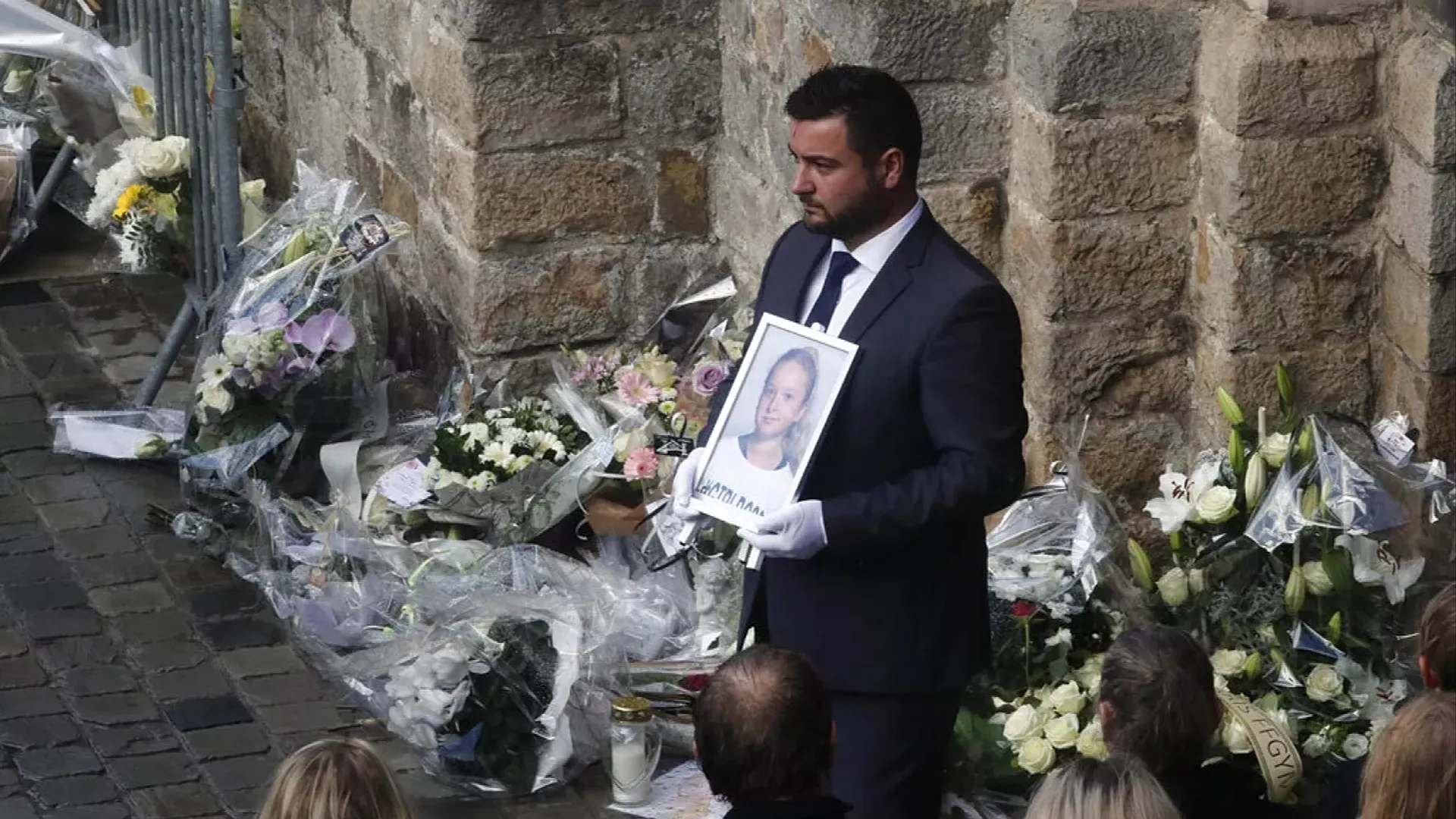
A verdict that shocked an entire nation has rewritten part of France’s criminal history.
Paris, October 2025. Dahbia Benkired, a twenty-seven-year-old woman, has been sentenced to life imprisonment without the possibility of release for the murder of twelve-year-old Lola Daviet in 2022, a crime that combined sexual assault, torture and premeditated violence. The decision, delivered by the Paris criminal court, marks the first time in France that a woman receives an “incompressible” life sentence, the harshest penalty under French law.
The court’s ruling followed a week-long trial in which jurors heard detailed testimony about the crime committed inside a residential building in Paris’s nineteenth arrondissement. Investigators reconstructed the final hours of the victim using surveillance footage and forensic evidence. Prosecutors described the act as “one of the most barbaric episodes in recent French memory,” emphasizing that the accused maintained full awareness of her actions, a conclusion supported by two independent psychiatric assessments.
French judicial sources confirmed that the crime took place while Benkired was under an existing deportation order for irregular residency status. That detail reignited debate over migration enforcement and institutional accountability. The prosecution argued that the case represented “a catastrophic chain of omissions” that allowed a preventable tragedy to unfold. Defense lawyers, while acknowledging the brutality of the events, appealed for recognition of the defendant’s psychological instability, but the court ruled that her discernment remained intact.
The verdict establishes a legal milestone. Under French criminal code, life sentences generally allow for review after twenty-two years. The “incompressible” variant removes that review altogether, effectively mandating incarceration for life. The measure, introduced in 1994 for acts of exceptional cruelty, had only been applied to male offenders in prior decades. Legal observers noted that its use against a female convict signals a decisive shift in how French courts interpret parity before the law in cases of extreme violence.
Internationally, the decision drew commentary from European and global human-rights organizations. The Council of Europe cited the case as evidence of the “broad interpretive reach” of national courts in defining irreducible sentences within the European Convention framework. The United Nations Office on Drugs and Crime (UNODC) referenced the proceedings in its review of comparative penal systems, noting France’s balance between retribution and rehabilitation. Meanwhile, the Inter-American Commission on Human Rights (IACHR) observed that the ruling would likely influence judicial debates in Latin American jurisdictions that are reconsidering lifelong imprisonment for aggravated homicide.
In Paris, crowds gathered near the courthouse after the announcement. Supporters of the victim’s family expressed relief at what they called “a measure of justice proportionate to the horror endured.” Others voiced concern about the symbolic and political consequences of such a precedent, especially given the public attention the case received since 2022. Security forces maintained a perimeter as hundreds of reporters transmitted live coverage across Europe.
French officials have avoided overt political statements, but within the Ministry of Justice, internal reports suggest that the Benkired case could accelerate proposed reforms on sentence execution and monitoring of offenders after release. The French National Institute for Demographic Studies (INED) pointed out that the number of women serving long-term sentences remains below two percent of the total prison population, underlining how exceptional this ruling truly is.
Psychological experts affiliated with the World Health Organization (WHO) emphasized the need for trauma-sensitive legal proceedings in crimes involving minors, recommending that France expand specialized training for investigators and prosecutors. In Japan and Canada, judicial authorities cited the case as an example of Europe’s evolving stance toward irreducible punishment in response to public outrage over child murders.
For the family of Lola Daviet, the verdict closes three years of anguish and media exposure. Their lawyer, speaking outside the court, stated that “no sentence restores a life, but society has drawn a line.” The defense team has not announced whether it will file an appeal before the Cour de cassation, though legal experts consider reversal improbable.
The Benkired judgment has become a national mirror reflecting the limits of justice, mercy and equality before the law. Behind its legal terminology lies a profound societal reckoning with violence, gender and responsibility — themes that continue to divide France each time the courthouse doors open.
Every silence speaks. / Cada silencio habla.